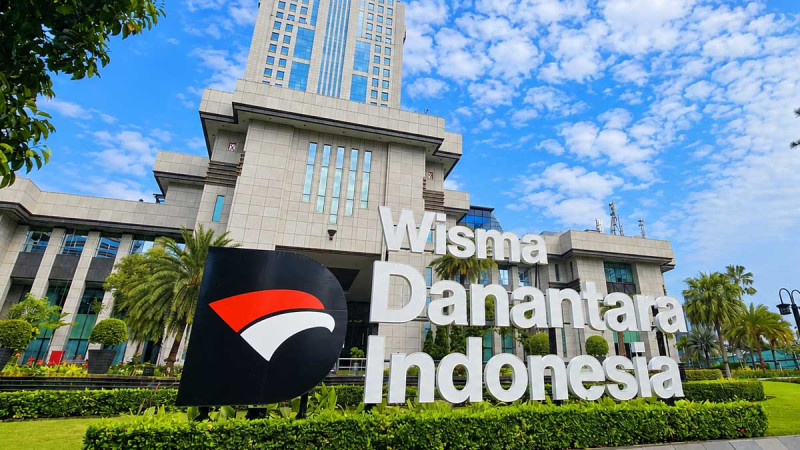
InfoSAWIT, JAKARTA – Indonesia’s sovereign investment agency, Danantara Indonesia, has assured industry stakeholders that the implementation of new export governance measures through PT Danantara Sumberdaya Indonesia (DSI) will not disrupt the flow of exports of the country’s strategic natural resource commodities.
In an official statement received by InfoSAWIT on Sunday (June 7, 2026), Danantara emphasized that business certainty remains a top priority. Existing export contracts will continue to be honored as long as no indications of under-invoicing or deliberate misreporting of export values are detected.
According to Danantara, maintaining the confidence of international buyers and investors is essential to preserving Indonesia’s export competitiveness. As a result, DSI’s mandate is designed to strengthen transparency, accountability, and credibility within the country’s commodity export sector.
Transition Period Focuses on Digital Monitoring
The government officially launched DSI’s transition phase on June 1, 2026. During this period, efforts will concentrate on strengthening digital reporting and monitoring systems.
DSI is currently developing an integrated digital platform capable of analyzing export transaction data across various strategic commodities. The system is expected to improve the detection of potential under-invoicing practices through data-driven and objective monitoring mechanisms.
Under this approach, export supervision can be conducted more effectively without disrupting legitimate export activities.
“Most transactions that comply with fair market principles will continue as normal, while greater attention will be directed toward transactions requiring further evaluation,” Danantara stated.
The agency also stressed that DSI will maintain strict confidentiality over commercial information obtained through monitoring activities, including transaction data and contractual arrangements belonging to exporters.
DSI to Serve as Export Facilitator
Once the transition period concludes, DSI will function as an intermediary that facilitates and supervises exports of strategic natural resource commodities.
The framework is designed to preserve direct commercial relationships between producers and international buyers while enhancing oversight of export transactions.
Danantara noted that the phased implementation aims to minimize disruptions to Indonesia’s export sector while achieving the broader objective of creating a more transparent and equitable trading environment free from export-value manipulation.
The effectiveness of the policy will be reviewed periodically, taking into account industry readiness and progress toward achieving the government’s objectives.
Transparent Pricing Methodology
DSI said it will adopt commodity-specific pricing methodologies that reflect the unique characteristics of each export product.
Pricing assessments will consider factors such as product quality, commodity specifications, logistics costs, and contractual structures. The objective is to ensure that recorded export values accurately reflect actual transactions while preventing under-invoicing practices that could undermine state revenues.
Danantara and DSI also pledged to maintain ongoing dialogue with exporters, industry associations, and other stakeholders throughout the implementation process.
The government expects that stronger governance based on transparency, accountability, and integrity will improve the accuracy of Indonesia’s export reporting while enhancing international market confidence in the country’s trade system. (T2)