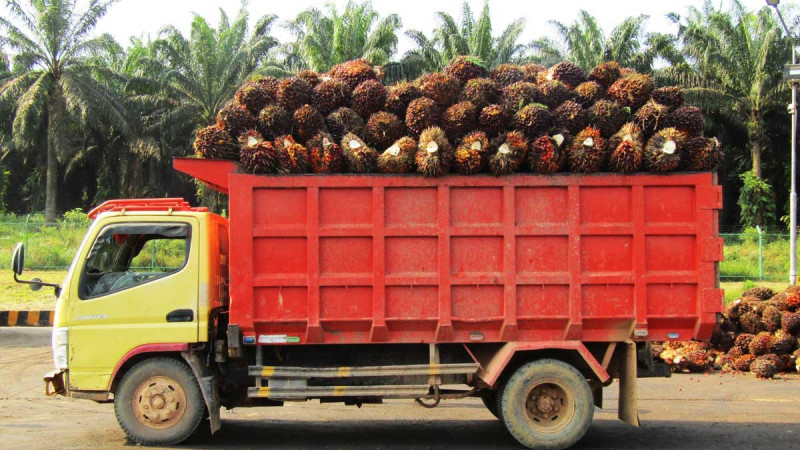
InfoSAWIT, SOUTH TAPANULI – Independent palm oil smallholders in South Angkola District, South Tapanuli Regency, have voiced concerns over what they describe as persistently low fresh fruit bunch (FFB) prices, calling for fairer pricing practices in line with Indonesia’s latest palm oil trading regulations.
Local grower Sudarmadi said that as of June 3, 2026, FFB prices offered by a nearby palm oil mill remained at Rp2,550/kg, significantly below prices reported in several other parts of North Sumatra.
According to him, the situation has raised questions among growers regarding the implementation of Agriculture Minister Regulation (Permentan) No. 13 of 2024, which aims to promote fair and transparent palm oil trading practices that support smallholder interests.
“We continue to see FFB prices in our area lagging behind neighboring regions, despite stronger prices being reported elsewhere. We hope the principles outlined in the regulation can be implemented fairly for all growers,” Sudarmadi told InfoSAWIT.
He noted that growers regularly monitor palm oil market developments through social media and farmer networks. Information circulating among growers indicates that FFB prices in several districts have improved in recent weeks.
As an example, growers pointed to reports from Hutaraja Tinggi District in Padang Lawas Regency, where FFB prices reportedly reached Rp3,200/kg on June 3, representing a significant premium over prices currently received in South Angkola.
Smallholders Face Mounting Economic Pressure
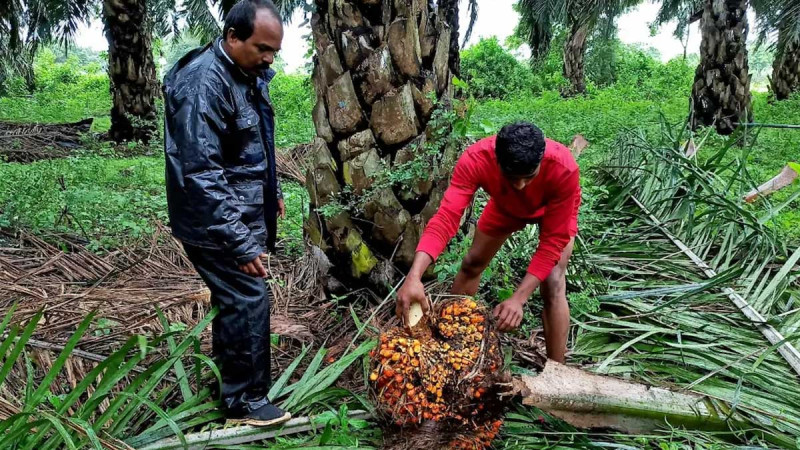
Sudarmadi, who manages approximately two to three hectares of oil palm plantations, said lower FFB prices have intensified economic pressures on small farming households.
He explained that production costs—including fertilizers, agrochemicals, farm equipment, and labor—continue to rise, while household expenses and education costs have also increased.
“Smallholders are struggling with rising costs across the board. We simply hope to receive a price that is comparable to what farmers in other regions are getting so that we feel we are being treated fairly,” he said.
Growers also highlighted concerns over limited marketing options in the district, noting that many farmers depend on a single palm oil mill as their primary buyer. The lack of competition, they argue, may affect pricing transparency and bargaining power.
Despite these challenges, farmers acknowledged the importance of maintaining fruit quality to meet mill requirements and support better pricing outcomes in the future.
The issue underscores ongoing concerns among independent smallholders regarding equitable access to markets and transparent FFB pricing mechanisms within Indonesia’s palm oil sector. (T2)