InfoSAWIT, JAKARTA – Escalating tensions in the Middle East during early 2026 once again underscored how deeply the global palm oil industry is intertwined with geopolitical developments.
As conflict intensified across the region, the impact extended far beyond global energy markets, reverberating through crude palm oil (CPO) trade and pricing dynamics in Indonesia.
CPO prices on Bursa Malaysia Derivatives climbed to as high as RM4,631 per ton by late March 2026, while Indonesia’s domestic KPBN reference price surged to Rp16,275 per kilogram—one of the highest levels recorded this year.
The sharp increase reflected more than ordinary market volatility. Instead, it represented a direct market response to mounting pressure on global energy supply chains and logistics networks.
Threats surrounding the Strait of Hormuz, one of the world’s most critical crude oil shipping lanes, pushed international energy prices higher almost immediately.
The consequences were quickly felt across industries.
Rising diesel prices increased operational costs, transportation expenses climbed, and palm oil-based biodiesel once again emerged as a more competitive energy alternative.
At the same time, security disruptions in the Red Sea and the Bab el-Mandeb Strait forced commercial vessels to alter shipping routes, triggering a new wave of logistical pressures.
The implications were significant.
Freight costs surged, insurance premiums increased, and global distribution networks came under mounting financial strain.
Yet despite those geopolitical disruptions, the global palm oil market appears to be entering what analysts describe as a new phase of equilibrium.
World production continues to grow, although no longer at the pace seen in previous years.
Malaysia is projected to produce around 19.7 million tons of CPO in 2026—remaining a major producer but without dramatic output expansion.
Indonesia, meanwhile, still possesses room for growth through plantation expansion and ongoing Smallholders’ replanting programs.
While additional production may not be spectacular, it reinforces the reality that global supply continues to increase.
This shifting balance is gradually redefining market dynamics.
The central issue is no longer merely how much palm oil the world can produce, but increasingly how global markets absorb expanding inventories.
The changing landscape highlights a broader structural transition within the palm oil industry—one where supply growth, geopolitical risk, energy demand, and logistical resilience are becoming more interconnected than ever before.
As uncertainty continues to shape global trade patterns, the palm oil sector faces the challenge of adapting to a market environment where geopolitical developments may prove just as influential as production fundamentals themselves. (T2)
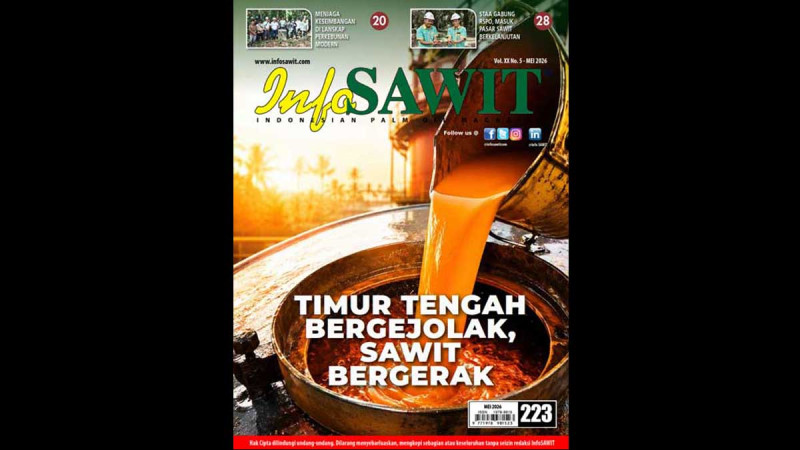
Read InfoSAWIT Magazine May 2026 edition