InfoSAWIT, JAKARTA – Indonesia’s Ministry of Agriculture has moved swiftly to address declining Fresh Fruit Bunches (FFB) prices reported across several palm oil-producing regions, as concerns grow over market reactions to the country’s planned single-window natural resource export policy through PT Danantara Sumber Daya Indonesia (DSI).
The government has engaged palm oil businesses, smallholder associations, and law enforcement agencies to ensure market instability does not harm farmers or disrupt the sustainability of Indonesia’s palm oil industry.
The response was confirmed by Deputy Minister of Agriculture Sudaryono following a coordination meeting at the Ministry of Agriculture on Tuesday (May 26, 2026). The meeting brought together representatives from the Indonesian Palm Oil Association (GAPKI), smallholder organizations, and the National Police Food Task Force.
According to the Ministry, the meeting was convened following growing concern among businesses and market participants over the implementation of the single-window export mechanism for natural resources under PT DSI. The uncertainty surrounding the policy has been viewed as one of the factors contributing to lower FFB purchasing prices at the farmer level.
Five Measures to Stabilize FFB Prices
During the meeting, stakeholders agreed on five key measures aimed at restoring FFB price stability and ensuring the gradual implementation of the export policy.
First, the government concluded that the current decline in FFB prices is largely driven by psychological factors, including uncertainty and limited understanding of how the new export mechanism will operate.
“The bottleneck occurring today is largely caused by concern, uncertainty, and insufficient understanding of the new single-window export policy,” Sudaryono said.
Second, the government reiterated that PT DSI will function as a transparent and accountable manager and supervisor of natural resource export policies rather than as a profit-seeking entity.
“PT DSI does not take transaction profits and does not impose additional charges. Therefore, farmers and exporters should not worry because business activities will continue as usual,” Sudaryono stressed.
Third, the government established a transition period from June 1 to August 31, 2026. During this phase, export activities will continue normally while authorities conduct evaluations and adjustments. Full implementation of the policy is scheduled for January 1, 2027.
“Starting September 1, companies that are ready may begin transitioning. Full implementation is planned from January 1, 2027,” he added.
Fourth, authorities ensured downstream sectors—including refineries, exporters, and related businesses—would continue operating normally during the transition.
The fifth agreement emphasized the need for FFB purchasing prices to align with regional crude palm oil (CPO) reference prices to accelerate recovery at the farmer level.
Ministry Finds 139 Palm Oil Mills Lowering FFB Prices
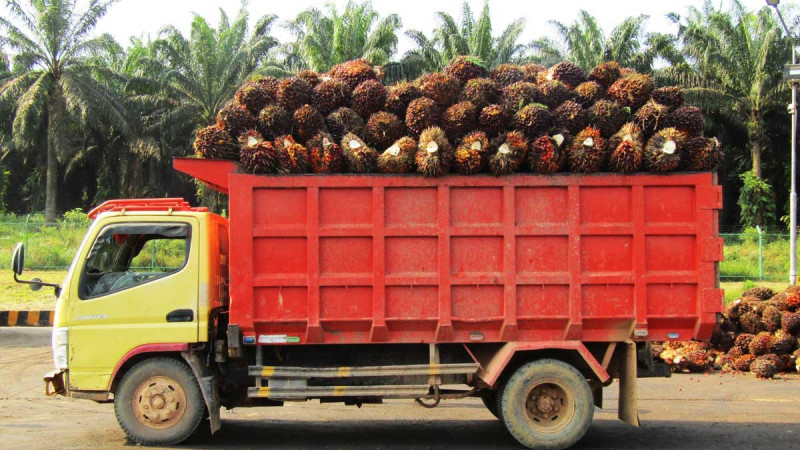
Sudaryono revealed that the Ministry of Agriculture has identified 139 palm oil mills (PKS) across Indonesia that have lowered FFB purchasing prices.
The government has therefore urged companies to promptly readjust prices in accordance with local CPO benchmarks.
“We hope that after this clarification, business concerns will ease and FFB purchasing prices will return to normal according to prevailing market mechanisms,” he said.
The Agriculture Ministry’s quick response received support from industry players. GAPKI Chairman Eddy Martono said government coordination was essential to restoring market confidence and maintaining the continuity of the national palm oil supply chain.
“We appreciate the Minister and Deputy Minister for moving quickly and decisively to address this issue. We hope the collapse in FFB prices can recover soon and that corporations purchasing FFB continue to recognize smallholders as an integral part of President Prabowo’s Asta Cita agenda and Indonesia’s broader interests,” Eddy said.
Meanwhile, Indonesia’s National Police Food Task Force reaffirmed its commitment to overseeing the policy and ensuring no violations occur in FFB purchasing activities.
Food Task Force chief Ade Safri Simanjuntak stated that law enforcement authorities stand ready to act if unfair business practices or other violations harming farmers are identified.
“We are committed to safeguarding government policy. If violations are found, whether unfair competition or other criminal acts, law enforcement measures will be taken firmly and proportionally,” Ade Safri said. (T2)