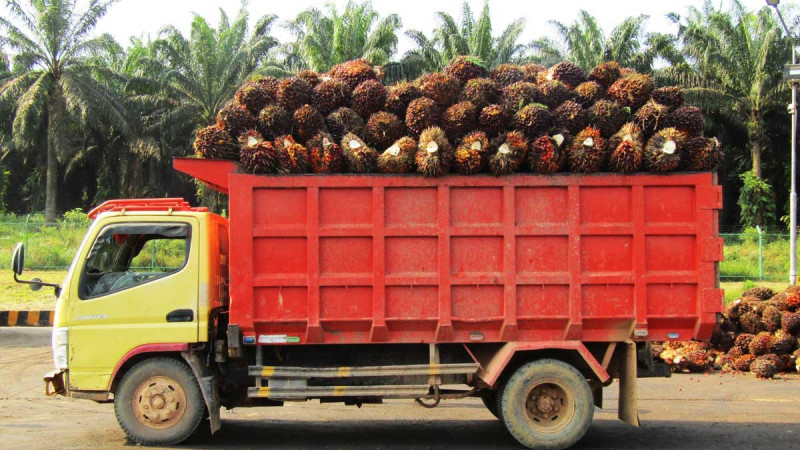
InfoSAWIT, BENGKULU – Chairman of the Bengkulu Provincial Regional House of Representatives (DPRD), Sumardi, has urged palm oil processing companies and crude palm oil (CPO) mills to safeguard Smallholder welfare amid declining Fresh Fruit Bunch (FFB) prices that have sparked growing concern among oil palm farmers in recent weeks.
The appeal follows complaints raised by the Bengkulu Palm Oil Farmers Alliance regarding the sharp fall in FFB prices. The Bengkulu Provincial Government has also convened discussions to assess the weakening market and its impact on farmer incomes.
According to Sumardi, FFB prices should be maintained at a minimum level of Rp2,800 per kilogram to ensure farmers continue to earn reasonable margins capable of supporting household livelihoods.
He argued that the benchmark remains sufficient to balance plantation operating costs with sales revenue received by farmers.
“We hope CPO mill owners and FFB processing companies continue paying close attention to Smallholder welfare by maintaining FFB prices at no less than Rp2,800 per kilogram,” Sumardi said, as quoted by InfoSAWIT from Tribunnews Bengkulu on Tuesday (26/5/2026).
Falling Palm Oil Prices Raise Farmer Concerns
Sumardi warned that excessive price declines could trigger uncertainty and anxiety among oil palm growers, particularly Smallholders already facing fluctuating production and operational costs.
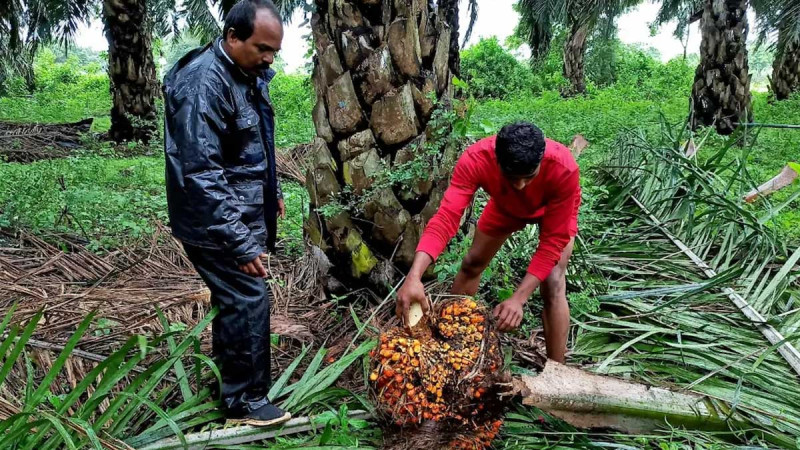
He noted that prolonged price pressure may even influence harvesting decisions, as farmers become hesitant to collect fruit if expected returns fail to cover plantation expenses.
“Farmers should not be left anxious, worried, or uncertain about whether their oil palm fruit will even be harvested,” he stressed.
The Bengkulu DPRD chairman emphasized that maintaining farmer confidence is essential not only for livelihoods but also for preserving stability across the regional palm oil supply chain.
DPRD Highlights Importance of Palm Oil Partnerships
Beyond price issues, Sumardi also underlined the need for stronger and healthier partnerships between plantation companies and Smallholders across Bengkulu.
He said constructive collaboration between mills and growers plays a strategic role in maintaining regional economic stability while creating a more conducive environment around plantations and processing facilities.
According to him, both companies and farmers share common interests—ensuring business sustainability and improving welfare.
“Mills want their operations to run smoothly, and farmers also want decent livelihoods. That is why partnership and mutual support are essential,” he said.
Sumardi further urged all stakeholders to exercise restraint and avoid policies that could potentially burden Smallholders, particularly at a time when commodity prices remain under pressure.
Meanwhile, Bengkulu DPRD Deputy Chairman Teuku Zulkarnain also highlighted the decline in FFB prices, noting that the downward trend appears inconsistent with CPO and cooking oil prices still seen in broader markets.
He argued that the mismatch between plantation-level prices and downstream palm oil product values deserves serious attention from policymakers and industry players alike.
The Bengkulu legislature’s statements add to growing calls for more transparent palm oil trade governance and stronger protection mechanisms for Smallholders, who remain among the key pillars of Indonesia’s palm oil industry. (T2)