InfoSAWIT, JAKARTA – Indonesia’s independent oil palm growers are beginning to feel mounting pressure following recent discussions surrounding a proposed state-controlled export mechanism through Danantara Sumberdaya Indonesia (DSI), according to the Indonesian Palm Oil Farmers Organizations Association (POPSI).
POPSI Chairman Mansuetus Darto said uncertainty surrounding the policy proposal has triggered market anxiety in several palm oil-producing regions, affecting fresh fruit bunch (FFB) prices, trading activities, and the distribution of smallholder harvests.
Speaking to InfoSAWIT, Darto said market reactions emerged shortly after President Prabowo’s remarks regarding a potential export gateway managed through DSI.
Sharp FFB Price Decline Reported
According to POPSI, FFB prices in several producing regions had previously ranged between Rp3,000 and Rp3,700 per kilogram. However, following discussions about the proposed export scheme, prices reportedly dropped to around Rp1,500–Rp2,500 per kilogram.
“Average price declines reached around Rp1,500 per kilogram within just a few days,” Darto said.
He warned that the situation is causing growing concern, particularly among independent smallholders who depend heavily on daily FFB sales to finance household expenses.
For these farmers, falling prices immediately affect food spending, education, healthcare, and routine living costs.
Collection Points and Traders Suspend Operations
POPSI reported that numerous ramps—local FFB collection and purchasing centers—have temporarily suspended operations due to market uncertainty.
As a result, middlemen and traders have become increasingly reluctant to purchase farmers’ produce.
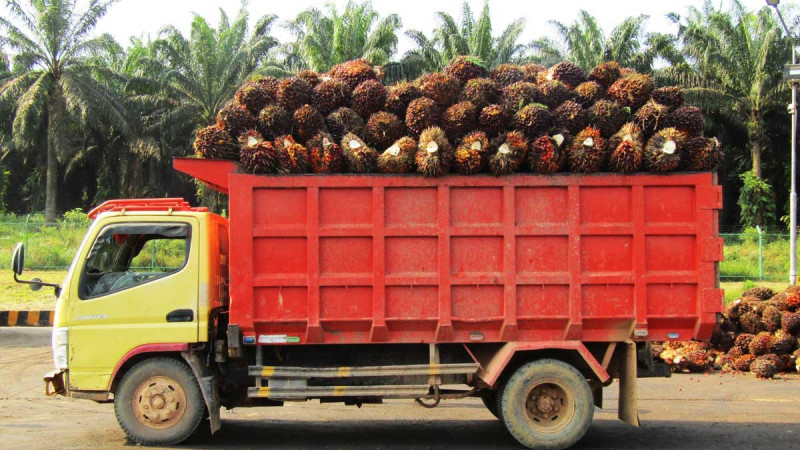
The slowdown has also affected transportation, with fewer trucks collecting FFB from plantations and delivering them to mills.
If prolonged, Darto warned, harvested fruit risks piling up and deteriorating before reaching processing facilities.
“Independent smallholders are the most affected because they rely on daily sales for their livelihoods,” he said.
Businesses Pause Amid Market Uncertainty
POPSI said many regional palm oil businesses are currently adopting a wait-and-see approach due to limited clarity surrounding future trade mechanisms.
Companies that have already purchased FFB at certain price levels now face uncertainty regarding future CPO selling prices, trading channels, and the possibility of additional margins within the supply chain should DSI become involved.
According to Darto, this uncertainty has prompted some businesses to lower buying prices to mitigate commercial risks.
“All of this creates uncertainty that makes markets react negatively,” he said.
Questions Raised Over DSI Readiness
Stakeholders in producing regions are also questioning DSI’s readiness should it eventually assume a role in national palm oil exports.
Concerns include the institution’s global trading capabilities, international market networks, logistics readiness, and payment systems, which industry players say must remain fast and reliable.
POPSI further warned that hundreds of palm oil mills without their own plantations could face operational pressure if refinery purchases slow during a prolonged transition period.
Under such conditions, mills may reduce or halt FFB purchases altogether, potentially severing marketing access for independent growers.
The economic implications, Darto noted, could be substantial.
With Indonesia’s independent smallholder area estimated at 6.4 million hectares and average production at roughly 1,000 kilograms per hectare per month, every Rp100 decline per kilogram could reduce farmer income by approximately Rp640 billion monthly.
Should prices fall by Rp1,000 per kilogram, potential national income losses among independent growers could approach Rp6.4 trillion per month.
“We hope major policies designed at the national level also consider their real impact on small farmers who form the backbone of Indonesia’s palm oil production,” Darto concluded. (T2)