InfoSAWIT, PEKANBARU – The Riau Provincial Plantation Agency (Disbun Riau) has issued an official circular prohibiting palm oil mills from lowering fresh fruit bunch (FFB) purchase prices unilaterally amid market uncertainty following discussions surrounding Indonesia’s proposed natural resource export governance policy.
The circular, issued on May 23, 2026, reflects the provincial government’s attempt to maintain market stability and protect smallholders from speculative pricing practices.
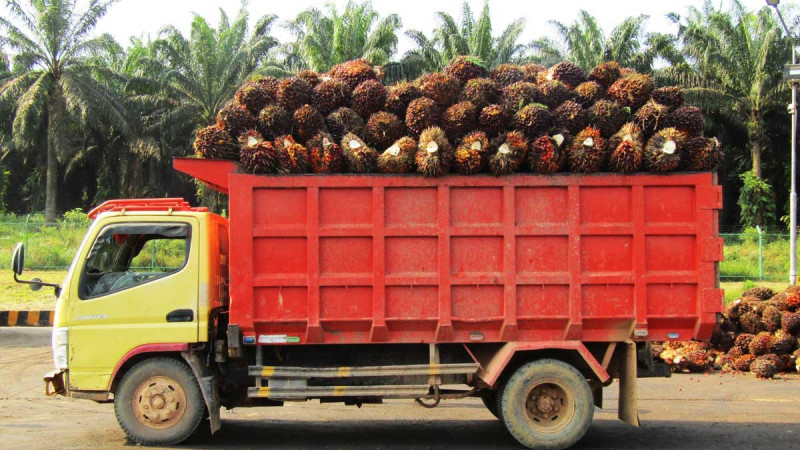
Head of the Riau Plantation Agency, Supriadi, said authorities observed instances of unilateral FFB price reductions despite relatively stable global crude palm oil (CPO) prices, which remain a major reference for determining FFB values.
“This instability has the potential to disrupt regional stability and became the primary reason behind issuing the circular. Central government policies are intended to strengthen long-term downstream palm oil development and should not be used to justify speculative actions that harm farmers,” Supriadi said, as quoted by InfoSAWIT from the Riau Media Center.
Field Monitoring Intensified
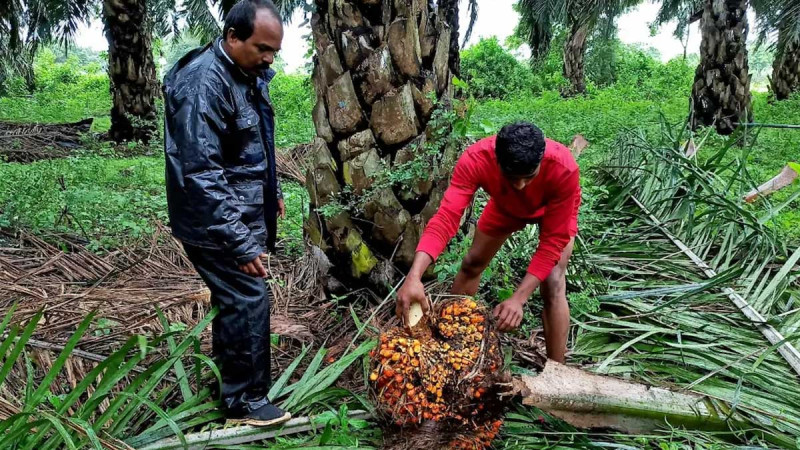
Through the circular, Disbun Riau instructed plantation offices across districts and municipalities to intensify supervision of FFB trading activities.
Monitoring efforts will focus on ensuring that FFB transactions follow officially determined pricing mechanisms set periodically by Disbun Riau.
The provincial government emphasized that any pricing conducted outside established procedures—particularly during periods of market uncertainty—would receive closer scrutiny.
Authorities also warned they would not tolerate price manipulation or violations that disadvantage smallholders.
Palm Oil Mills Reminded to Follow Official Pricing Rules
The circular specifically reminded plantation companies and palm oil mills (PKS) not to lower FFB buying prices under the pretext of adjusting to anticipated central government policy changes.
Supriadi stressed that all mills remain obligated to follow the pricing decisions determined by the Riau FFB Pricing Team, as regulated under Minister of Agriculture Regulation No. 13/2024.
The mechanism is also reinforced by Riau Governor Regulation No. 77/2020, which governs procedures for determining FFB purchase prices from smallholders.
According to Disbun Riau, the pricing framework was designed through participation involving government institutions, growers, and industry stakeholders, making strict implementation essential.
Industry and Grower Associations Asked to Help Stabilize Market
Beyond mill operators, the agency also called on the Indonesian Palm Oil Association (GAPKI) to coordinate member companies to ensure fair purchasing practices aligned with official pricing.
Meanwhile, grower organizations including ASPEKPIR, APKASINDO, and SAMADE were encouraged to educate members and prevent panic-driven market behavior.
The associations were also asked to report suspected pricing violations formally should mills fail to comply with regulations.
Supriadi emphasized that cooperation among all stakeholders remains critical to maintaining stability and long-term sustainability in Indonesia’s palm oil sector.
“Synergy and compliance among all stakeholders are the main pillars for maintaining the sustainability of the palm oil industry,” he concluded. (T2)