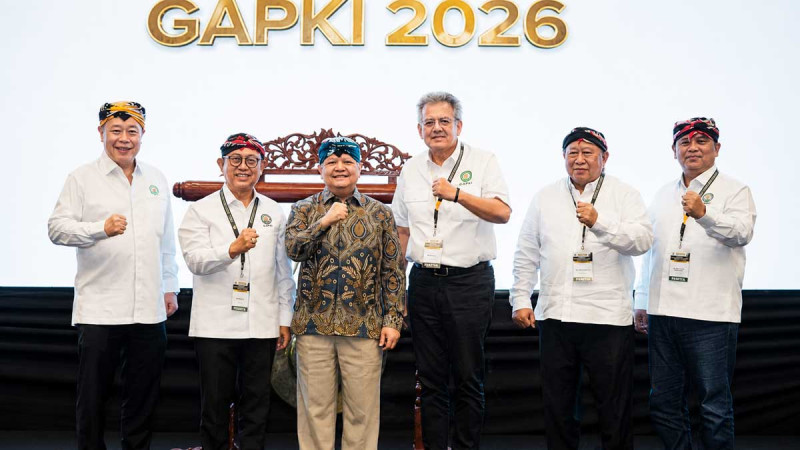
InfoSAWIT, SOLO – The Indonesian Palm Oil Association (GAPKI) has reaffirmed its commitment to strengthening collaboration with the government in supporting sustainable national food and energy security. The commitment was emphasized during the 2026 GAPKI National Working Meeting (Rakernas) held in Solo from May 20–22, 2026.
Chairman of GAPKI, Eddy Martono, stated that the palm oil industry plays a strategic role in supporting Indonesia’s food and energy self-sufficiency agenda. Therefore, stronger collaboration between industry stakeholders and the government remains essential through fair and sustainability-oriented policies.
“This reflects our collective determination that Indonesia’s palm oil industry must continue to play an important role in supporting national resilience, both in food and energy self-sufficiency,” Eddy Martono said in an official statement received by InfoSAWIT on Friday (May 22, 2026).
The event was also attended by Dida Gardera, Expert Staff for Connectivity and Services Development at Indonesia’s Coordinating Ministry for Economic Affairs, alongside members of GAPKI’s advisory board, supervisory board, expert council, and regional representatives from across the country.
Eddy stressed that GAPKI’s commitment will continue to prioritize sustainability principles and fairness for all stakeholders, including Smallholders. According to him, fair, consistent, and nationally oriented policies will create business certainty while strengthening the competitiveness of Indonesia’s palm oil industry.
He added that Indonesia’s palm oil sector has a long history, substantial potential, and strong competitive advantages capable of contributing significantly to national economic growth and public welfare.
During the meeting, Eddy expressed hope that the 2026 GAPKI Rakernas would produce robust and adaptive work programs capable of addressing increasingly complex industry challenges in the future.
“With GAPKI’s 45 years of experience, we are confident in developing strong programs that will support sustainable, inclusive growth of Indonesia’s palm oil industry and deliver the greatest possible benefits to the nation,” Eddy emphasized.
In addition to the national working meeting agenda, the event also featured a focus group discussion (FGD) on transforming palm oil research and innovation to strengthen industry resilience and competitiveness.
The discussion involved several stakeholders, including GAPKI’s Research Division, representatives from the Indonesian Oil Palm Plantation Fund Management Agency (BPDP), the Ministry of Agriculture, researchers from the Indonesian Oil Palm Research Institute, and the Indonesian Quarantine Agency.
The FGD explored various strategies to strengthen research and innovation aimed at improving productivity, efficiency, and competitiveness of Indonesia’s palm oil industry amid global market dynamics and increasing sustainability demands. (T2)