InfoSAWIT, JAKARTA – Indonesia is facing growing concerns over forest and land fires (karhutla) in 2026 after MADANI Berkelanjutan reported that the country’s Indicative Burned Area (AIT) reached around 71,000 hectares between January and March 2026, a sharp increase from only 4,100 hectares recorded during the same period last year.
In its latest report, MADANI stated that approximately 94% of the affected areas were newly burned zones, significantly expanding environmental damage. Another 3,600 hectares were identified as recurring fire areas that continued to show fire indications every month during the first quarter of the year.
MADANI Berkelanjutan Executive Director, Nadia Hadad, warned that the situation represents a serious alarm ahead of the 2026 dry season.
“The increasing number of fires at the beginning of this year is deeply concerning, especially as BMKG predicts that the 2026 dry season will arrive earlier, last longer, and may be influenced by weak to moderate El Niño conditions in the second half of the year,” Nadia said in an official statement received by InfoSAWIT on Sunday (May 17, 2026).
Regionally, West Kalimantan recorded the largest burned area at 23,850 hectares, followed by Riau Province with approximately 16,670 hectares.
Particular concern has emerged over fires occurring in peatland ecosystems and palm oil concession areas. MADANI reported that around 65.1% of the burned area, equivalent to nearly 43,900 hectares, was located on peatlands, which are considered among the world’s largest carbon storage ecosystems.
The organization warned that such conditions could threaten Indonesia’s Forest and Other Land Use (FOLU) Net Sink 2030 target.
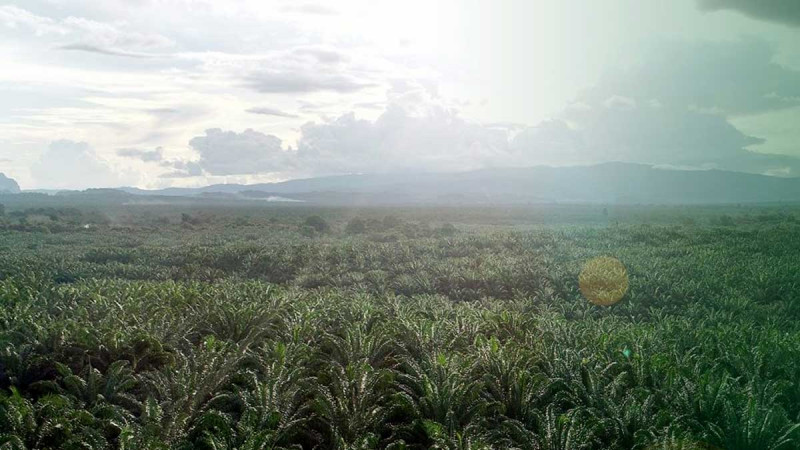
In addition, more than half of the burned areas, or roughly 35,000 hectares, overlapped with licensed corporate concession zones. Palm oil concessions accounted for the largest share, with fires affecting approximately 19,000 hectares.
The report also highlighted a nearly twofold increase in indicative burned areas within palm oil concessions between January and March 2026. MADANI argued that land management practices within company concession areas remain one of the key drivers of forest fire vulnerability.
According to the organization, law enforcement measures imposed on concession holders have yet to create a sufficient deterrent effect, as fires continue to recur in concession areas.
The effectiveness of Indonesia’s moratorium on new permits in forest and peatland areas also came under question. MADANI noted that nearly 49% of the burned areas, or about 33,000 hectares, were located within PIPPIB moratorium zones.
MADANI GIS Specialist, Fadli Ahmad Naufal, described the situation as a serious warning for policymakers.
“Only three months into the year, yet indicative burned areas within moratorium zones have already exceeded 33,000 hectares. With the threat of a prolonged dry season ahead, this should serve as a major alarm for the Ministry of Forestry,” he said.
Beyond concessions and moratorium areas, fires were also detected across approximately 7,800 hectares of Key Biodiversity Areas (KBA), which are considered critical for species and ecosystem survival.
In response, MADANI Berkelanjutan urged the government to tighten oversight of permits and concessions, strengthen forest moratorium enforcement, accelerate peatland restoration, and integrate forest fire prevention into Indonesia’s broader climate strategy.
“Forest and land fires at the start of this year are a serious wake-up call for all of us. If Indonesia is truly committed to its climate goals, preventing forest fires is no longer optional but an urgent necessity,” Nadia concluded. (T2)