InfoSAWIT, JAKARTA – Badan Pengelola Dana Perkebunan (BPDP) has officially expanded the scope of its 2026 BPDP Research Grant by adding two new strategic commodities—coconut and cocoa—complementing a research focus previously dominated by the oil palm plantation sector. The move is seen as opening wider opportunities for universities, research institutions, and industry partners to participate in innovation development based on Indonesia’s plantation commodities.
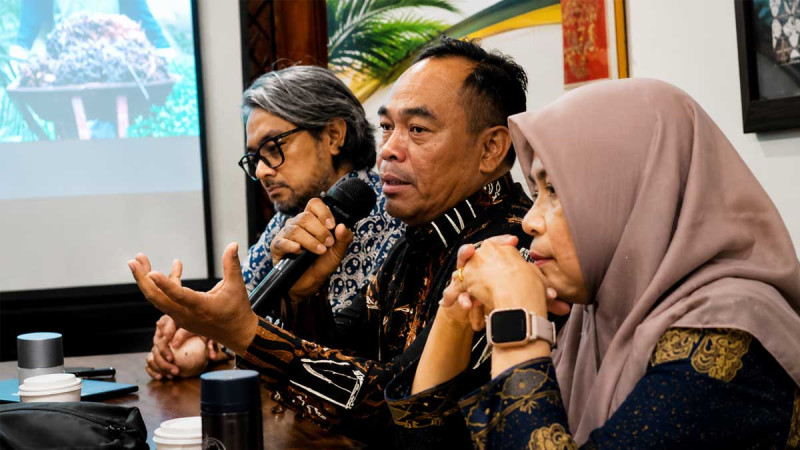
This was conveyed by Rahmat Widiana, Head of the Research Fund Distribution Division at Badan Pengelola Dana Perkebunan (BPDP), during the BPDP 2026 Research Grant Call for Proposal Webinar on Thursday (30/4/2026), attended by InfoSAWIT.
According to Rahmat, the expansion of the research grant’s scope is in line with the mandate of Presidential Regulation No. 132 of 2024, which strengthens BPDP’s role in supporting the broader development of strategic plantation commodities.
“Starting in 2026, our research area will no longer focus only on palm oil, but will also include coconut and cocoa. This certainly opens much greater opportunities for universities, research institutions, and industry players to contribute,” said Rahmat Widiana.
No Commodity Quotas, Open Competition
Rahmat emphasized that under the 2026 BPDP Research Grant, there will be no funding quota allocation by commodity, whether for palm oil, coconut, or cocoa. All proposals will compete openly based on quality, relevance, innovation, and the scale of impact offered.
According to him, this system creates healthy competition because the best proposals from all sectors will have the same opportunity to secure funding.
“There is no quota such as this much for palm oil, this much for coconut, or this much for cocoa. The opportunity is wide open as long as proposals meet the criteria and address the needs of industry and society,” he explained.
BPDP once again stressed that funded research investments must be oriented toward real-world implementation, particularly to enhance industrial competitiveness and improve the welfare of Smallholders, coconut farmers, and cocoa farmers.
Rahmat noted that research outcomes should not stop at scientific publications or academic journals alone, but must advance toward higher technology readiness levels so they can be adopted by industry.
“If research results stop only at academic reviews or journal publications, their benefits are limited. What we encourage is research that can be accelerated toward implementation and deliver direct impact,” he said.
Since the research program began in 2016 through 2025, BPDP has recorded around 55 research proposals funded from 30 universities. With the addition of new priority commodities, BPDP expects broader participation from universities and research institutions.
BPDP is also preparing regional cluster-based outreach programs so information regarding the Call for Proposal can reach more institutions. However, these outreach activities will be conducted in a coordinated manner and will not be exclusive to certain campuses, in order to preserve the independence of the selection process.
Tight Selection, Administration Remains a Critical Point
Rahmat reminded prospective applicants that many proposals fail not because of weak substance, but due to administrative non-compliance.
Proposals must be submitted through official institutions such as universities, government institutions, regional governments, or legally incorporated private research institutions—not by individuals.
In addition, the principal investigator must not be pursuing further studies, and is only allowed to serve as lead researcher on one proposal in the same year.
“Very often, proposals are strong, but they fail at the administrative stage. Therefore, document completeness and compliance with requirements must be a top priority,” Rahmat stressed.
With the proposal submission deadline set for 30 June 2026, BPDP has urged academics, researchers, and industry partners to make full use of the available time to prepare sharper, more applicable proposals with broad impact for the sustainability of Indonesia’s palm oil, coconut, and cocoa ecosystems. (T2)