InfoSAWIT, JAKARTA – Indonesia’s export performance in January–February 2026 showed a positive trend, growing by 2.19% compared to the same period last year, largely driven by the manufacturing sector, including crude palm oil (CPO) and its derivatives.
Data from Statistics Indonesia (BPS), released in early April 2026, shows total exports reached US$44.32 billion, up from US$43.37 billion in the same period of 2025. Meanwhile, non-oil and gas exports rose 2.82% to US$42.35 billion.
“Total export value in January–February 2026 increased by 2.19% year-on-year, with the main contribution coming from the manufacturing sector, which grew by 5.36%,” BPS stated in its official report, as quote by InfoSAWIT on Saturday (April 4, 2026).
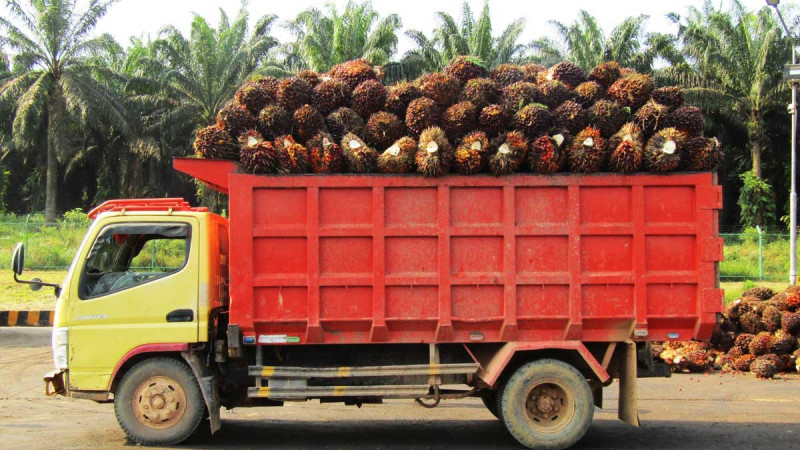
One of the key highlights was the performance of CPO and its derivative products. Export value surged by 26.40% to US$4.69 billion, compared to US$3.71 billion in the same period last year.
In terms of volume, CPO exports also increased significantly by 36.26%, from 3.33 million tons to 4.54 million tons.
This strong performance pushed the contribution of CPO and its derivatives to 11.07% of total non-oil exports during the first two months of 2026.
Manufacturing Sector Leads Growth
Sectorally, non-oil export growth was driven by the manufacturing industry, which expanded by 6.69% cumulatively in January–February 2026. On a year-on-year basis, the sector grew 5.24% in February alone, contributing 4.21% to overall export growth.
In contrast, the mining sector and agriculture, forestry, and fisheries sectors contracted by 16.34% and 25.99%, respectively.
“The increase in non-oil export value was primarily driven by the manufacturing sector,” BPS noted.
In terms of destination markets, exports to China rose significantly from US$8.84 billion to US$10.46 billion. Exports to the United States and India also recorded increases.
However, exports to ASEAN and the European Union saw slight declines, reflecting ongoing fluctuations in global demand.
Coal Declines, Palm Oil Becomes Key Support
Unlike palm oil, coal exports dropped sharply, declining 18.21% from US$4.25 billion to US$3.48 billion, alongside a 7.90% decrease in export volume.
Meanwhile, iron and steel exports recorded modest growth of 1.53%.
These developments further highlight palm oil’s strategic role as a key pillar supporting Indonesia’s non-oil exports amid pressure on other commodities.
With this trend, the palm oil sector is expected to remain a backbone of national exports, particularly in maintaining trade balance performance amid global economic uncertainty. (T2)