InfoSAWIT, JAKARTA – One of the clearest messages from Citra Rapati is that industries must ensure their raw materials come from ISPO-certified suppliers.
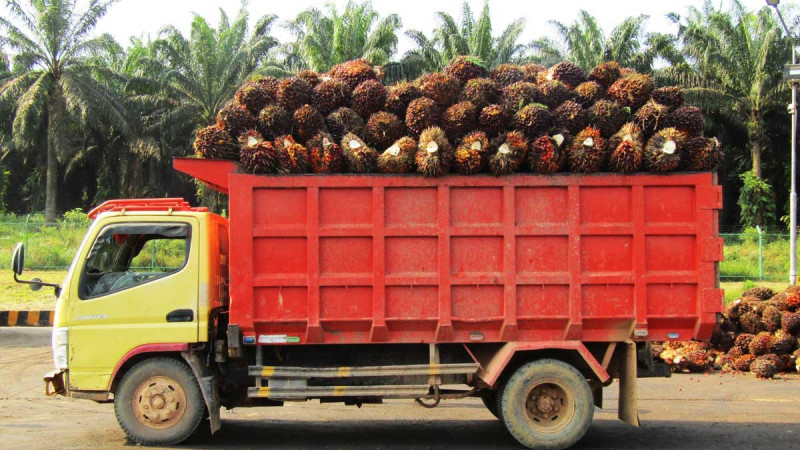
At this point, certification is no longer just about assessing whether “a factory is clean or not.” It forces industries to reorganize their supply chains—from Fresh Fruit Bunches (FFB), mills, crude palm oil (CPO), to derivative products.
She highlighted supply chain models such as mass balance and segregation, which require traceability of raw material origins, composition of supporting materials, processing methods, and transportation of both raw materials and finished products.
The list of affected business classifications (KBLI) is extensive, covering crude palm oil (10431), palm kernel oil (10432), fractionation (10433), refining (10434), cooking oil (10437), margarine (10412), palm-based animal feed (10801), and basic chemicals derived from palm oil (20115).
ISPO is no longer confined to palm oil mills—it is now reaching the very core of downstream industrialization.
Citra outlined the certification process flow through an information system: companies select certification bodies, establish agreements, undergo audits within a maximum of 10 days after agreement, receive audit reports within 30 days, followed by certification decisions in subsequent stages.
The scheme appears well-structured. However, the real test lies not in the flowchart but in implementation: whether company data is accurate, audits remain independent, supervision is consistent, and certification becomes a genuine tool for improvement rather than merely a reputational shield. (T2)
Source: InfoSAWIT Magazine, February 2026 Edition