InfoSAWIT, BANGKOK – An international investigation has revealed links between an Indonesian palm oil company under fraud investigation and several major European energy firms, including Italy’s Eni and Finland’s Neste.
The findings come from a joint investigation by AFP and SourceMaterial, highlighting the global biofuel supply chain—particularly the use of palm-derived products as renewable energy feedstock.
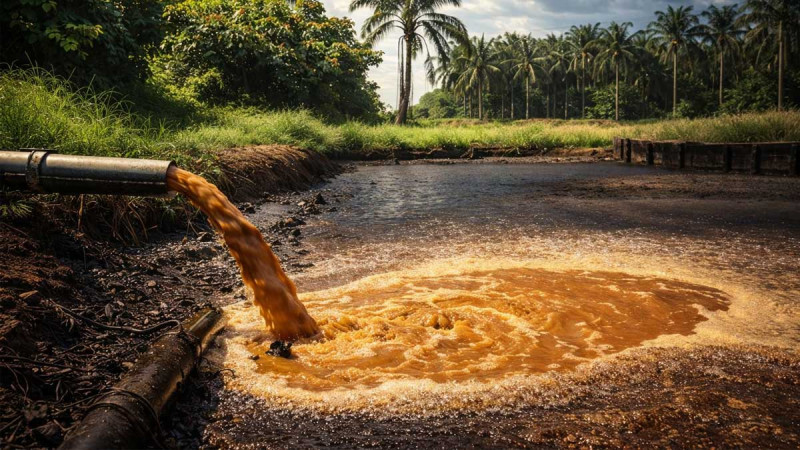
The case centers on alleged manipulation practices in Indonesia, where companies and officials are suspected of misclassifying palm oil as palm oil mill effluent (POME) to avoid higher export taxes.
For the Indonesian government, the practice could result in losses amounting to millions of dollars. For European buyers, the issue raises serious concerns about sustainability commitments within their supply chains.
However, there is no indication that companies such as Eni or Neste were aware of or involved in the alleged fraud.
Supply Chain Integrity Questioned
The investigation found that both companies received shipments labeled as POME from Indonesian firms currently under investigation. Meanwhile, the European Union has decided to phase out palm oil-based biofuels by 2030 due to deforestation concerns.
Observers say the case highlights weaknesses in global biofuel verification systems.
“The EU has decided to phase out palm-based biofuels due to deforestation links. However, disguising palm oil as waste like POME is too easy. Verification systems are clearly still weak,” said Cian Delaney of Transport & Environment (T&E), as reported by MalayMail via InfoSAWIT, Thursday (March 19, 2026).
Company Responses
Eni stated it has no direct contracts with the companies involved and received supplies through certified vendors, which have since ceased cooperation following the investigation.
Neste said it has instructed its suppliers to exclude the implicated companies from its supply chain. Testing of shipment samples from 2023–2025 reportedly confirmed they were consistent with palm-based waste rather than pure palm oil.
Indonesian authorities have long suspected fraud in POME trade. In February, officials arrested 11 individuals, including customs officers, over alleged export manipulation between 2022 and 2024.
Further investigations identified several companies allegedly involved, including Green Product International, Surya Inti Primakarya, and Bumi Mulia Makmur. These firms were linked to shipments to Eni (2022–2024) and Neste (2023–2024).
The case also raises questions about certification bodies such as the International Sustainability and Carbon Certification (ISCC). Some companies have been stripped of certification, while others retain their status.
Industry players stress that transparency is key.
“I challenge all POME industry players to disclose their volume, sources, and documentation for independent verification,” said James Cogan of ClonBio.
As demand for sustainable biofuel feedstock rises, the case underscores the challenges of ensuring global supply chain integrity and serves as a warning for regulators and industry players to strengthen oversight systems. (T2)