InfoSAWIT, BOGOR – Indonesia’s Ministry of Agriculture is reinforcing support for the national palm oil sector through expanded programs aimed at improving productivity and sustainability.
Through the Directorate General of Plantations, the ministry signed cooperation agreements for management support funds for the Smallholder Palm Oil Replanting Program (PSR) as well as Palm Oil Plantation Facilities and Infrastructure (Sarpras) programs for 2026 with regional operational units in key palm oil producing areas on Tuesday (March 4).
The initiative is intended to boost national palm oil production and productivity while strengthening sustainable plantation management.
Director General of Plantations Abdul Roni Angkat said the facilities and infrastructure program is a key instrument in strengthening the upstream palm oil sector, particularly for smallholders.
“Through this support for facilities and infrastructure, we want to ensure that smallholders have better access to production facilities so plantation productivity can increase significantly,” Roni told InfoSAWIT, citing the Ministry of Agriculture statement on Sunday (March 15, 2026).
The Sarpras program includes nine categories of support:
plantation expansion
intensification programs
post-harvest equipment
processing units
plantation road construction and water management
transportation equipment
agricultural machinery
market infrastructure
Indonesian Sustainable Palm Oil (ISPO) certification
In 2026, the program will be implemented through 125 regional operational units across 21 provinces and 104 regencies/cities in Indonesia’s main palm oil producing regions.
Local governments are expected to maximize the opportunity by submitting technical recommendations to accelerate improvements in smallholder plantation productivity.
Initial PSR Target Set at 50,000 Hectares
Alongside infrastructure support, the government is also accelerating the Smallholder Palm Oil Replanting Program (PSR) to improve productivity and sustainability.
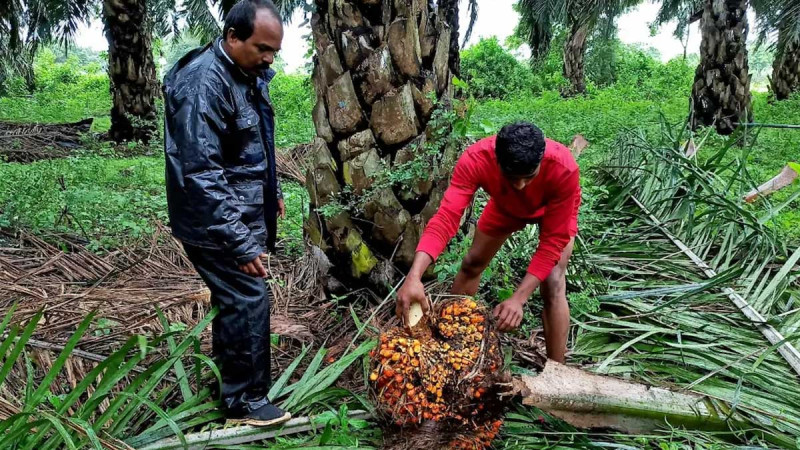
The program replaces aging or unproductive oil palm trees with high-yield superior seedlings.
Roni noted that since its launch in 2017, the PSR program has been implemented across 21 provinces and 148 palm oil producing districts. In the first phase of 2026, the government targets replanting 50,000 hectares.
Data as of February 25, 2026 shows that technical recommendation approvals issued by the Directorate General of Plantations since 2017 have reached 417,008 hectares.
Physical progress also shows:
land clearing (tumbang chipping): 310,138 hectares or about 75%
planting realization: 290,701 hectares or about 70%
Smallholders Control 41% of National Palm Oil Area
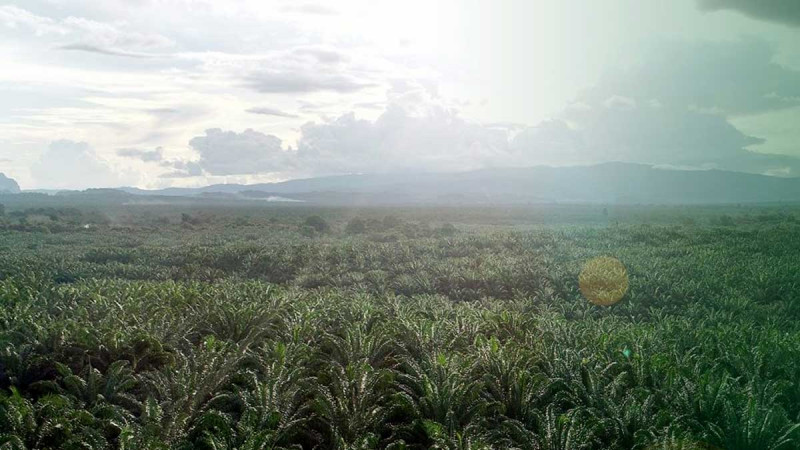
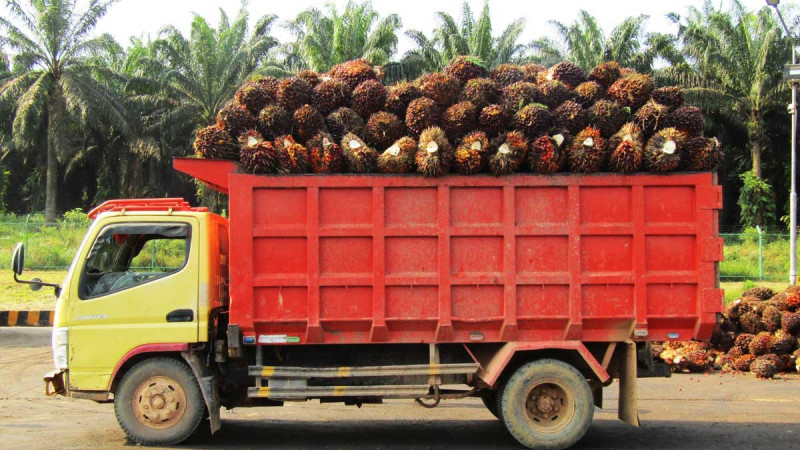
Roni added that Indonesia’s oil palm plantation area has now exceeded 16.83 million hectares, with around 41% managed by smallholders.
This highlights that the future of Indonesia’s palm oil industry is closely tied to improving smallholder productivity.
However, several challenges remain, including limited farmer participation, administrative constraints such as land legality and aerial photo requirements, and the need to strengthen smallholder institutions.
“The success of this program depends heavily on collaboration between the central government, regional governments, industry players, smallholder associations, and farmers as the main actors in the field,” Roni said.
Meanwhile, Agriculture Minister Andi Amran Sulaiman emphasized that palm oil plays a strategic role in Indonesia’s economy.
“Palm oil is a strategic commodity that contributes significantly to national economic growth, both through export earnings and job creation. Therefore, we continue to strengthen support for smallholders through programs that improve productivity and efficiency,” Amran said.
He expressed hope that stronger coordination between central and regional governments will accelerate the development of a sustainable, competitive palm oil sector capable of improving smallholder welfare. (T2)