InfoSAWIT, JAKARTA – Indonesia’s palm oil industry recorded solid performance in 2025, with rising production and exports. However, the sector continues to face domestic and global challenges related to productivity, regulation, and sustainability issues.
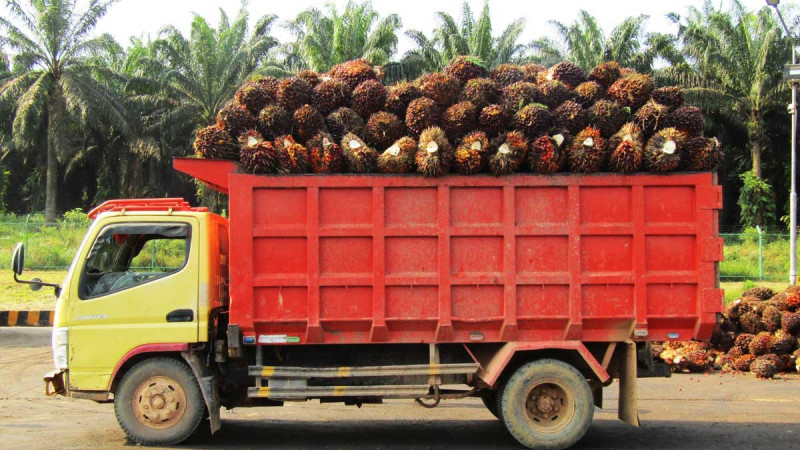
Secretary General of the Indonesian Palm Oil Association (GAPKI), Hadi Sugeng, said Indonesia’s crude palm oil (CPO) production reached 51.7 million tons in 2025, an increase of 7.2% compared with 48.2 million tons in 2024.
“CPO production in 2025 grew by 7.2% compared to the previous year. This was partly influenced by relatively favorable weather conditions throughout the year and high palm oil prices in 2024, which encouraged farmers to maintain their plantations more optimally,” Hadi said during a GAPKI press conference and iftar gathering, attended by InfoSAWIT on Thursday (March 12, 2026).
Exports also increased. In 2025, Indonesia exported 32.3 million tons of palm oil, up 9.5% from 29.5 million tons in 2024.
Domestic consumption also rose to 24.8 million tons in 2025, up 3.8% from 23.9 million tons in 2024.
The increase was mainly driven by the biodiesel sector, which grew 11%, while food consumption declined 3.6% and the oleochemical sector grew around 1%.
“Domestic consumption growth was mainly supported by biodiesel demand,” Hadi said.
Domestic Industry Challenges
Despite rising production, the industry still faces structural challenges, particularly declining productivity amid growing domestic consumption driven by the biofuel program.
Accelerating the Smallholder Replanting Program (PSR) and plantation intensification are considered key steps to improving productivity.
“Accelerating PSR and intensification programs requires collaboration with ministries and related institutions, including developing superior germplasm, introducing pollinating insects, developing Ganoderma-tolerant oil palm clones, and implementing good agricultural practices,” Hadi explained.
Another challenge is the overlap between oil palm plantations and forest areas. GAPKI data show that around 4.09 million hectares of plantations have been taken over by the Forest Area Control Task Force (PKH).
Approximately 1.7 million hectares have been handed over to PT Agrinas Palma Nusantara (APN).
The affected area could expand to 4–5 million hectares by 2026.
“In this case, policy solutions must consider field conditions, especially for plantations that already have legal land rights,” Hadi said.
The industry also faces overlapping regulations related to community plantation development facilities (FPKM), palm oil mills (PKS), export foreign exchange (DHE), and various regional taxes and levies.
ISPO Certification Acceleration
In terms of sustainability, the government continues to accelerate the implementation of Indonesian Sustainable Palm Oil (ISPO) certification.
Industry players are also actively conducting ISPO clinics and outreach programs to accelerate certification among members.
“We continue working with the government to promote positive campaigns on sustainable palm oil practices so global acceptance of Indonesian palm oil improves,” Hadi said.
Outlook for 2026
Palm oil production in 2026 is expected to grow less than 5%, partly supported by replanting areas entering the production phase.
However, several risks remain, including delays in the PSR program, a potential El Niño event in mid-2026, and governance challenges in the palm oil sector.
Domestic consumption is expected to remain relatively stable, as the biodiesel blending mandate remains at B40.
Palm oil prices are projected to stay relatively high in the short term.
“Harga minyak sawit hingga kuartal pertama 2026 diperkirakan berada pada kisaran USD 1.050 hingga USD 1.125 per ton,” pungkas Hadi. (T2)