InfoSAWIT, JAKARTA – Students from the Chemical Engineering Department of Universitas Brawijaya (UB) have once again gained recognition through a renewable energy innovation utilizing palm oil waste.
The Perwira Agak Laen Team secured third place in the Chemical Engineering Universe (CHEVERSE) 2026 competition organized by the Chemical Engineering Student Association of Universitas Pertamina on February 14, 2026.
The team consists of Ahmad Hisyam Shidqi and Kevin Ainal Rizki Fadillah, both members of the 2022 Chemical Engineering cohort.
They competed against teams from leading universities in Indonesia, including Universitas Indonesia (UI), Institut Teknologi Bandung (ITB), and Universitas Gadjah Mada (UGM).
Under the supervision of Ir. Diah Agustina Puspitasari, S.T., M.T., Ph.D, the team presented research on converting palm oil waste into renewable energy.
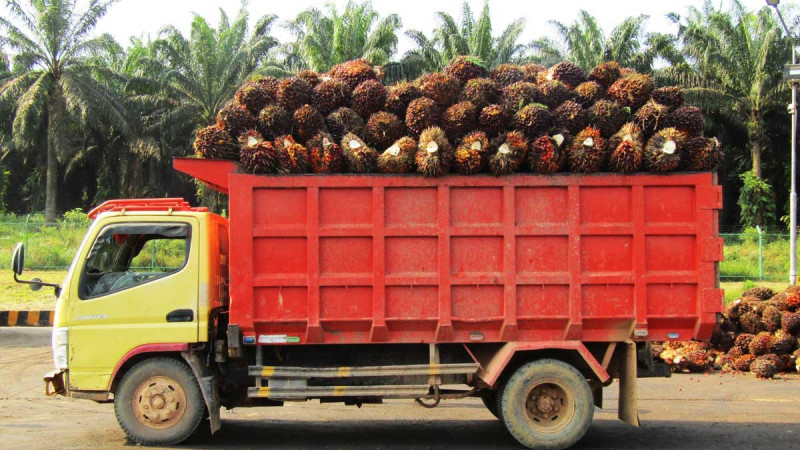
Their study, titled “Utilization of Empty Fruit Bunch Waste into Bioethanol: Evaluation of the Simultaneous Saccharification and Fermentation (SSF) Method at Industrial Scale to Support Sustainability and Energy Optimization,” focuses on converting Empty Fruit Bunches (EFB) into bioethanol as an alternative fuel.
The research supports Indonesia’s E10 fuel blending program, which aims to integrate bioethanol into transportation fuels.
Using Aspen Plus V14 simulation software, the team evaluated two bioethanol production methods: Simultaneous Saccharification and Fermentation (SSF) and Separate Hydrolysis and Fermentation (SHF).
“We aim to identify the most technically and economically optimal method so that palm waste–based bioethanol can be implemented at an industrial scale,” Kevin said in a statement received by InfoSAWIT on Monday (March 9, 2026).
The innovation aligns with several Sustainable Development Goals (SDGs), particularly SDG 7 (Affordable and Clean Energy) and SDG 9 (Industry, Innovation and Infrastructure).
It also supports SDG 12 (Responsible Consumption and Production) through the circular economy approach and SDG 13 (Climate Action) by helping reduce greenhouse gas emissions through bioethanol fuel blending. (T2)