InfoSAWIT, KUALA LUMPUR – Malaysia’s palm oil production is expected to record its sharpest monthly decline in more than a year in February 2026, following floods that hit key plantation areas in the country.
The drop in production is expected to reduce inventories while supporting global palm oil prices.
According to a Bloomberg survey of 12 industry participants, including plantation executives, traders, and analysts, Malaysia’s palm oil production is projected to fall 16% to 1.33 million tons in February.
This would mark the largest monthly decline since January 2025 and the fourth consecutive monthly decrease.
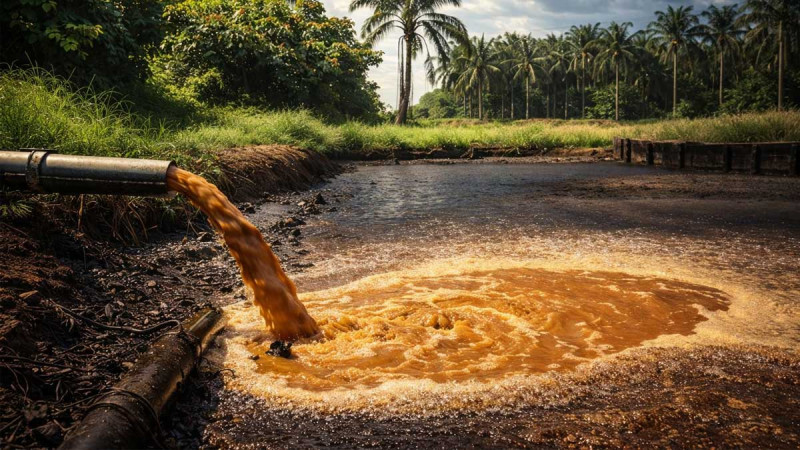
Reported by Bloomberg on Monday (March 9, 2026), the production drop was largely caused by heavy rainfall and flooding in Sabah, one of Malaysia’s key palm oil producing regions that accounts for around 20% of the country’s total output.
In addition to extreme weather conditions, palm oil production in Malaysia typically declines seasonally in February due to the low production cycle and fewer working days following long holidays early in the year.
As production falls, Malaysia’s palm oil inventories are also expected to decline by around 6% from January levels to 2.65 million tons, according to the same survey.
If realized, this would mark the second consecutive monthly decline and bring inventories to their lowest level in four months.
However, the inventory drop may be limited as palm oil exports are also expected to weaken.
The survey estimates February exports fell about 20% month-on-month to 1.19 million tons.
Official data on Malaysia’s palm oil production, exports, and inventories for February will be released by the Malaysian Palm Oil Board (MPOB) on March 10, 2026.
Earlier, Malaysia’s palm oil stocks had surged to a seven-year high in December 2025. The recent inventory decline may provide support for palm oil prices, which had been pressured by weak export demand and the strengthening Malaysian ringgit.
Meanwhile, market participants remain cautious about the outlook for global vegetable oil demand.
Anilkumar Bagani, Head of Research at Mumbai-based Sunvin Group, said geopolitical tensions in the Middle East could disrupt commodity trade flows.
“Market participants remain cautious about vegetable oil demand prospects as tensions involving Iran may influence global trade flows,” Bagani said. (T2)