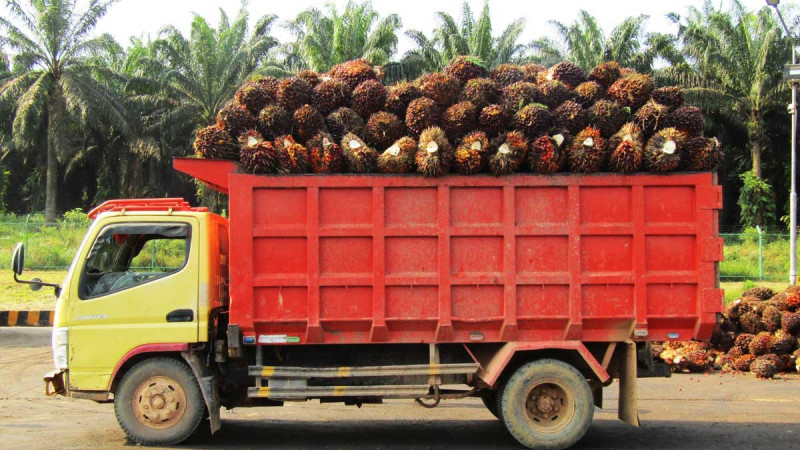
InfoSAWIT, DEPOK – The deficit in fossil fuel oil (BBM) continues to widen, while issues of global warming and environmental degradation are becoming increasingly urgent. The world—especially Europe and the United States—has begun to reorganize its energy policies. Biodiesel has become a key term. The European Union implemented a B5 biodiesel blend until 2010, then increased it to B10 in subsequent years.
“At that time, global palm oil demand surged, outpacing production capacity,” said Mochamad Husni of the Communications Division of the Indonesian Palm Oil Association (GAPKI), when speaking with InfoSAWIT after serving as a speaker at the 2026 Palm Oil Biodiesel Program Journalists’ Workshop in Depok, Thursday (5/2).
So far, motor vehicles have been the largest consumers of fossil fuels and the main contributors to air pollution—especially in densely populated cities like Jakarta. Research conducted by the Agency for the Assessment and Application of Technology (BPPT), now part of BRIN, together with the Bandung Institute of Technology (ITB), shows that the use of biodiesel can reduce motor vehicle pollutant emissions by between 23 and 90 percent, depending on the type of pollutant.
“These figures provide scientific legitimacy that biodiesel is not merely an emergency alternative, but part of a structural solution,” Husni continued.
Since 2009, a biofuel subsidy scheme has been implemented. Institutional strengthening followed with the establishment of the Palm Oil Plantation Fund Management Agency (BPPDKS), now known as BPDP. Trillions of rupiah have been allocated to support the mandatory biodiesel program. Biodiesel blending levels have increased gradually: B15 in 2015, B20 in 2016, B30 in 2020, B35 in 2023, and are planned to reach B40 in 2025–2026. This policy curve has risen consistently. However, behind it lies a fundamental question: where will the feedstock come from?
Based on GAPKI data, the demand for crude palm oil (CPO) for biodiesel has surged dramatically. In 2020, biodiesel feedstock demand was around 7.4 million tons. Five years later, the figure nearly doubled to 13.2 million tons. At the same time, palm oil demand for food continues to rise.
GAPKI data also show that in 2020, palm oil demand for food reached about 8.4 million tons—relatively balanced with biodiesel demand at that time. However, by 2025, food demand is estimated at around 10 million tons, far lower than biodiesel demand, which has reached approximately 13.2 million tons.
This is where the paradox becomes more pronounced. The biodiesel program is considered successful, but its success requires an ever-increasing supply of feedstock. The problem is that Indonesia’s palm oil production has instead stagnated. In 2024 and 2025, CPO production was only 52.76 million tons and 53 million tons, respectively. Of this volume, 25 million tons of CPO were consumed domestically, with the majority used for biodiesel (52%), followed by food (40%) and oleochemicals (8%). At the same time, over the past 10 years, the area of oil palm plantations has remained at around 15–16 million hectares, with average CPO production per hectare of about 3.3 tons. Meanwhile, global palm oil consumption will continue to increase in line with population growth and rising demand. If this stagnation continues while domestic consumption keeps rising, supplies for the global market will be eroded. Indonesia’s competitiveness—especially against Malaysia—will also be threatened, including in strategic markets such as the United States.
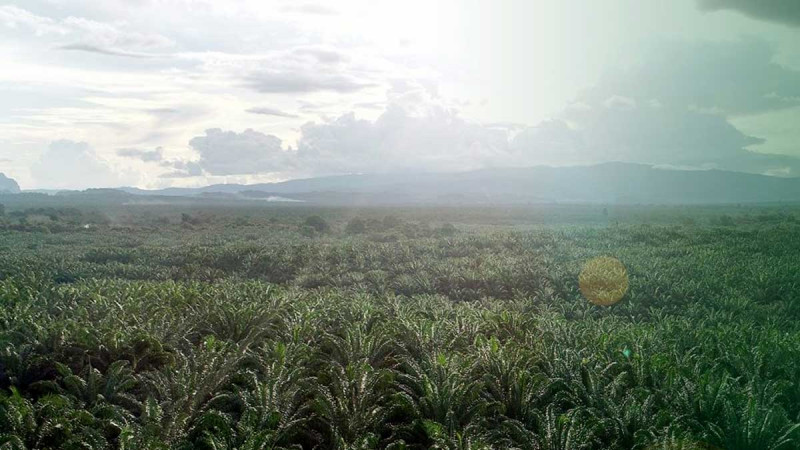
For an industry committed to sustainability principles, as promoted by GAPKI, the answer does not lie in expanding land for oil palm plantations. That space is increasingly limited, both ecologically and politically. The key lies in productivity. The question is how far vegetable oil production can be increased, given issues such as aging oil palm trees, low productivity among smallholder farmers, and the fact that not all existing land can optimally support oil palm production, such as peatlands.
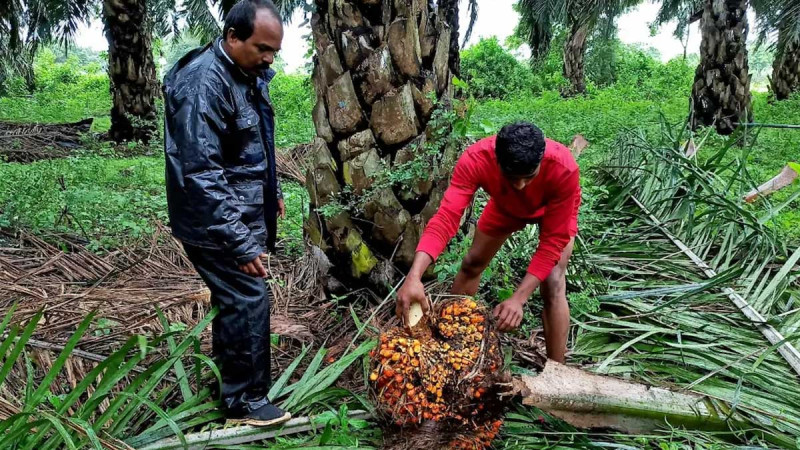
Efforts to increase productivity are now moving into more technical—even biological—domains. The industry is encouraging the introduction of more aggressive pollinating insects to increase fruit set. In Medan, the Palm Oil Research Center (PPKS) is developing three main types of pollinating insects: Elaeidobius kamerunicus, Elaeidobius plagiatus, and Elaeidobius subvittatus, including the introduction of new pollinators from Tanzania. The hope is simple but crucial: productivity increases without the need to open new plantations—intensification.
“Our hope is that productivity can increase,” said Husni.
Ultimately, biodiesel is not merely an energy issue. It is a nexus where food, environmental, industrial, and geopolitical interests intertwine. Maintaining a positive climate for the national palm oil industry, according to Husni, is key. This is especially true given that palm oil has clearly made a major contribution to Indonesia’s economy—through job creation, foreign exchange earnings, and the strengthening of the domestic market via biodiesel. (T2)