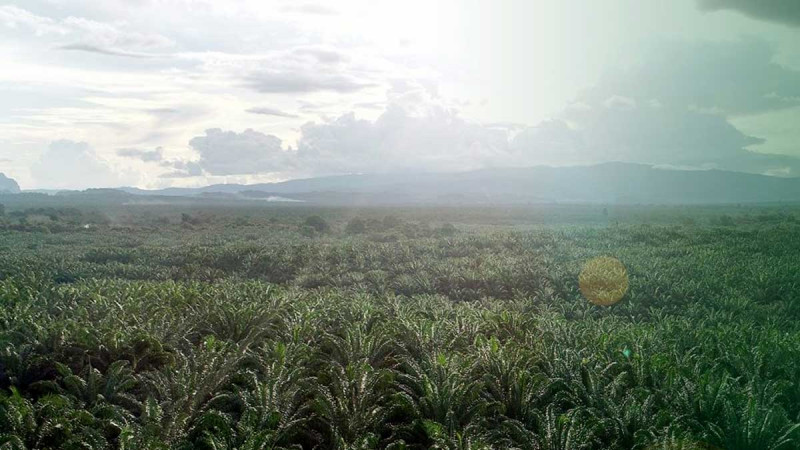
InfoSAWIT, JAKARTA – The issue of opening new oil palm plantations in Papua has resurfaced and sparked various responses from industry players. Chairman of the Indonesian Palm Oil Association (GAPKI), Eddy Martono, said any plan to expand into new areas must be carefully reviewed due to regulatory challenges and potential barriers in export markets.
Eddy noted that the idea of developing new plantations in Papua is largely part of the government’s agenda. However, he stressed that Papua remains a highly sensitive region, often linked to environmental and forestry concerns. If land clearing activities are seen as contradicting sustainability principles, it could become a serious obstacle—especially in global markets.
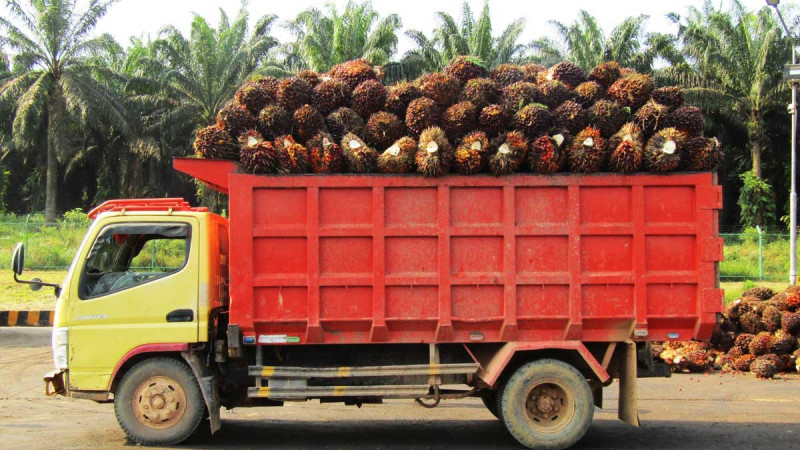
While acknowledging that national energy demand continues to increase, Eddy emphasized that boosting production should not automatically mean expanding into new land. Instead, he said the more realistic approach is to push intensification, particularly by improving productivity on existing plantations.
“If production has to keep increasing, then intensification is the better option. It makes more sense than opening new land,” Eddy said during a webinar attended by InfoSAWIT recently.
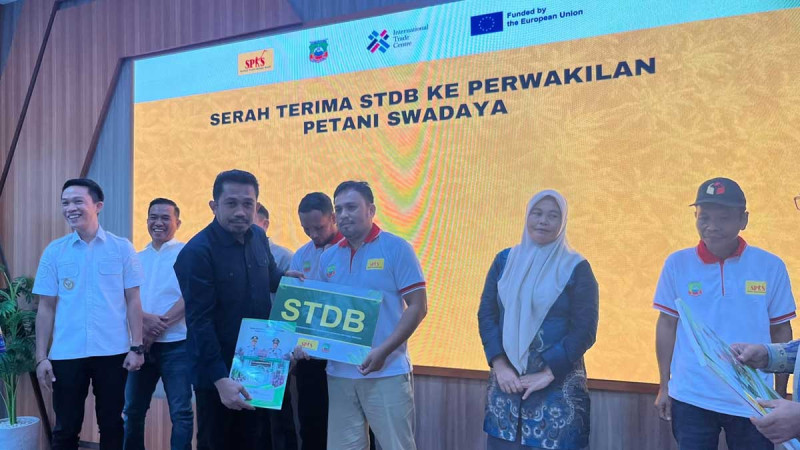
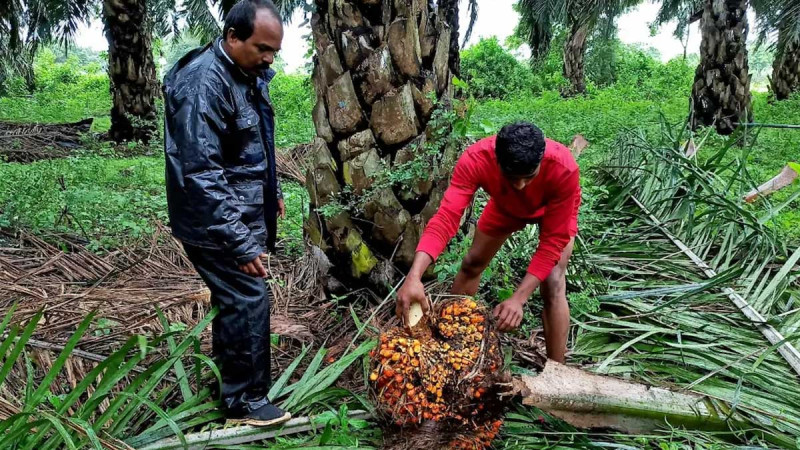
Still, Eddy admitted that intensification faces major challenges, particularly among Smallholders. So far, national production growth has been driven mostly by large companies, while Smallholders continue to deal with unresolved structural issues.
Among the main barriers are forest area disputes, unclear land legality status, and socio-economic realities that make Smallholders hesitant to replant.
“Smallholders hesitate to cut down their trees because what are they going to live on? On top of that, in the field, many plots still have unclear ownership,” he explained.
Eddy warned that if intensification issues are not immediately addressed, new expansion will continue to be seen as a “shortcut,” even though it may create long-term impacts such as social conflict, environmental pressure, and increasing international scrutiny of Indonesia’s palm oil industry.
He also highlighted the importance of strengthening Papua’s local economy through other productive activities suited to the region. According to him, food crops and livestock development could become viable alternatives, especially to reduce dependency on supply from outside the region.
Eddy concluded that sustainability in the palm oil industry is not only about production volumes, but also about governance certainty and social acceptance. Therefore, policy direction must be balanced so development targets can be achieved without sacrificing social stability or Indonesia’s export competitiveness. (T2)