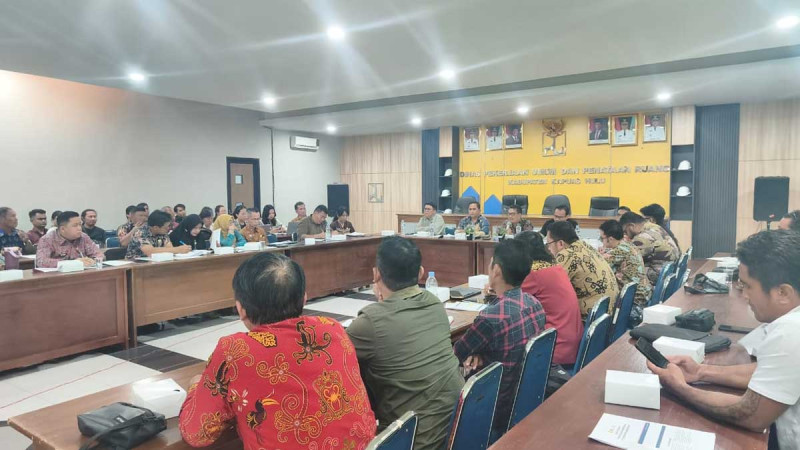
InfoSAWIT, JAKARTA — The Palm Oil Plantation Fund Management Agency (BPDP) continues to strengthen its steps towards the implementation of B50 biodiesel, or the blending of 50% biofuel into diesel. This was marked by the holding of a strategic forum led directly by BPDP President Director, Eddy Abdurrachman, at the Surachman Tjokrodisurjo Building Ballroom in Jakarta.
The meeting served as a platform for stakeholders across sectors—including government agencies, industry players, research institutions, and technical parties—to discuss the latest study results covering technical aspects, supply, demand, and the economic and fiscal impacts of B50 implementation.
One of the main concerns from the initial presentation was the projection of national Crude Palm Oil (CPO) production. The study indicated that production in 2045 is expected to reach only 60 million tons, far from the expected target. Stagnation in productivity in the upstream sector, limited new land, and increasing threats from plant diseases such as Ganoderma are considered the main causes.
In response, extraordinary measures such as increasing plant productivity, optimizing abandoned land, and applying more efficient agricultural technologies were recommended.
Domestic CPO needs to support the B50 scheme are estimated to reach 17.5–18 million tons, which could potentially suppress palm oil export volumes. A study conducted by the KSO Sucofindo–Appertani estimates that the implementation of B50 in 2026 will lead to an 11.40% decrease in exports compared to 2024, given that stagnant production growth does not match the increase in domestic consumption.
Quoted from BPDP on Thursday (July 31, 2025), the forum also highlighted Indonesia's dependence on methanol imports, which is a crucial material in biodiesel production. Imports of NaOH/KOH catalysts reached US$190 million or around IDR 2.85 trillion, potentially reducing foreign exchange earnings from the biodiesel program.
Professor Udin Hasanudin, a professor at UNILA and a member of the BPDP Research and Development Committee, expressed the significant potential of alternative raw materials such as EFB Oil, POME Oil, SBE Oil, and UCO (used cooking oil). Its potential is estimated to exceed 2 million tons and is relatively free from sustainability issues like EUDR. However, further testing and the formulation of regulations and technical specifications are needed to support the integration of these raw materials into the production chain.
From a technical perspective, the Oil and Gas Testing Center (LEMIGAS) presented test results of various biodiesel blends, including B35D15, B40D10, and B50. The best results currently are shown by B35D15, both in terms of engine performance, fuel consumption, emissions, and filtration efficiency. However, for pure B50 use, improvements in biodiesel quality are needed, especially regarding water content, monoglycerides, and oxidation stability. Operational endurance testing in the field is also an important agenda moving forward.
Economic studies indicate a potential subsidy deficit of up to IDR 25 trillion in the 2026–2027 period if B50 is implemented without adjustments. Therefore, BPDP proposes a flexible approach to the blending ratio, following a dynamic model like bioethanol in Brazil, by adjusting the blend proportion based on CPO market prices.
The readiness of production and distribution infrastructure, such as Pertamina's Green Refinery in Cilacap and Dumai, is also an important consideration in the national implementation of B50. (T2)