InfoSAWIT, BOGOR – IPB University, along with several international partners, has successfully created a new breakthrough in sustainable agriculture by developing an innovative model they call "Koronisasi." This model allows for intelligent intercropping between palm oil, cowpea, and IPB 9G rice varieties.
The collaboration between IPB University, Wageningen University and Research (WUR) in the Netherlands, Lambung Mangkurat University (ULM), and PT Citra Putra Kebun Asri (CPKA) has produced this concept as part of the "SustainPalm: Sustainable Palm Oil" program. The goal is to support environmentally friendly palm oil production while also contributing to the achievement of Sustainable Development Goals (SDGs).
The first trial was conducted in Jorong Village, Tanah Laut Regency, South Kalimantan, with encouraging results. The palm-cowpea intercropping system, which started in February 2023, successfully produced cowpea productivity reaching 2.5–3 tons per hectare with minimal fertilizer use.
In the next phase, the palm-rice intercropping trial from April to July 2025 showed that IPB 9G rice could yield around 3 tons per hectare. This potential yield is expected to increase with optimized pest control, especially against the brown planthopper.
Prof. Sudrajat from IPB University explained that the term "koronisasi" was chosen because cowpea plays a central role in this model. Its ability to improve soil structure and naturally increase nitrogen availability makes it ideal as a precursor for rice plants. "This approach not only enhances soil fertility but also economic potential through the utilization of cowpea seeds as a high-protein source for animal feed and food," he said, quoted from IPB University on Tuesday (July 30, 2025).
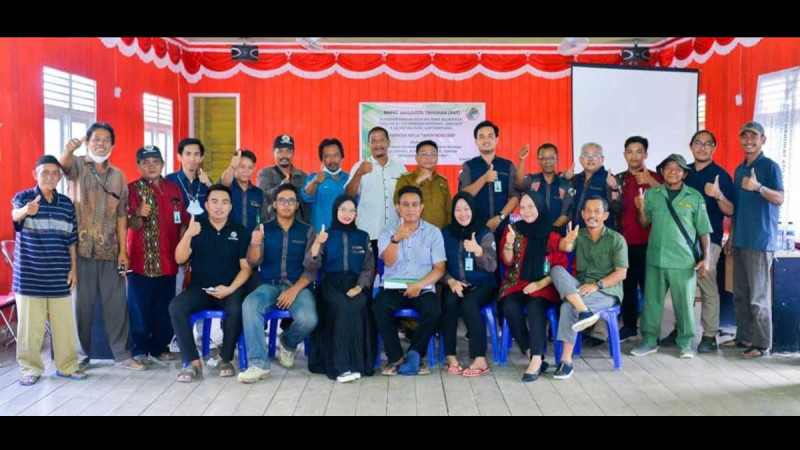
Local farmers, such as H. Sariman and Sari, welcomed this initiative as IPB 9G rice grows well on land previously used for palm oil replanting. They plan to expand rice planting in the upcoming rainy season, showing enthusiasm for the potential for greater yields.
The manager of PT CPKA, Ir. Eko, also welcomed the success of this trial by planning to expand the planting area to 10 hectares. This step is expected to reduce the company's internal food costs by up to 25%.
With strong support from various parties, Prof. Sudrajat hopes that the "koronisasi" model can be an effective solution in supporting the sustainability of Indonesia's palm oil industry. Through a pentahelix approach involving various sectors, he believes this program can improve farmers' welfare and optimize land use sustainably. (T2)