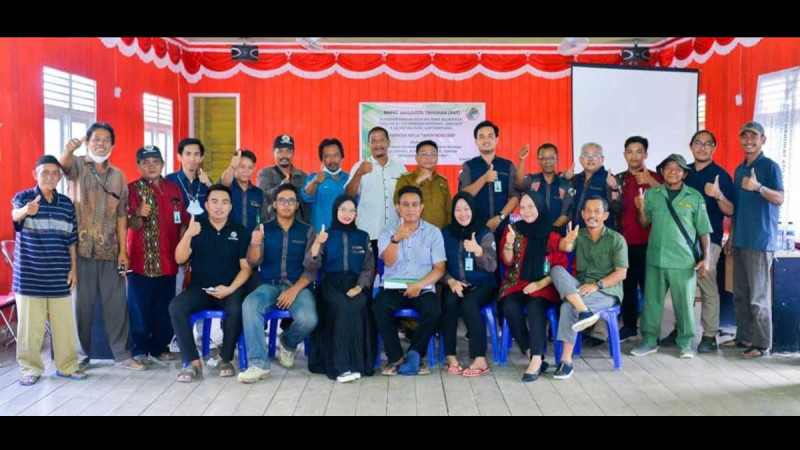
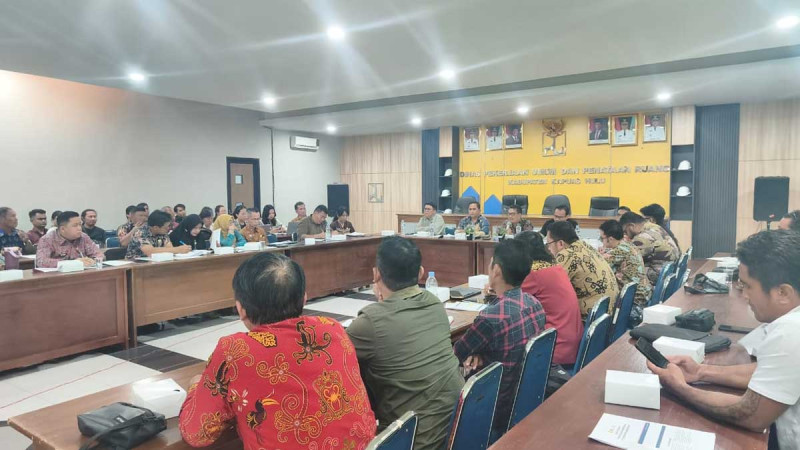
InfoSAWIT, BANDA ACEH — A vibrant atmosphere filled with enthusiasm marked the Technical Training on Palm Oil Cultivation held from July 21 to 25, 2025, at Ayani Hotel in Banda Aceh. A total of 84 palm oil farmers from Aceh Tamiang and Aceh Timur participated in this event, which brought together three cohorts: V, VI, and XV, as part of the 2025 Palm Oil Human Resource Development Program.
This initiative is a collaborative effort between the Palm Oil Plantation Fund Management Agency (BPDP), the Directorate General of Estates at the Ministry of Agriculture (Ditjenbun), and IPB Training, aimed at enhancing the capacity and competence of farmers in productive, sustainable palm oil cultivation that meets national standards.
The training was officially opened on Monday, July 21, 2025, by several key officials, including Zulfadli, Secretary of the Aceh Provincial Agriculture and Plantation Office, M. Apuk Ismane, Head of the Institutional and Workforce Training Team at BPPSDMP, and Tulus Tri Margono, Head of the Empowerment Working Team at the Directorate General of Estates. Their presence underscored the importance of cross-institutional synergy in empowering farmers to compete in the increasingly dynamic palm oil industry.
Five professional trainers from IPB Training led the sessions, including Hariyadi, M.S., who emphasized the significance of comprehensive technical understanding from the outset. “Three keys to success in palm oil cultivation are the right location, superior seeds, and optimal management. All must work in harmony,” Hariyadi stated in an official release received by InfoSAWIT on July 26, 2025.
The training not only focused on theoretical aspects in the classroom but also integrated highly applicable field practices. On Thursday, July 24, 2025, participants visited PT Agro Sinergi Nusantara, where they observed palm oil cultivation practices across three zones: nursery, immature plants, and mature plants.
The visit was led by Zuhri Pradana, Manager of Kebun Tanoh Makmue Seujahtera, who guided participants in observing effective harvesting practices, techniques for identifying pest plants (OPT), and post-harvest handling. Participants actively discussed certified seeds, transplanting techniques, and the selection of healthy seedlings.
The enthusiasm among participants was palpable. Kamisan, a farmer from Bandar Pusaka, Aceh Tamiang, described the training as a turning point in his farming practices. “I have been farming for 15 years, but this is the first time I’ve participated in a science-based training. I realized that many of my practices were not aligned with best practices. Even the planting distance—I just learned that it should follow a five-eye pattern of 9x9 meters,” he shared.
Similarly, Sufrio, a farmer from Aceh Timur, noted that the training opened farmers' eyes to the importance of sustainable agriculture. “We now know the best times for fertilization, how to identify superior seeds, and how to control pests. I hope training like this continues,” he expressed.
Zulfadli from the Aceh Agriculture and Plantation Office emphasized that this training is a crucial step in unlocking the potential of palm oil plantations in Aceh, which spans over 230,000 hectares. “Palm oil is not only a source of income for farmers but also a pillar of regional foreign exchange. Training like this will significantly determine the future of this sector,” he explained.
In his presentation, Tulus Tri Margono from Ditjenbun noted that approximately 42% of national palm oil plantations are managed by smallholder farmers, yet their productivity remains relatively low, averaging 3 tons per hectare per year. In contrast, the actual potential could reach 5 to 6 tons per hectare. “The key lies in improving plantation management, using superior seeds, and implementing proper fertilization practices,” he stated.
Meanwhile, M. Apuk Ismane from BPPSDMP highlighted the importance of collaboration between the government and private institutions in developing agricultural human resources. “Activities like this align with the agricultural development targets for 2025–2029, which aim to cultivate modern, productive, and competitive farmers,” he remarked.
The training covered various technical aspects, including land planning, seedling production, planting techniques, maintenance, fertilization, and pest and disease control. All materials were systematically designed and delivered by experts from IPB Training using an interactive approach.
Overall, the training received positive feedback from participants. Not only did it provide new knowledge, but it also strengthened networking among farmers and opened up opportunities for future collaboration.
Through this training, the government and related parties hope to significantly increase the productivity of smallholder palm oil plantations in Aceh. With the right knowledge and skills, farmers are expected to manage their plantations efficiently, sustainably, and in an environmentally friendly manner, thereby supporting national self-sufficiency and energy sovereignty based on palm oil.
This technical training serves as a tangible testament that the development of the plantation sector is not just about land and production, but also about the quality of the human resources behind it. (T2)