InfoSAWIT, BANDUNG — The Plantation Fund Management Agency (BPDP) continues to strengthen its role in supporting sustainable palm oil research and innovation in Indonesia. Arfie Thahar, Head of the BPDP Program Division, revealed that the agency actively opens funding opportunities for strategic research in the palm oil sector through an annual proposal selection process.
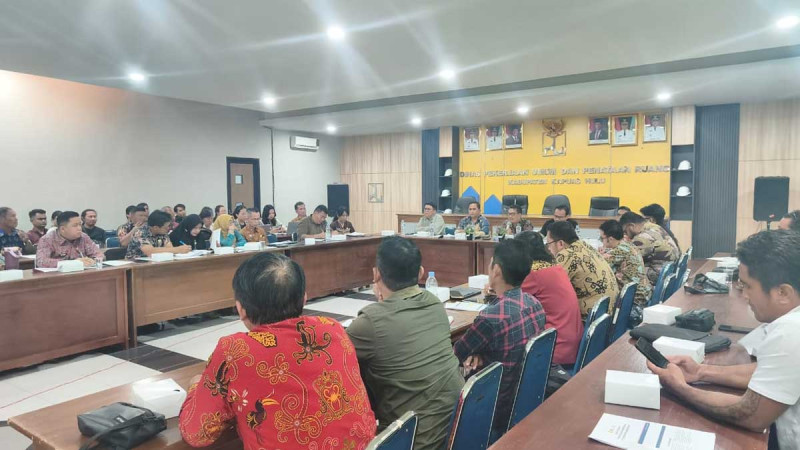
"Research proposals are submitted and undergo a rigorous selection process. Typically, submissions occur at the beginning of the year, and the process until final approval can take up to eight months," Arfie explained at an event in Bandung attended by InfoSAWIT recently.
Current research projects are the result of proposals selected from the 2024 submissions. Meanwhile, new selections for research funding in 2026 are currently underway in 2025.
BPDP focuses its research on seven main areas: Energy, Materials and Chemicals, Food and Health, Cultivation (including land and soil), Post-Harvest, Environment and Socio-Economics, and Information Technology.
In the energy sector, one of the studies funded by BPDP is the development of alternative catalysts to replace methanol in biodiesel production. "Methanol has been imported at high costs. We are funding research to find alternative catalysts from local materials to make it more efficient and affordable," Arfie stated.
In the health sector, BPDP supports innovations for detecting specific contents in palm oil products. One interesting innovation showcased by TCP is a simple technology-based detection tool that is applicable for the industry.
In the cultivation sector, research is focused on developing palm oil varieties that are resistant to drought stress and disease attacks. "We aim to create plants that are more adaptive to climate change and varying land conditions," he added.
Collaboration between researchers and industry is an integral part of BPDP's strategy. A concrete example is the research on producing PVC stabilizers from palm oil, which previously relied on imported pine resin. This research involves collaboration with PT Timah as a potential industrial partner.
"From the outset, we engage industry partners to ensure that research results can be directly applied. The funds we allocate are indeed intended to produce innovations that can be utilized, not just stored in academic papers," Arfie emphasized.
Interestingly, the research results funded by BPDP can be freely utilized by industry players without any fees. "We encourage widespread utilization. So, companies are welcome to use the technologies resulting from this research for free," Arfie concluded.
Through this strategy, BPDP hopes to accelerate the transformation of Indonesia's palm oil sector into a more innovative, efficient, and sustainable industry while bridging the gap between research and the needs of the industry in the field. (T2)