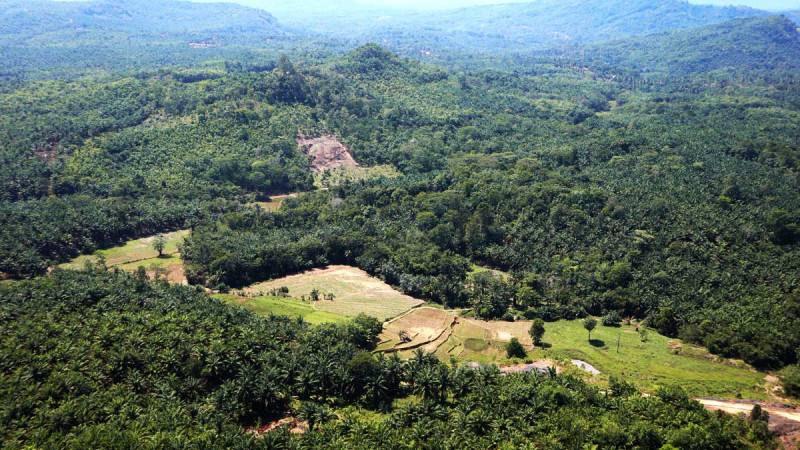
InfoSAWIT, JAKARTA - As the government officially introduces Presidential Regulation (Perpres) No. 5 of 2025, establishing the Forest Area Regulation Task Force (Satgas PKH), this move is claimed to address agrarian conflicts and overlapping forest management issues that have long remained unresolved. However, for WALHI, this regulation sets a troubling precedent in forest area management, particularly due to its allowance for military involvement.
"The military approach in forest area regulation is very dangerous," asserted Uli Arta Siagian, Chair of WALHI National. He expressed concerns about the potential intimidation of communities, especially those who have long lived and farmed within forest areas lacking legal clarity.
According to WALHI, forest area management should be conducted by civil apparatus prioritizing legal and social approaches, rather than security measures. "This task force should not involve the military. Regulation enforcement must be transparent and accountable," Uli stated.
He added that the government has tended to relax regulations for large corporations, while small communities often bear the brunt. Uli referred to previous policies such as PP No. 10 of 2010 and PP No. 104 of 2015, which have often served as a pathway for palm oil companies to clear forests first and then seek legality afterward.
The Job Creation Law has also faced WALHI's criticism. Articles 110 A and 110 B grant businesses three years to finalize land legality, yet many failed to report by the 2020 deadline. "This indicates weak law enforcement, and Perpres 5 merely equates communities with rogue corporations," he emphasized.
Tenurial issues in forest areas remain a hot topic. Approximately 30 million hectares of land overlap with customary territories that lack adequate resolution. WALHI notes that over 130,000 communities they support reside in areas classified as forest zones, without any clarity regarding their status. (T2)
For more details, read the May 2025 edition of InfoSAWIT Magazine.