InfoSAWIT, JAKARTA — Hopes for justice from indigenous communities and civil society in the formation of the Natural Resources Conservation Law (UU KSDAHE) have been dashed by the Constitutional Court (MK). In its ruling on case number 132/PUU-XXII/2024, the MK rejected the formal test request submitted by four petitioners: the Alliance of Indigenous Peoples of the Archipelago (AMAN), WALHI, KIARA, and Mikael Ane, a representative of the indigenous community from Ngkiong, Manggarai, East Nusa Tenggara.
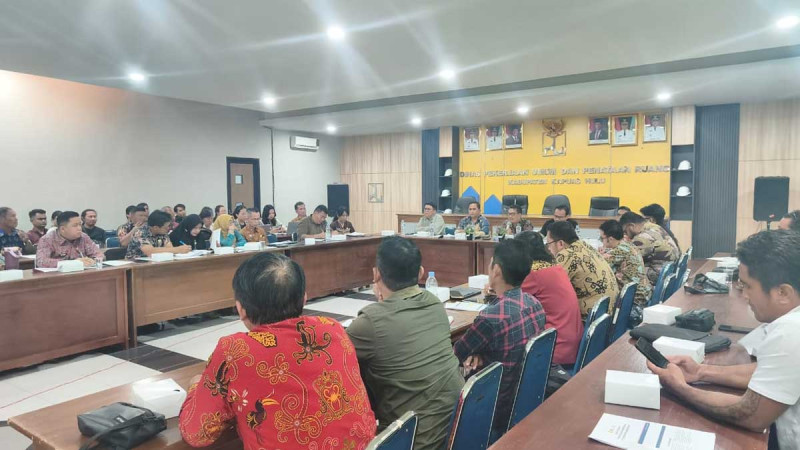
This decision has sparked deep disappointment among civil society, who view it as a negative precedent for the protection of indigenous rights in national legislative processes, particularly concerning environmental and natural resource issues. The MK acknowledged that out of 22 meetings held during the discussion of the UU KSDAHE, only four were open to the public, while the rest, including meetings of the Drafting Team and Synchronization Team, were conducted behind closed doors. Nevertheless, the MK deemed the process compliant with regulations, claiming that the public could access meeting outcomes through minutes, despite evidence showing that 20 documents from these meetings were not available to the public.
Civil society coalitions have questioned this claim, arguing that such secrecy limits meaningful participation, especially since many inputs from indigenous communities were not accommodated in the law's drafting.
“Legal, But Not Legitimate” “We respect the MK's decision, but we maintain that the involvement of indigenous communities in this legislative process does not reflect full and meaningful participation,” stated Cindy Julianty, Executive Coordinator of the Working Group on ICCAs Indonesia. According to Cindy, the difficulty in accessing meeting documents and the lack of explanations from lawmakers regarding problematic articles indicate a weak commitment to fostering participatory spaces. "We will continue to monitor this law," she emphasized in an official statement received by InfoSAWIT on Saturday (July 19, 2025).
Meanwhile, AMAN's Secretary-General, Rukka Sombolinggi, remarked that the MK's ruling further distances indigenous communities from the state. “This law may be legally valid, but it lacks legitimacy in the eyes of indigenous peoples,” he said. “Out of 21 meetings, only two were open. Our inputs were ignored. For us, this is not a fair process.”
One of the most highlighted aspects is the paradox in the MK's reasoning. On one hand, the MK rejected the formal test request, while on the other, it urged lawmakers to maximize the use of information technology to enhance public participation in the future. “The MK's reasoning appears inconsistent,” said Teo Reffelsen, Legal Manager and Advocate for WALHI. “This ruling seems to acknowledge the importance of participation while still tolerating closed legislative practices.”
In agreement, Susan Herawati, Secretary-General of KIARA, noted that this ruling adds to the long list of legislative processes that disregard the principle of openness. “This betrays the hopes of coastal and small island communities who have long safeguarded biodiversity. They have never been genuinely involved,” she asserted.
Dissenting Opinions from Two Constitutional Judges Amidst the disappointment, a glimmer of recognition emerged in the form of dissenting opinions from two Constitutional Judges: Suhartoyo and Saldi Isra. They explicitly stated that the process of forming Law 32/2024 was conducted in a closed atmosphere that disregarded the principle of openness. “The principle of meaningful participation cannot be realized if the discussion process is conducted behind closed doors,” they wrote in their opinion. According to them, this alone is sufficient grounds to declare the law formally defective and in violation of the 1945 Constitution.
In their argument, the two judges urged the Court to grant the request, or at least part of it. “This is not just a procedural issue; it’s about how the state listens to the voices of its most affected citizens,” Saldi Isra expressed. This ruling not only reflects the tension between formal law and substantive justice but also signals the need for profound reform in national legislative processes. “The government and the parliament must improve the way laws are drafted, especially those related to the environment and indigenous peoples. They are not objects of development but legal subjects that must be heard,” stated Syamsul Alam Agus, the petitioners' legal counsel. (T2)