InfoSAWIT, DEPOK — Behind the government's efforts to regulate forest areas lies a tangled web of overlapping regulations and unclear legal statuses that have persisted for decades. Without comprehensive legal structuring, policies such as Presidential Regulation No. 5 of 2025 could inadvertently create new disasters for communities and businesses.
Amid the government's vigorous efforts to regulate forest areas through the Forest Area Control Task Force (Satgas PKH) and the issuance of Presidential Regulation No. 5 of 2025, critical voices from the academic community have emerged. Sadino, a forestry law expert from Al Azhar University Indonesia, reminded that the issues surrounding forest areas in Indonesia are not merely about legal violations but are the accumulation of a long history of overlapping regulations, weak spatial planning, and the absence of legal certainty.
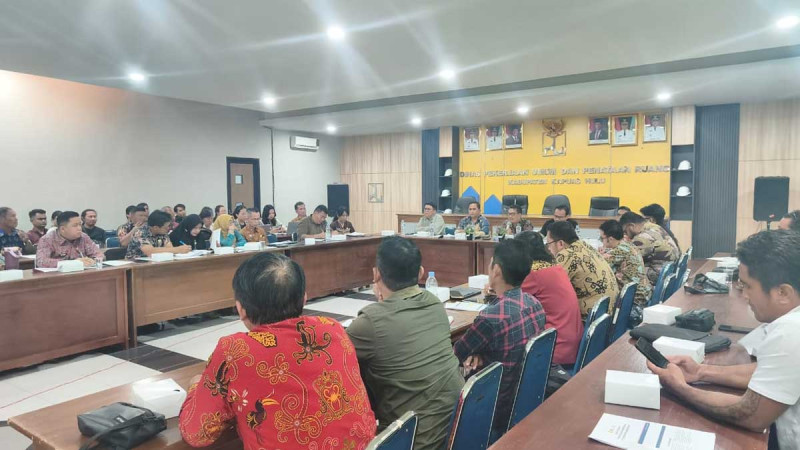
“Indonesia has a land area of 187 million hectares. Two-thirds of it is designated as forest area. However, from the beginning, the demarcation between forested and non-forested areas has never been clear,” Sadino stated during a discussion held by the Doctoral Program in Law at the Faculty of Law, Pancasila University, attended by InfoSAWIT in early May 2025 in Depok.
He noted that the designation of forest areas since the 1950s has led to various problems, particularly due to conflicts with government administrative structures. In Java, everything may be orderly because it is managed by Perhutani. However, outside Java, the situation is much more complex.
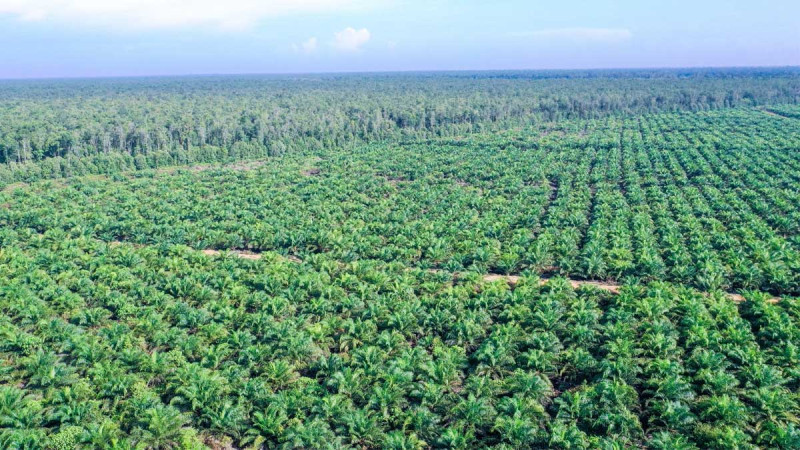
“When we talk about our forests, there are 43 million hectares involved in tenure conflicts. And about 32 million hectares of forest areas, in fact, no longer have forests. We are talking about forest areas based on location, not just vegetation cover. The function of a forest is determined by its cover, not just its status on a map,” he explained.
Sadino also revealed that the designation of forest areas is often not accompanied by complete legal processes such as boundary delineation and official designation. As a result, many communities—including transmigrants in the Aspekpir program who already have certificates—suddenly find themselves claimed to be within forest areas.
“This is not just about administrative overlap. It concerns citizens' rights. When certified land is included in forest areas, it becomes a disaster for both communities and businesses. They cannot access financing because their legal status is flawed,” he emphasized.
In Sadino's view, the Forest Area Control Task Force must be cautious in executing its mandate. “This task force cannot operate with the same approach as before. They must involve a strong verification process, not just refer to indicative maps. If land is taken over and then cooperated on, but its legal status is not clear, it will lead to serious legal defects.”
Sadino also highlighted the need for a paradigm shift. He believes that Presidential Regulation No. 5 of 2025 will be a significant test—whether it is truly a sustainable solution or merely a legal guise for takeover.
“If we want change, then forest area governance must be built from the ground up, with complete legal certainty. We must not destroy the foundations of justice for communities and businesses in the name of environmental protection,” Sadino concluded.
Meanwhile, Professor Agus Surono, a law professor at Pancasila University, assessed that this regulation has the potential to conflict with fundamental principles in the constitution, the Job Creation Law, and several other forestry regulations. (T2)
For more details, read the May 2025 edition of InfoSAWIT Magazine.