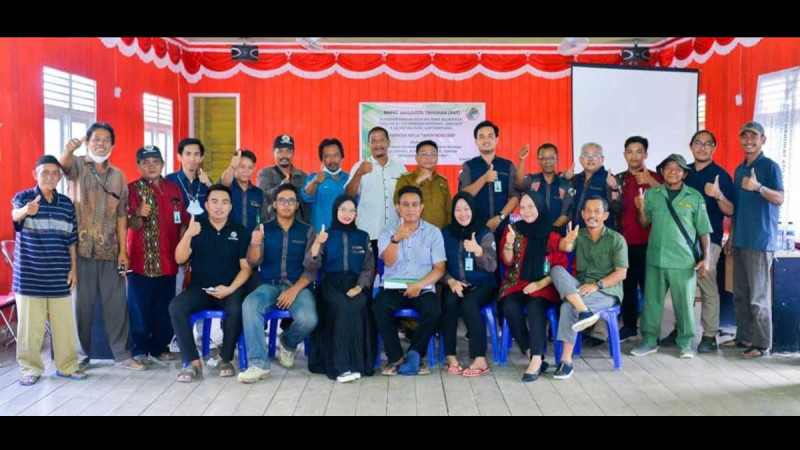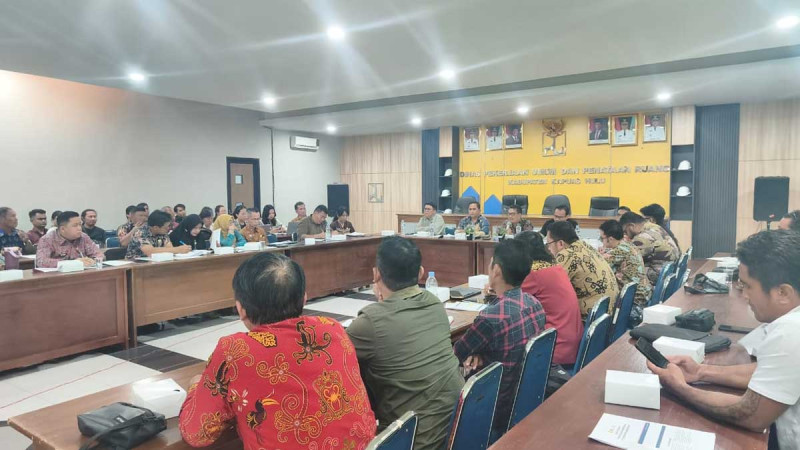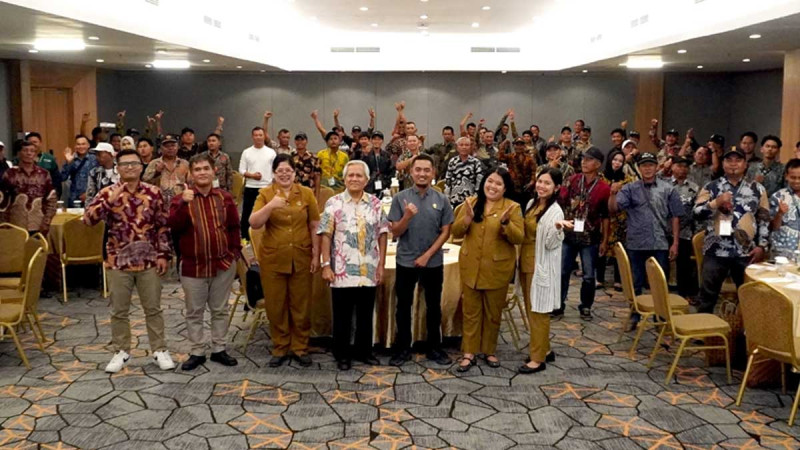
InfoSAWIT, MEDAN – A total of 61 independent palm oil farmers and their assistants from Batubara Regency, North Sumatra, participated in a Technical Training on Palm Oil Cultivation as part of the Human Resource Development Program for Palm Oil Plantations (SDM-PKS) for 2025. The training, held from June 16 to 20, 2025, at the AIHO Hotel in Medan, was supported by the Palm Oil Plantation Fund Management Agency (BPDP) and the Directorate General of Plantations (Ditjenbun) under the Ministry of Agriculture of the Republic of Indonesia.
The event was officially opened by Darmansyah Basyaruddin, Chairman of the SDM PKS Development Committee, who emphasized the importance of enhancing farmers' capacities as a prerequisite for achieving optimal productivity and meeting sustainability standards. He referenced the Plantation Law No. 39 of 2014, which mandates the strengthening of knowledge and skills among farmers.
"The productivity of Indonesia's smallholder palm oil plantations is currently very low, averaging around 1.5-2 tons/ha/year of CPO, compared to a potential of 6 tons/ha/year," Darmansyah stated in an official release received by InfoSAWIT on Monday, June 23, 2025. "Through this training, we hope that farmers can apply appropriate and sustainable cultivation techniques, leading to a significant increase in their harvests."
Furthermore, Darmansyah addressed the obligation of the Indonesian Sustainable Palm Oil (ISPO) certification, which will be fully implemented starting in 2025. "ISPO requires management of plantations to meet certain standards. Therefore, this training is not just about capacity building, but also serves as preparation for legality and sustainability," he added.
The training, facilitated by a team of trainers from PT Koompasia Enviro Institute (KEI), combined theoretical and practical approaches. The curriculum was divided into five intensive classes, covering various aspects of palm oil cultivation on mineral land, including regulations and policies, seed selection, planting techniques, and maintenance as well as pest and disease control.
The interactive learning methods were designed to help participants absorb the material more effectively. Participants not only learned in the classroom but also engaged in hands-on fieldwork. The highlight of the training was a field trip on Friday, June 20, 2025, to the PT Eastern Sumatra Indonesia plantation, Bukit Maraja Estate, in Gunung Malela, Simalungun Regency.
During this visit, participants had the opportunity to engage in direct discussions with plantation managers to deepen their understanding of palm oil management, covering stages from Non-Producing Plants (TBM) to Producing Plants (TM) and seed units. The interactive discussions on-site added a practical dimension to the training and enriched participants' insights into the application of cultivation standards at the corporate level.
"This is a valuable experience. We can see firsthand how the plantation is managed professionally. There are many lessons we can apply to our own farms," said one of the training participants.
With support from state institutions and professional training providers, the SDM-PKS 2025 Program is expected to not only serve as a momentum for individual capacity enhancement but also contribute to systemic transformation in the governance of smallholder plantations. If implemented consistently, such training is believed to be a starting point for improving the welfare of independent farmers and their contributions to the national sustainable palm oil system. (T2)