InfoSAWIT, JAKARTA — The future of the national palm oil industry cannot solely rely on the strength of large corporations. Behind the 16 million hectares of palm oil land in Indonesia, over 40% is managed by smallholder farmers. However, many of them remain trapped in an imbalanced supply chain, facing uncertain selling prices and dependence on middlemen.
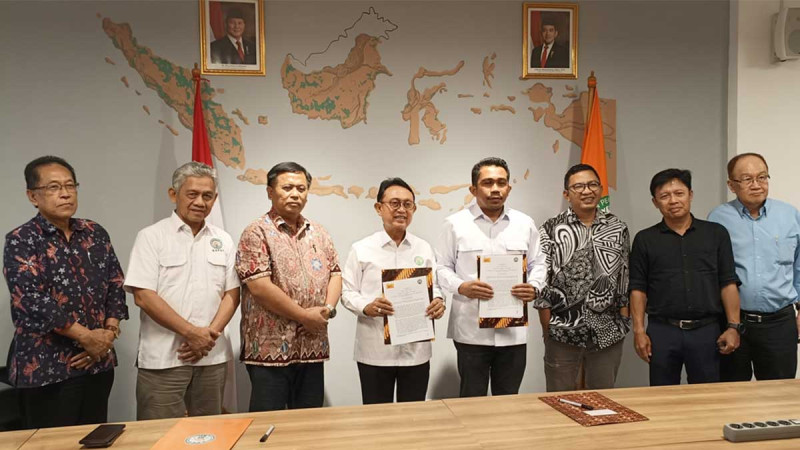
In response to this challenge, the Indonesian Palm Oil Entrepreneurs Association (GAPKI) and the Palm Oil Farmers Union (SPKS) signed a memorandum of understanding (MoU) marking a new chapter in the relationship between entrepreneurs and farmers. The signing took place on June 17, 2025, at GAPKI's headquarters in Jakarta, conducted by GAPKI Chairman Eddy Martono and SPKS Chairman Sabarudin.
This collaboration is not merely ceremonial; it is a strategic agreement aimed at strengthening the institutional capacity of farmers, encouraging partnerships with companies, and supporting sustainability certification. For SPKS, this is a historic moment: a new bridge between the business world and the farming community that has long operated independently.
Breaking Free from Middlemen, Building Direct Access
One of the key points of this collaboration is to establish cooperative partnerships between farmers and GAPKI member companies, so that farmers no longer depend on intermediaries who often suppress prices. "Many SPKS cooperatives have been formed, but they still sell their harvests through middlemen. We want to change that. Farmers should be able to partner directly with companies, with a fair and transparent system," Sabarudin stated in an official statement reported by InfoSAWIT on Monday (June 23, 2025).
With over 76,700 members across 22 districts and 11 provinces, SPKS has long been active in supporting palm oil farmers through Good Agricultural Practices (GAP) training, strengthening cooperatives, and assisting in the People's Palm Oil Rejuvenation (PSR) program. Now, through this collaboration, SPKS aims to expand its impact, particularly in supporting farmers to achieve ISPO certification in accordance with Presidential Regulation No. 16 of 2025.
GAPKI Chairman Eddy Martono emphasized that this partnership reflects the spirit of mutual cooperation between entrepreneurs and farmers. "We want SPKS member farmers to be stronger institutionally, more economically independent, and better prepared to meet global demands," he stated.
GAPKI also welcomes SPKS's commitment to sustainability. With this collaboration, training and technology transfer to farmers will be expanded, including facilitating production tools and sales systems that are more beneficial to farmers. "This is not just about certification or documents. It's about real change on the ground. GAPKI and SPKS will ensure this transformation occurs with principles of equality and sustainability," Eddy added.
In addition to economic aspects, the partnership between GAPKI and SPKS also promotes improved governance of the national palm oil industry. Both parties agreed to build a more transparent, equitable system that aligns with sustainable development principles. This step addresses the increasing global market pressure regarding environmental issues, product traceability, and farmers' rights. GAPKI sees collaboration with SPKS as a way to strengthen Indonesia's palm oil industry's position to compete ethically and credibly on the international stage.
"We cannot go it alone. The palm oil industry will thrive if entrepreneurs and farmers support each other, trust each other, and benefit together," said Eddy. For SPKS, this collaboration also provides a space to accelerate farmers' transformation towards global standards. "We believe that smallholder palm oil can become a significant force if supported by access, knowledge, and justice," Sabarudin stated.
He added that SPKS is ready to be an active partner in ISPO assistance, expanding PSR, and strengthening cooperatives as the backbone of farmers' economies. Through this collaboration, GAPKI and SPKS hope to create a system that not only benefits large companies but also empowers farmers as key actors in the national palm oil supply chain.
Sustainable palm oil is no longer just an aspiration but a commitment that is beginning to be built from the ground up—from the farmers' fields that have long been unheard. Now, with GAPKI's support, that voice is becoming louder and more directed. (T2)