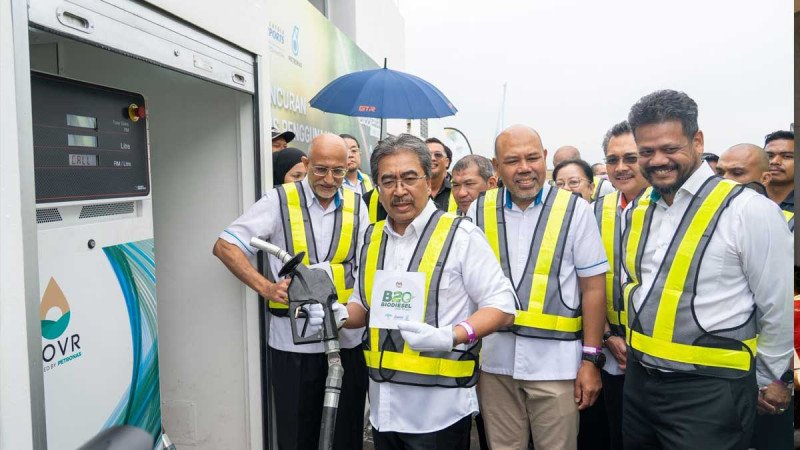
InfoSAWIT, KUALA LUMPUR — Malaysia has reaffirmed its commitment to sustainable energy by launching a pilot project for the use of B20 palm oil biodiesel in ground support equipment (GSE) at Kuala Lumpur International Airport (KLIA). This initiative, which began in February 2025, marks a significant milestone in the application of bioenergy based on local commodities in the aviation sector.
The initiative is spearheaded by the Malaysian Ministry of Plantation and Commodities (KPK) in collaboration with strategic partners such as Petronas Dagangan Berhad, Malaysia Airports Holdings Berhad (MAHB), and Syarikat Teras Kembang Sdn Bhd.
Minister of Plantation and Commodities, Datuk Seri Johari Abdul Ghani, described the launch as a historic step, as it is the first time B20 biodiesel has been officially used for GSE operations at Malaysian airports.
“This project is a tangible proof of our commitment to expanding the use of sustainable energy based on local commodities. With the implementation of B20 at KLIA, the entire fuel supply chain in the airport environment has begun its transformation towards sustainability,” Johari stated, as quoted by InfoSAWIT from the official Facebook page of the Ministry of Plantation and Commodities Malaysia on Friday, June 20, 2025.
GSE vehicles, such as baggage transport trucks, ground service vehicles, and internal airport buses, play a crucial role in daily operations at international airports. The use of B20 biodiesel is expected to reduce carbon emissions from these vehicles, aligning with Malaysia's targets for a low-carbon economy.
According to MPOB, the B20 biodiesel used is a blend of 20% palm methyl ester and 80% diesel, which has been proven safe for conventional diesel vehicles. Previously, the use of B20 biodiesel had been expanded in the land transportation sector in several states and is now making its way into the aviation sector.
“This is not just about emission reduction; it is also about maximizing the added value of Malaysian palm oil, which has long been the backbone of the country's economy,” Johari explained.
As the second-largest palm oil producer in the world, Malaysia continues to seek ways to enhance value through product diversification, including the development of biofuels. The launch of the B20 biodiesel project at KLIA is seen as a step forward in demonstrating to the world that palm oil can be a clean and environmentally friendly energy solution.
This project also aligns with the national strategy to expand the use of renewable fuels and strengthen the position of palm oil in the global value chain. In addition to KLIA, the government plans to expand this implementation to other airports if the pilot results prove successful and efficient.
“This is not the end, but the beginning of a significant movement towards a greener air transportation system,” concluded Johari Abdul Ghani. (T2)