InfoSAWIT, JAKARTA – Indonesia's opportunity to strengthen its palm oil exports to the European Union (EU) is widening as negotiations for the Indonesia-European Union Comprehensive Economic Partnership Agreement (IEU-CEPA) near completion, with over 90 percent of substantive agreements reached.
A meeting between Coordinating Minister for Economic Affairs Airlangga Hartarto and European Union Commissioner for Trade and Economic Security Maroš Šefčovič on June 6, 2025, marked a significant point in the final phase of the IEU-CEPA negotiations. During the meeting, both parties agreed that only a few technical issues remain to be finalized at the Chief Negotiators and Working Groups level.
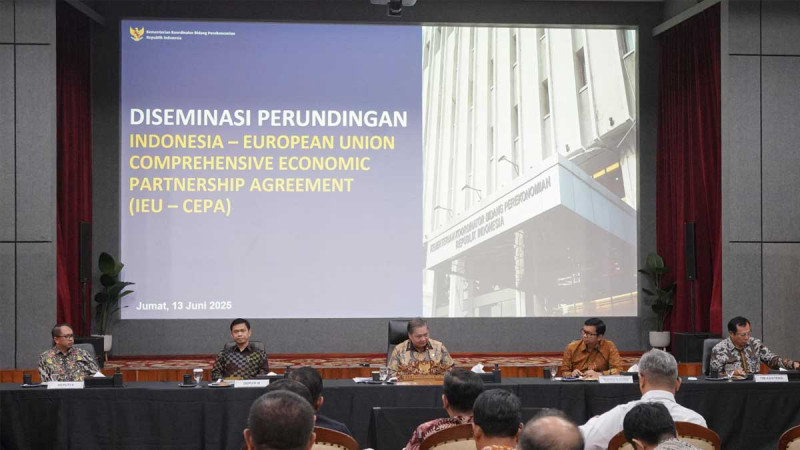
“The substantive negotiation process of IEU-CEPA has entered its final stage, and almost all substance has been agreed upon. We hope that during Commissioner Maroš's visit to Indonesia in September, a memorandum of understanding can be signed,” Airlangga stated at the IEU-CEPA Dissemination Forum in Jakarta, as reported by InfoSAWIT on June 15, 2025.
One crucial issue of concern in this agreement is the potential increase in palm oil and its derivative exports to the EU market. So far, this commodity has been the backbone of Indonesia's trade with the EU but still faces challenges from tariffs and strict environmental regulations.
With the completion of IEU-CEPA, export tariffs for several leading Indonesian commodities—including palm oil—which currently can reach 8-12 percent, are expected to drop to 0 percent. This is believed to enhance the competitiveness of Indonesian palm oil products in the European market.
“If our exports increase by 50 percent, it would be on par with Vietnam or Malaysia this year. If we push for this, then export tariffs could drop to 0 percent,” Airlangga remarked.
In 2024, the trade value between Indonesia and the EU reached USD 30.1 billion, with Indonesia recording a surplus of USD 4.5 billion—significantly up from USD 2.5 billion in 2023. Among these figures, palm oil and its derivatives are major contributors to exports, alongside products such as copper ore, fatty acids, footwear, and rubber products.
Although Indonesia's exports to the EU had declined after reaching a record USD 21.53 billion in 2022, 2024 showed a recovery with export values increasing to USD 17.35 billion. The EU itself accounts for about 6.5% of Indonesia's total exports.
The EU has also shown its commitment to opening broader market access for Indonesia's leading commodities, including palm oil, footwear, textiles, and canned fish. In the renewable energy sector and electric vehicle development, the EU has expressed readiness to collaborate more closely with Indonesia.
However, Airlangga emphasized that these opportunities must be accompanied by domestic readiness. “Indonesia needs to ensure the readiness of its domestic industry, strengthen the supporting export ecosystem, and harmonize cross-sector policies,” he stated.
Support from independent studies such as those from CSIS (2021) and the Sustainability Impact Assessment by the European Commission (2020) adds optimism regarding the economic benefits of IEU-CEPA. Both studies project an increase in Indonesia's GDP by 0.19%, an additional national income of USD 2.8 billion, and a surge in exports of up to 57.76% within three years after implementation.
IEU-CEPA is expected to be a significant leap for Indonesia, not only in strengthening trade relations with Europe but also in paving the way for national palm oil to establish a stronger footprint in the global market. If ratification by the 27 EU member states and Indonesia can be completed soon, a new chapter in Indonesia's trade diplomacy will soon open—with palm oil as one of its stars.
This dissemination event was also attended by officials from the Coordinating Ministry for Economic Affairs and the Ministry of Trade, as well as industry players who have long awaited broader access to the EU market. (T2)