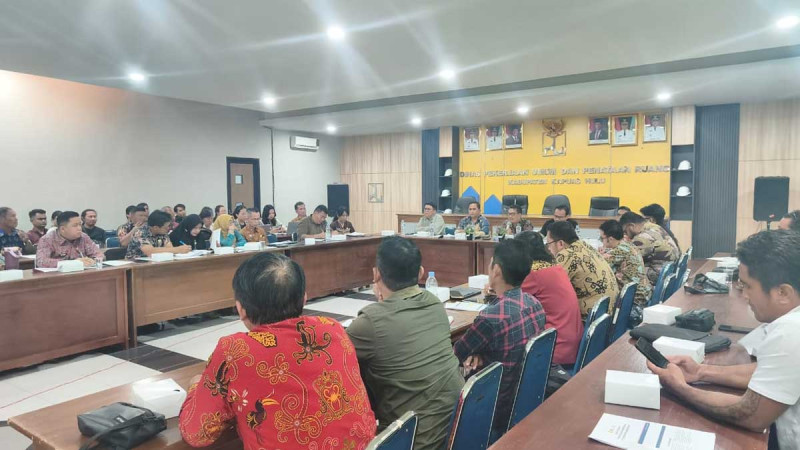
InfoSAWIT, PALEMBANG – A total of 119 palm oil farmers and cooperative managers from various districts in Ogan Komering Ilir (OKI), South Sumatra, participated in a Technical Training on Palm Oil Harvesting and Post-Harvest Practices held from June 10 to 14, 2025, at Hotel Emilia, Palembang. This initiative is part of the national program for the Development of Human Resources in the Palm Oil Sector (SDM PKS), funded by the Palm Oil Plantation Fund Management Agency (BPDP) and organized by the Directorate General of Plantations of the Ministry of Agriculture of the Republic of Indonesia, with technical implementation by IPB Training.
The training responds to the urgent need to enhance the technical capacity of palm oil farmers in harvesting and post-harvest practices, which have been critical points in the production chain of smallholder palm oil. The approach combines classical learning, field practice, and group discussions based on participants' experiences.
Agus Darwa, Head of the South Sumatra Plantation Office, officially opened the event, stating that South Sumatra is one of the provinces with the largest palm oil plantations in Indonesia, covering 1.3 million hectares, most of which are managed by smallholder farmers.
“Harvesting that does not meet standards can lead to fruit damage, loss of yield, and even accelerate land degradation. Through this training, we want farmers to be able to harvest correctly, efficiently, and sustainably for future generations,” Agus emphasized in an official statement received by InfoSAWIT on June 16, 2025.
He added that out of approximately 1.2 million palm oil farmers in South Sumatra, only 2,500 have received training this year. Therefore, participants in this training are also expected to become education ambassadors for farmer groups in their respective areas.
This training is part of the South Sumatra Plantation Office's strategy to build a more adaptive and competitive smallholder palm oil sector through resilience, acceleration, and education approaches.
Muhammad Sigit Susanto, M.M., LCPC, Director of IPB Training, emphasized that this training is not just about transferring knowledge but also about building farmers' awareness of the importance of scientific and measured harvest management.
“Many farmers are not aware that small mistakes in harvesting can have significant impacts on fruit quality. Through this training, we want them to not only know how to do it but also understand why it is important,” Sigit stated.
The training was conducted in a participatory atmosphere, with participants divided into four classes to optimize interaction and material depth. Topics covered included harvesting philosophy and regulations, fruit maturity criteria and their impact on quality, production estimation, harvesting organization systems at the plantation level, correct harvesting and post-harvest techniques, and hands-on harvesting simulation practice in the field.
The instructors for this training included six experts from IPB who have long been mentoring palm oil farmers in various regions, such as Dr. Ir. Haryadi, M.S., Ir. Sri Harmawan, Ir. Sofyan Zaman, M.P., Dr. Ir. Supijatno, M.S, Dr. Cecep Ijang Wahyudin, S.P., M.Si., and Abdul Rosid, Amd., S.E. They delivered material not only from a technical perspective but also through adult learning approaches (andragogy), making it suitable for the character of field farmers.
Interestingly, this training also received support from the BPPSDMP of the Ministry of Agriculture, which, through a virtual address by Dr. M. Apuk Ismane, stated that improving the quality of farmers is the foundation for the future transformation of the palm oil industry.
“We are not just talking about production and tonnage. We are talking about the people behind the plantations. If they are equipped with the right knowledge and working methods, the Indonesian palm oil industry will be stronger and more independent,” Apuk explained.
IPB Training noted that the success of this training will be measured by its direct application in the fields and its collective impact on improving product quality, labor efficiency, and reducing losses.
“Knowledge only becomes meaningful when applied. And when farmers change, the entire system will move,” Sigit concluded. (T2)