InfoSAWIT, JAKARTA - In a significant recognition of its ongoing commitment to eradicating child labor in the palm oil industry, the Indonesian Palm Oil Entrepreneurs Association (GAPKI) was honored with a special award from the Partnership for Action Against Child Labour in Agriculture (PAACLA) on June 12, coinciding with World Day Against Child Labour. This accolade underscores GAPKI's dedication to promoting child labor-free practices within the palm oil sector.
PAACLA, a collaborative platform initiated by the National Development Planning Agency (Bappenas) alongside various stakeholders, aims to coordinate efforts to eliminate child labor in agriculture, particularly in rural areas. Recent data from the International Labour Organization (ILO) reveals that approximately 138 million children are engaged in child labor worldwide, with 61% of them residing in rural regions.
The award was presented during a commemorative event held at the Aryaduta Hotel in Jakarta, where Sumarjono Saragih, Chairman of GAPKI's Human Resource Development Division and Founder of Worker Initiatives for Sustainable Palm Oil (WISPO), accepted the honor. "This award is a testament to the fact that the Indonesian palm oil industry can and has contributed to creating a safe and child-friendly work environment," Sumarjono stated in an interview with InfoSAWIT.
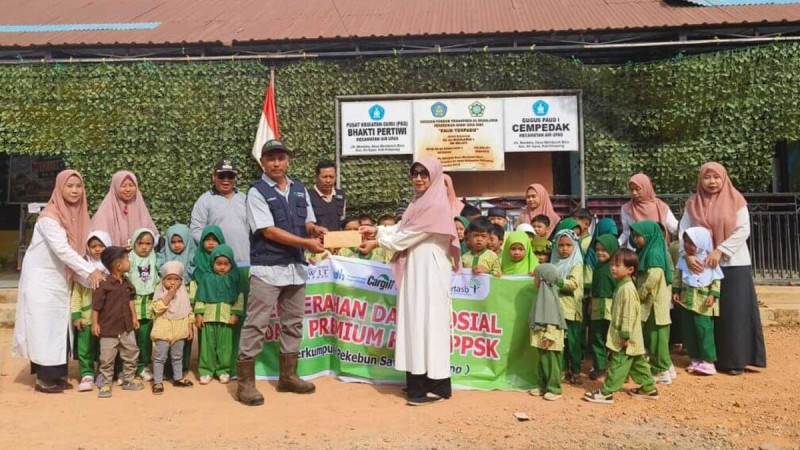
He emphasized that while the regulation against child labor is a normative standard, GAPKI is advocating for a broader vision—one that promotes child-friendly palm oil practices. Many GAPKI member companies have taken proactive steps by providing access to education, healthcare facilities, childcare services, and other essential infrastructure to support children's growth and development in plantation environments.
Furthermore, GAPKI actively campaigns for child-friendly palm oil practices through various discussion forums, seminars, and publications. Since 2021, the organization has launched the "Child-Friendly Indonesian Palm Oil Guide" (SIRA) and expanded its educational outreach in 2024 through educational videos distributed across palm oil-producing regions.
"We aim for the entire palm oil industry ecosystem and rural economy to understand the importance of building economic activities that respect, protect, and fulfill children's rights," Sumarjono explained.
Globally, the fight against child labor has shown positive progress, with a reduction of 20 million child laborers over the past five years. In Indonesia, similar advancements are reflected in various government policies and programs, such as the roadmap for eliminating child labor and the Child-Friendly City/District initiative.
However, Sumarjono cautioned that this success cannot rely solely on the industrial sector. Greater, collaborative, and structured efforts are necessary, highlighting the crucial role of local leaders in regulatory and driving functions. "GAPKI has been and will continue to be active. But GAPKI alone is not enough. Local leaders need to be change-makers, orchestrating collective efforts to make child-friendly palm oil the norm," he concluded.
The award from PAACLA serves as a reminder that the sustainability of Indonesia's palm oil industry is not just about production and environmental concerns, but also about ensuring that future generations grow up in safe, healthy, and opportunity-rich environments as the nation aims for a prosperous Indonesia by 2045. (T2)