InfoSAWIT, JAKARTA – The government has designated the palm oil industry as a pilot project in its efforts to build a national technology downstreaming ecosystem that prioritizes the welfare of the people. In collaboration with the Ministry of Higher Education, Science, and Technology (Kemdiktisaintek), the Indonesian Palm Oil Council, and various cross-sector partners, the focus of research and innovation development is now directed towards tangible impacts in the field.
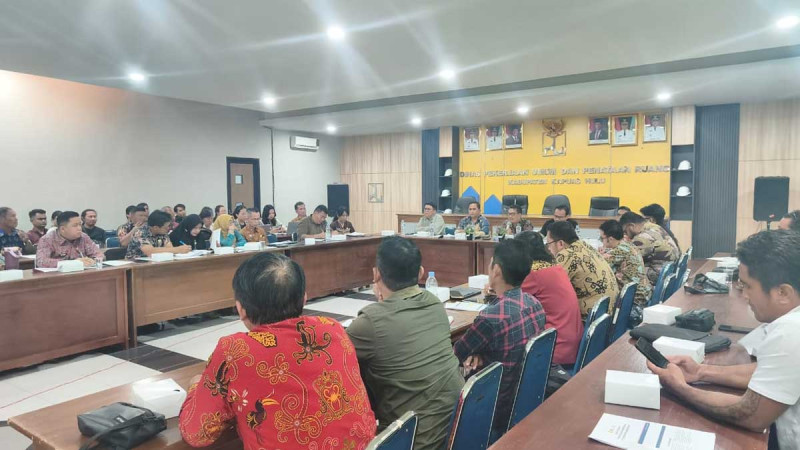
Minister of Higher Education, Science, and Technology, Brian Yuliarto, emphasized that palm oil is a strategic product that has yet to undergo a comprehensive downstreaming process. “We are making this a pilot project, and we will oversee it until it is fully realized,” he stated during a cross-sector meeting held on Thursday.
During the meeting, Brian highlighted the importance of developing low-emission palm oil processing technologies and implementing an inclusive business model based on farmer cooperatives. This approach not only focuses on end products but also aims to restructure supply chains and local economic systems that have yet to be touched by technological innovation.
According to InfoSAWIT, as reported by Kemdiktisaintek on Friday (June 13, 2025), one of the research achievements now entering the commercialization stage is the low-temperature, water-free palm oil processing technology developed by a consortium including ITB, MIPA UI, PT NCA, and Agro Investama. This technology produces products such as RBMO (Refined Bleached Minimized-Olein) with very low 3-MCPD content, meeting international standards.
In the future, this technology will be introduced to independent farmers' plantations in the form of energy-efficient mini plants that do not produce liquid waste. The business scheme is designed as shared ownership by farmers through cooperatives. Over a certain period, the management of the factory will be fully transferred to the farmers.
Kemdiktisaintek notes that approximately 34.8% of the 6.88 million hectares of smallholder palm oil plantations need rejuvenation to enhance productivity. With replanting projects and the construction of mini plants on over 1 million hectares of land, the government estimates an investment requirement of IDR 171 trillion.
However, the potential profits are deemed commensurate. This project aims to increase palm oil sector revenues from IDR 61.5 trillion to IDR 142.7 trillion per year by 2029, while also creating jobs for over 16 million people. Additionally, this low-emission technology opens up carbon trading opportunities, with an estimated value of USD 15 per ton of carbon—where the Chinese market is ready to absorb up to 30 million tons.
The nutritional aspects of the community are also included in the downstream agenda. Derivative products from palm oil, such as vitamin E and tocopherols, are being prepared to support food fortification programs aimed at combating stunting, in collaboration with the national food industry.
To oversee the implementation of this project, the Minister of Higher Education, Science, and Technology has instructed the formation of a special team to formulate an implementation roadmap, technology specifications, economic impact analysis, and synergy schemes between the government, business sector, and higher education institutions.
This palm oil downstreaming project marks a new direction for national technology policy—research that addresses the real challenges of the nation and prioritizes the welfare of the people as the ultimate goal of innovation. (T2)