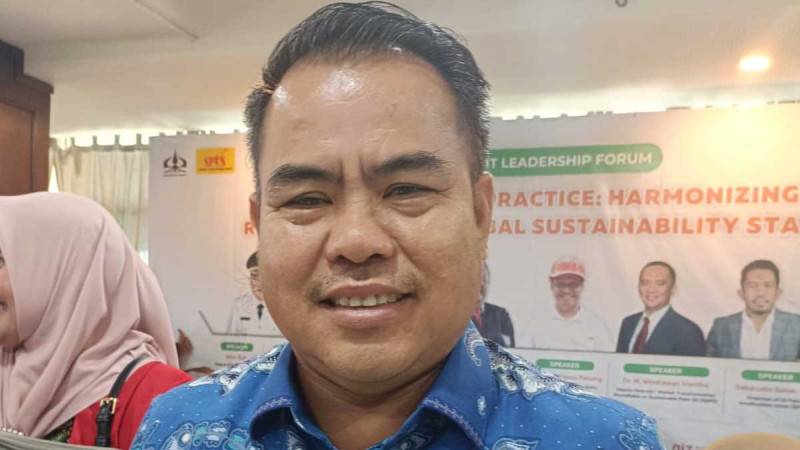
InfoSAWIT, JAKARTA – The Regent of Sekadau, Aron, emphasized the significant positive impact of palm oil investments on local communities. Speaking at the Thought Leadership Forum held at Trisakti University on Tuesday (May 27, 2025), Aron underscored how the sector not only boosts the economy but also provides employment and empowers people in rural areas.
“We support palm oil investment because it has proven to create jobs and empower communities, especially in Sekadau,” Aron stated. He also stressed the importance of smallholders and Indigenous Peoples in the palm oil value chain. “We want to ensure that this growth provides room for smallholders and Indigenous communities to be key players, not mere spectators,” he added.
Aron called for the acceleration of palm oil-based national energy policies, highlighting that developing biodiesel from crude palm oil (CPO) can enhance the value of fresh fruit bunches (FFB) at the farm level. “We hope the central government will soon push for mass-scale CPO-to-biodiesel conversion,” he said.
As a regional commitment, Aron cited the issuance of Regent Regulation No. 26 of 2022 on the Regional Action Plan for Sustainable Palm Oil. This policy includes support for farmers through programs such as the distribution of superior seedlings, ISPO certification assistance, land legality programs via PTSL and TORA, and the development of agricultural infrastructure.
Sekadau has also officially recognized three Dayak Indigenous communities as local wisdom-based protected areas, a step seen as crucial to ensuring that palm oil development respects Indigenous rights.
Chairman of the Palm Oil Farmers Union (SPKS), Sabarudin, praised the Sekadau government’s inclusive approach. “We need more regional leaders like this. It's time for smallholder palm oil to be the backbone of the industry, not a complement,” he said.
Sabarudin also highlighted the ongoing lack of funding support for the ISPO certification process, particularly for smallholders. He reminded that, under Presidential Regulation, certification costs should be borne by the Palm Oil Plantation Fund Management Agency (BPDPKS). “This must be realized immediately so that farmers are not burdened,” he urged.
The forum, attended by various stakeholders, served as a strategic platform to advocate for policies that favor smallholder farmers and reinforce palm oil’s contribution to sustainable regional development. (T2)