InfoSAWIT, JAKARTA – Indonesia’s palm oil industry faces a growing supply challenge as domestic and global demand rises while opportunities to expand plantation areas become increasingly limited. Improving productivity, strengthening human resources and accelerating agricultural innovation are emerging as key priorities for sustaining the sector’s contribution to the economy.
Bandung Sahari, head of communications at the Indonesian Palm Oil Association (GAPKI), said the industry contributes to the national economy through more than crude palm oil (CPO), with its derivatives serving the food, industrial and energy sectors.
Indonesia produces approximately 49 million metric tonnes (MT) of the world’s estimated 85 million MT of palm oil, accounting for around 58% of global output. Bandung also noted that Indonesia supplies approximately 22% of global vegetable oil.
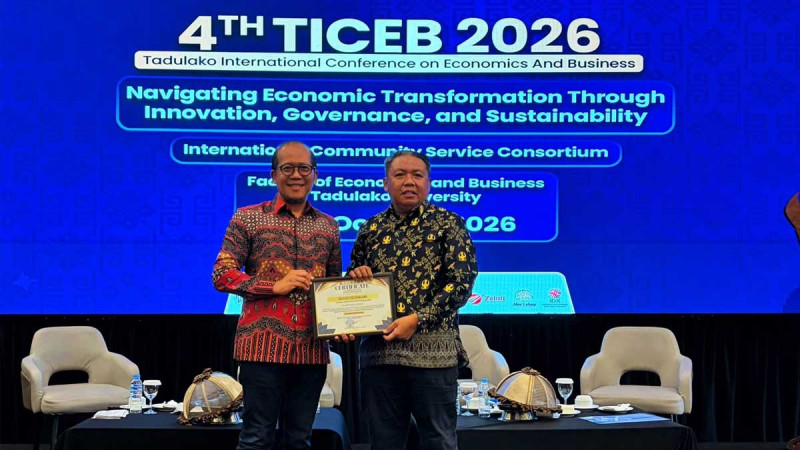
However, without significant production growth, Indonesia could face a palm oil supply deficit of up to 27 million MT as it seeks to meet domestic demand while maintaining exports, he said in a statement received by InfoSAWIT on Thursday, October 8, 2026.
Productivity Becomes Increasingly Critical
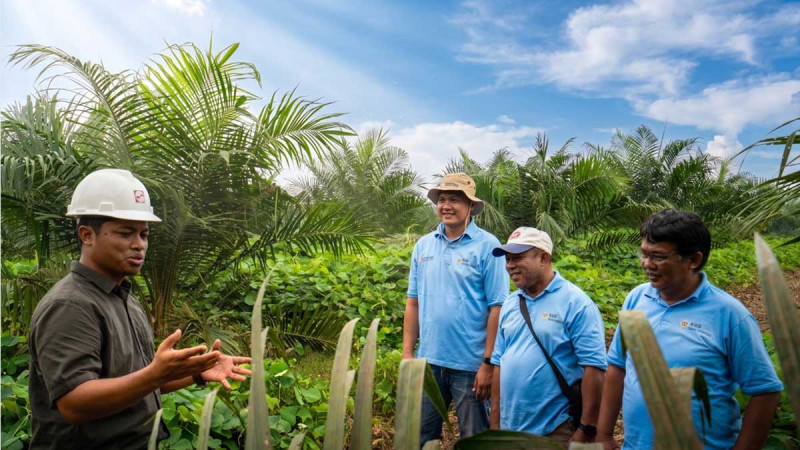
With plantation expansion constrained, Bandung argued that improving yields from existing plantations must become a central industry priority. Domestic CPO productivity would need to reach approximately five MT per hectare annually to help meet future demand.
Achieving this target requires better agricultural technology, stronger farmer capabilities and investment in education and innovation. Protecting productive agricultural land from conversion to non-agricultural uses is also important.
At the same time, sustainability requirements present additional challenges. Efforts to reduce emissions and strengthen environmental practices can increase production costs, potentially affecting the competitiveness of plantation companies and placing additional pressure on smallholders.
Balancing Downstream Investment and Raw Material Supply
Bandung cautioned that Indonesia’s focus on downstream processing must be accompanied by stronger investment in upstream production.
“However advanced downstream innovation may be, it will lose its meaning if we do not have sufficient raw material supplies to support that growth,” he said.
He called for closer integration between agriculture, industry and services, alongside infrastructure investment and stronger farmer institutions to improve efficiency and create greater economic value.
Indonesia’s palm oil industry has also continued to pursue sustainability initiatives, including commitments to eliminate deforestation, protect peatlands and respect human rights.
As Indonesia moves toward its Golden Indonesia 2045 vision, the challenge will be to secure sufficient palm oil supplies without compromising sustainability. Higher productivity, technological innovation and stronger smallholder capacity will be essential to achieving that balance. (T2)