InfoSAWIT, JAKARTA – Indonesia's palm oil industry is entering a new era of environmental governance following the issuance of the Ministry of Environment/Environmental Control Agency Regulation (Permen LH/BPLH) No. 6 of 2026 on Environmental Supervision and Administrative Sanctions. The new regulation strengthens monitoring mechanisms, expands the authority of environmental inspectors, and introduces stricter administrative sanctions for businesses that fail to comply with environmental obligations.
According to the regulation obtained by InfoSAWIT on Monday (July 6, 2026), the new policy replaces Ministry of Environment and Forestry Regulation No. 14 of 2024, which is considered no longer aligned with the latest legislative developments. The government said the updated framework aims to improve environmental supervision through greater transparency, efficiency, effectiveness, and legal certainty for businesses.
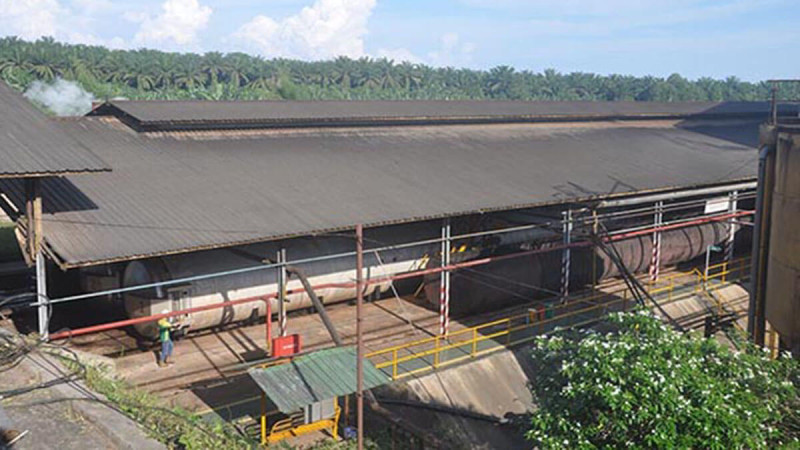
The regulation is particularly significant for Indonesia's palm oil sector, where plantation companies and processing mills are required to comply with a wide range of environmental obligations, including environmental approvals, wastewater treatment, emission control, waste management, and continuous implementation of environmental management and monitoring plans.
Under the new framework, environmental inspections will become more systematic and risk-based. Authorities will utilize licensing data, corporate compliance records, the Performance Rating Assessment Program (PROPER), and integration with the Online Single Submission (OSS) system to determine inspection priorities and monitoring frequency.
The regulation also strengthens the role of Functional Environmental Supervisory Officers (PPLH), granting them broader authority to conduct on-site inspections, collect samples, examine operational facilities, document field findings, and halt certain violations in accordance with prevailing laws.
For palm oil plantations and mills, compliance assessments will no longer rely solely on administrative documentation. Instead, the government will establish a comprehensive profile for each business based on risk level, investment value, compliance history, operational complexity, pollution control measures, and potential environmental impacts. These factors will determine the intensity and frequency of inspections.
Key environmental aspects subject to closer scrutiny include palm oil mill effluent management, air emission control, hazardous and non-hazardous waste handling, peatland protection, forest and land fire prevention, biodiversity conservation, and fulfillment of obligations stipulated in Environmental Approvals.
Beyond strengthening supervision, the regulation also introduces a more robust administrative enforcement mechanism. Sanctions may range from written warnings and government enforcement measures to administrative fines, suspension of business licenses, and even revocation of operating permits for companies that fail to rectify violations.
One of the most significant provisions allows authorities to impose administrative fines of up to 5 percent of a company's investment value on businesses operating without Environmental Approval or Business Licensing, in addition to penalties for violations related to wastewater discharge or emission standards.
The stricter compliance framework is expected to encourage palm oil companies to strengthen environmental governance from the earliest stages of investment planning through daily operations. Beyond avoiding substantial financial penalties, stronger compliance is increasingly essential for maintaining business sustainability, meeting international market requirements, and preserving Indonesia's competitiveness in the global palm oil trade.
The regulation also authorizes the Minister of Environment/Head of the Environmental Control Agency to assume supervisory authority from regional governments when serious violations occur, local authorities fail to perform their oversight duties, or environmental pollution and damage have widespread and difficult-to-recover impacts.
Spanning 246 pages, Permen LH/BPLH No. 6 of 2026 signals the government's commitment to implementing more rigorous, risk-based environmental supervision backed by stronger law enforcement. For Indonesia's palm oil industry, the regulation represents both a compliance challenge and an opportunity to reinforce sustainability standards amid increasingly stringent global market expectations. (T2)