InfoSAWIT, JAKARTA – Indonesia's non-oil and gas trade continued to demonstrate resilience during the first five months of 2026, with palm oil remaining one of the country's largest export earners despite mounting global economic challenges.
Although Indonesia recorded a trade deficit of US$1.61 billion in May 2026, cumulative trade data for January–May 2026 still showed an overall trade surplus of US$4.03 billion, driven largely by the country's strong non-oil and gas export performance.
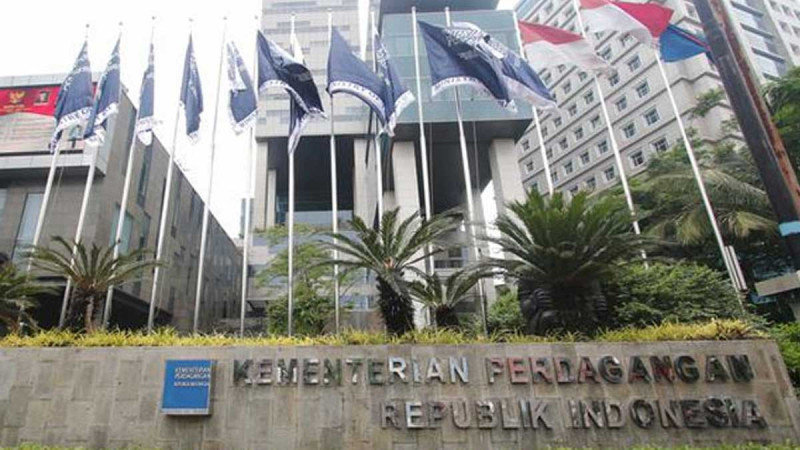
Trade Minister Budi Santoso said Indonesia's non-oil sector continues to serve as the backbone of the country's export performance.
"Although Indonesia recorded a trade deficit in May 2026, cumulatively the country still posted a surplus. This demonstrates the resilience of Indonesia's non-oil trade amid global economic challenges," Budi said in an official statement quoted by InfoSAWIT on Sunday (July 5, 2026).
According to the Ministry of Trade, Indonesia generated a non-oil trade surplus of US$16.31 billion during the January–May period, offsetting the US$12.28 billion oil and gas trade deficit.
In May alone, the oil and gas deficit widened to US$3.76 billion, largely due to higher imports of refined petroleum products valued at US$3.40 billion and crude oil imports worth US$0.70 billion. Natural gas trade, however, still posted a surplus of US$0.35 billion.
Despite the energy sector deficit, Indonesia maintained a US$2.15 billion non-oil trade surplus in May.
Palm Oil Among Top Contributors
Among the strongest contributors to the surplus were:
- Mineral fuels (HS 27): US$2.54 billion
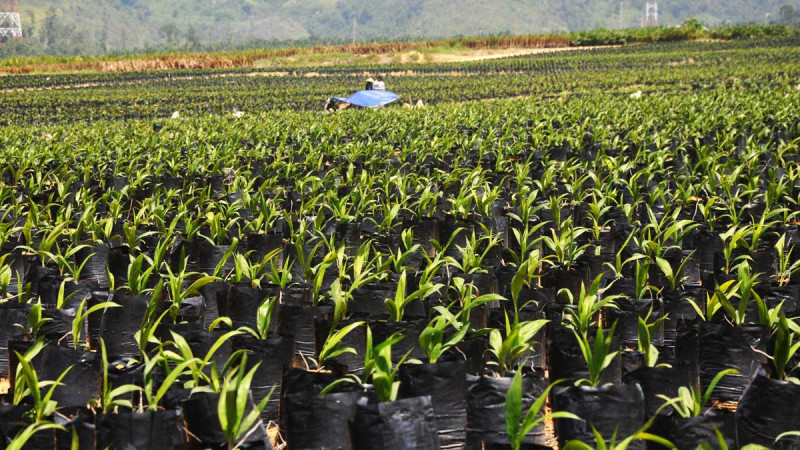
- Animal and vegetable fats and oils (HS 15), dominated by palm oil products: US$2.21 billion
- Iron and steel (HS 72): US$1.38 billion
On a cumulative basis through May 2026, the animal and vegetable fats and oils (HS 15) category remained Indonesia's largest surplus-generating export group, contributing US$13.92 billion, followed by mineral fuels at US$10.88 billion and iron and steel at US$7.09 billion.
The United States remained Indonesia's largest non-oil surplus destination with US$8.47 billion, followed by India at US$5.34 billion and the Philippines at US$3.42 billion.
Manufacturing Continues to Drive Export Growth
Indonesia exported goods worth US$23.20 billion in May 2026, down 8.30% from April and 5.73% from the same month last year.
Nevertheless, cumulative exports during the first five months of 2026 reached US$115.36 billion, representing 3.02% year-on-year growth.
Non-oil exports increased 3.89% to US$110.19 billion, while oil and gas exports declined 12.71% to US$5.17 billion.
Budi noted that the manufacturing sector continues to be the main engine of Indonesia's export expansion, indicating that downstream industrialization policies are adding greater value to domestic products.
During January–May 2026, manufacturing exports expanded 6.80%, supported by strong shipments of aluminium products, nickel and downstream nickel products, as well as organic chemicals.
Conversely, agricultural exports declined 24.95%, mining exports fell 8.14%, and oil and gas exports contracted 12.71% compared to the same period last year.
Export Market Diversification Gains Momentum
Indonesia also recorded strong export growth to several emerging markets during the first five months of 2026. Non-oil exports to Romania surged 409.78%, while shipments to Hong Kong, Egypt, Thailand, and China also posted double-digit growth.
Export expansion was likewise recorded across Central Asia, North Africa, East Asia, South America, and West Africa, reflecting the government's efforts to diversify export destinations and reduce dependence on traditional markets.
For Indonesia's palm oil industry, the latest trade figures once again underline the strategic importance of palm oil products under the HS 15 category, which continue to generate the country's largest non-oil trade surplus and play a crucial role in supporting Indonesia's overall trade balance amid an uncertain global economy. (T2)