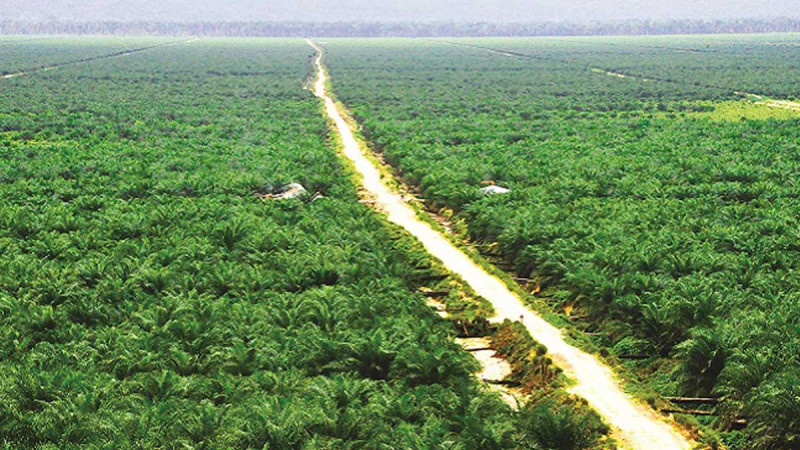
InfoSAWIT, KUALA LUMPUR – The global palm oil industry may face renewed supply challenges in the second half of 2026 as weather forecasters warn of a strengthening El Niño event, raising concerns over production prospects in both Indonesia and Malaysia. A tighter supply outlook could, in turn, provide further support for crude palm oil (CPO) prices in international markets.
According to market research firm CGS International Securities Malaysia, recent discussions with agronomist Dr. Lee Chin Tui indicate that the latest data from the U.S. National Oceanic and Atmospheric Administration (NOAA) points to a 63% probability of a strong El Niño developing between November 2026 and January 2027.
As reported by InfoSAWIT, citing New Straits Times, Lee noted that signs of drier weather conditions could begin emerging as early as July 2026. Historical evidence suggests prolonged dry spells can significantly affect palm oil productivity across Southeast Asia’s major producing regions.
The impact of El Niño on palm oil output has been evident in previous episodes. During the 2016 El Niño event, Malaysia’s CPO production declined by 13.2% year-on-year, while ten major Indonesian plantation companies recorded an average production drop of 13.4%. Indonesia also experienced production contractions of 5.3% in 2019 and 8% in 2024 amid below-average rainfall conditions.
Given that Indonesia and Malaysia collectively account for the majority of global palm oil production, CGS International believes any weather-related disruption could significantly tighten global supplies and strengthen palm oil prices.
Fertilizer Costs Add to Industry Challenges
Beyond climate concerns, plantation companies continue to grapple with rising production costs, particularly fertilizer expenses. Earlier this year, geopolitical tensions involving the United States and Iran contributed to higher urea prices, although costs have eased recently following signs of de-escalation.
Lee cautioned that reducing fertilizer application as a cost-saving measure could prove counterproductive, especially during periods of extreme heat. Elevated temperatures can increase nitrogen losses through volatilization, reducing fertilizer efficiency and ultimately affecting crop performance.
Long-term field trials indicate that suspending fertilizer use may not immediately impact yields. However, mature oil palm trees can suffer average yield declines of around 11% over the following five years compared with plantations that maintain regular nutrient applications.
Water management also remains a critical factor, as adequate soil moisture improves nutrient uptake and helps palms withstand climate-related stress.
Fresh Fruit Bunch Output Shows Early Weakness
Although Malaysia’s CPO production reached 7.38 million tonnes during the first five months of 2026, surpassing the same period last year, CGS International believes the headline figure masks emerging production concerns.
The increase was largely supported by stronger oil extraction rates (OER), while fresh fruit bunch (FFB) production actually declined by 3.1% year-on-year.
Lee said Malaysia’s full-year CPO production target of between 19.5 million and 20 million tonnes could prove difficult to achieve. A key benchmark will be whether the industry can sustain monthly production levels of around 1.8 million tonnes throughout the third quarter.
Should weather conditions become drier than expected in the second half of the year, drought-related stress on FFB production could intensify, while normalization of extraction rates may further weigh on overall CPO output.
Biodiesel Demand Continues to Support Market Fundamentals
Despite the weather-related risks, CGS International has maintained its “Overweight” recommendation on Malaysia’s plantation sector. The research house expects palm oil demand to remain supported by biodiesel mandates in both Malaysia and Indonesia, as well as palm oil’s price competitiveness relative to soybean oil.
The firm believes potential supply constraints from Indonesia and Malaysia during late 2026 and 2027 could create a more favorable pricing environment for plantation companies. It also highlighted several producers that appear better positioned to withstand prolonged dry conditions due to stronger operational resilience and premium CPO pricing capabilities. (T2)