InfoSAWIT, JAKARTA – The Indonesian government is accelerating efforts to integrate the palm oil and livestock sectors as part of a broader strategy to strengthen national food security and reduce dependence on imported beef products. Through the Sistem Integrasi Sawit-Sapi (SISKA) program, oil palm plantations are increasingly being positioned not only as economic assets, but also as strategic platforms for integrated food and energy development.
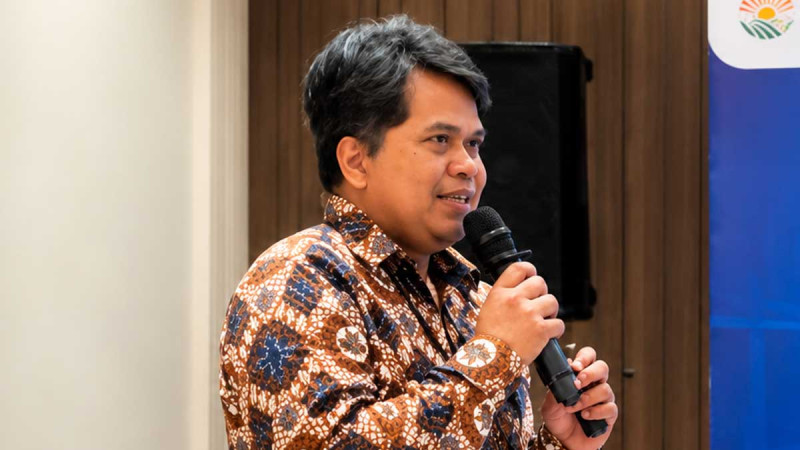
Assistant Deputy for Food Connectivity and Service Development at the Coordinating Ministry for Food Affairs, Radian Bagiyono, said Indonesia’s vast oil palm plantation area offers enormous potential for large-scale cattle development.
“Indonesia’s palm oil sector is not only a major foreign exchange contributor, but also holds a strategic position as a catalyst for national resilience through the integration of food, energy, and livestock,” Radian said in an official statement received by InfoSAWIT.
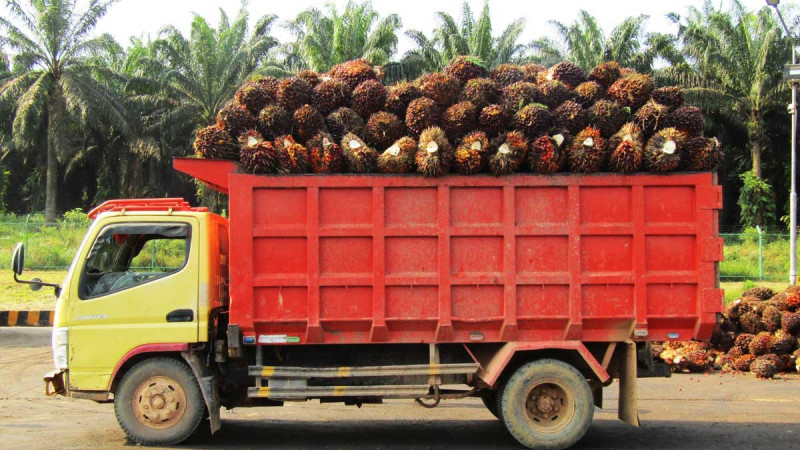
According to him, the palm oil industry currently contributes around 4.5% to Indonesia’s Gross Domestic Product (GDP) and supports more than 16 million jobs directly and indirectly. With the country’s oil palm plantation area reaching approximately 16.01 million hectares, the opportunity for palm oil-cattle integration is considered highly promising.
Based on grazing capacity calculations of around four hectares per head of cattle, utilizing only 50% of Indonesia’s total oil palm plantation area could theoretically support up to two million beef cattle.
The government views this potential as the foundation for a broader transformation toward integrated palm oil agroindustry development, connecting fertilizers, plantations, animal feed, and livestock production into a single sustainable economic ecosystem.
Beyond livestock integration, downstream utilization of palm-based products is also expected to strengthen import substitution, particularly for feed ingredients, renewable energy, and biomass-based food products.
Indonesia has reinforced the regulatory framework supporting the program through Law No. 41/2014, Minister of Agriculture Regulation No. 105/2014, and Presidential Instruction No. 6/2019 concerning the National Action Plan for Sustainable Palm Oil Plantations.
To implement the initiative, the government is preparing an integrated investment cluster business model. Under this scheme, one development cluster with a capacity of 10,000 cattle is estimated to require investment of around Rp237 billion.
The funding would cover procurement of 5,320 breeding cows, 245 bulls, an additional 3,000 feeder cattle, feed mill construction, slaughterhouse facilities, and development of 300 hectares of forage plantations.
Spatially, each integrated cluster would require approximately 28,000 hectares of land, consisting of 22,260 hectares of nucleus plantations owned by state-owned plantation companies or private firms, along with 5,740 hectares of plasma plantations managed by local communities.
“Integrated cluster development is the most realistic model for building a productive, measurable, and investment-attractive SISKA ecosystem because it creates a clear business chain from upstream to downstream,” Radian explained.
To accelerate implementation, the government has prepared a Rp5 trillion financing scheme to support the establishment of 19 national SISKA clusters, including interest subsidies and investment insurance to mitigate risks.
Authorities are also encouraging nucleus-plasma partnership models similar to the SISKA KUINTIP approach already implemented in South Kalimantan. Through this system, communities surrounding plantations can directly participate in cattle farming within plantation areas, supported by technical assistance, infrastructure, and collaborative financing.
The government believes that multi-stakeholder collaboration involving plantation SOEs, state-owned banks, universities, private sector players, and livestock organizations will be crucial to ensure palm oil-cattle integration evolves beyond a short-term program into a new rural economic model capable of strengthening food security while improving livelihoods in plantation communities. (T2)