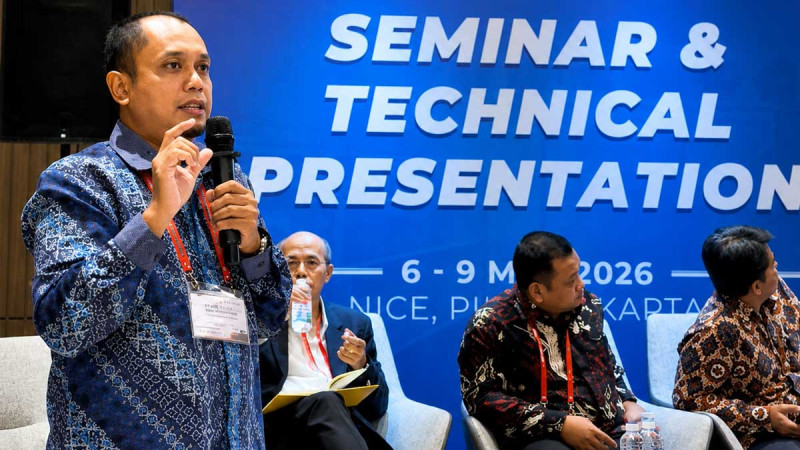
InfoSAWIT, JAKARTA – Rising temperatures and increasing climate volatility are becoming major obstacles for Indonesia’s integrated palm oil-cattle farming system, widely known as SISKA. Daily tropical temperatures ranging between 27°C and 34°C are triggering heat stress in livestock, significantly reducing productivity, reproductive performance, and overall farm efficiency.
To tackle this challenge, Dr. Santoso, an expert from Indonesia’s National Research and Innovation Agency (BRIN), has introduced Smart SISKA 4.0, a precision livestock farming concept that integrates digital technologies to improve cattle productivity within oil palm plantation ecosystems while strengthening adaptation to increasingly extreme tropical climates.
According to Santoso, heat stress is one of the biggest limiting factors in tropical livestock systems. Elevated temperatures raise body heat, increase respiration rates, and reduce feed intake—conditions that can lower meat and milk productivity by 5–20%, while fertility rates may drop by as much as 30%.
“Heat stress is not simply an animal comfort issue—it directly affects productivity, reproduction, and the economic efficiency of livestock operations. That is why precision technology is becoming an urgent necessity,” Santoso said.
Smart SISKA 4.0 combines Internet of Things (IoT), Big Data Analytics, Artificial Intelligence (AI), and genetic technologies into a single modern livestock management ecosystem.
A key pillar of the system is the use of wearable biosensors and GPS tracking, enabling real-time monitoring of vital livestock parameters—from body temperature with sensitivity up to ±0.2°C, to heart rate and movement patterns across large plantation areas. This allows farmers to detect physiological changes early, before production losses occur.
BRIN is also developing a Genetic Feed Performance (GFP) Digitalization platform, which integrates feed consumption data, growth rates, and genetic markers to accelerate the selection of superior cattle breeds better adapted to tropical environments.
Another innovation is AI-powered Body Condition Scoring, delivered through the Sapintara application, which uses digital imaging to assess livestock condition, estimate live weight, calculate carcass potential, and predict market prices more quickly and accurately.
Within the Smart SISKA framework, monitoring the Temperature-Humidity Index (THI) is crucial. Once THI exceeds 72, cattle begin experiencing heat stress, marked by reduced feed intake and rising body temperatures. At 79–88, stress reaches moderate levels, potentially cutting meat and milk production by 10–25%. Above 88, severe heat stress sets in, sharply increasing mortality risk while fertility may decline by more than 30%.
“Early heat stress detection enables faster mitigation, significantly reducing economic losses caused by lower feed consumption and declining livestock performance,” Santoso explained.
Beyond digitalization, BRIN is also advancing genetic breeding research, including CRISPR-Cas9 genome editing, to identify heat-adaptive genetic markers such as the “slick” gene, known to improve heat tolerance in cattle.
The research aims to develop Double Muscle beef cattle lines and lowland dairy cattle breeds that remain productive under Indonesia’s tropical conditions.
Smart SISKA 4.0 is projected to improve labor efficiency by 30–50% while reducing greenhouse gas emissions from livestock operations by 10–20% through better feed efficiency, higher productivity, and more precise farming systems.
With the convergence of digital technology, AI, and genetic innovation, Smart SISKA 4.0 is emerging as a strategic model for building a modern, efficient, and sustainable livestock industry integrated with Indonesia’s palm oil plantations. (T2)