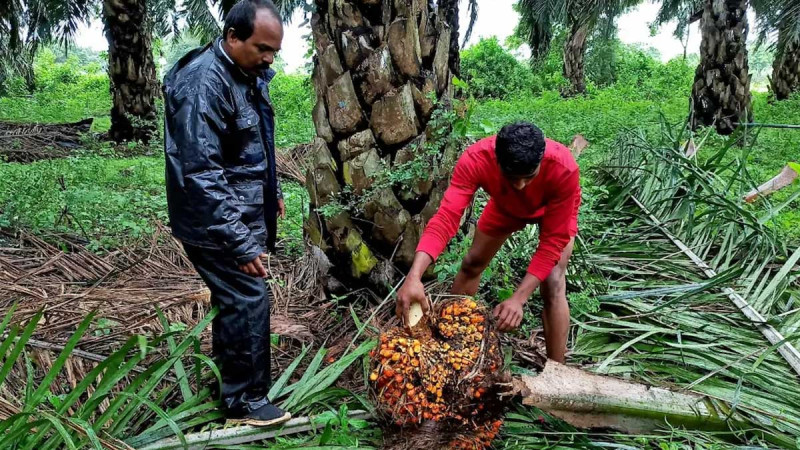
InfoSAWIT, JAKARTA – As global market requirements tighten, especially under the European Union’s deforestation-free supply chain regulations, traceability in Indonesia’s palm oil sector is becoming increasingly critical. However, implementation remains challenging—particularly among smallholders, who manage around 42 percent of the country’s total oil palm planted area.
Windrawan Inantha, a researcher at the Strategic Advisor Center for Entrepreneurship, Change, and Third Sector (CECT) Sustainability at Trisakti University, believes independent smallholders remain the weakest link in the palm oil supply chain when it comes to traceability.
“In the context of traceability, smallholders are the most vulnerable point in the supply chain,” he said.
According to Windrawan, pressure for traceability has intensified since the implementation of the EU Deforestation Regulation (EUDR), which requires palm oil products entering Europe to be traceable back to their plantation origin and verified as deforestation-free.
He noted that traceability in Indonesia is currently driven more by export market demands than domestic consumer awareness, making institutional support crucial.
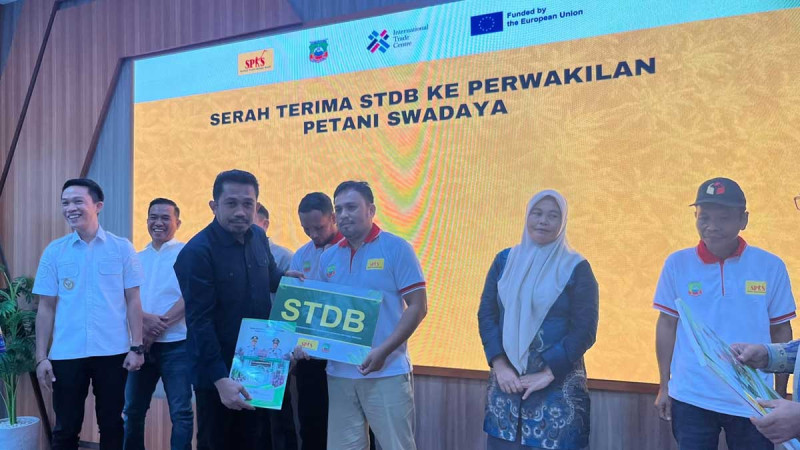
In this context, BPDP is being encouraged to sharpen its policy focus and prioritize support for smallholders who already possess legal cultivation documents such as e-STDB, or those undergoing legalization processes.
“Policy incentives must be tangible at farmer level, especially for those who have secured legal cultivation status,” Windrawan emphasized.
He added that one of the biggest obstacles is the lack of direct economic incentives for farmers adopting traceability systems.
“As long as traceable fresh fruit bunches are sold at the same price as non-traceable produce, transformation will move slowly,” he said.
Beyond incentives, BPDP is also being urged to expand support for farm-level data infrastructure, including plantation mapping, geolocation technology training, and digital administrative systems for farmer cooperatives.
Land legality remains another major bottleneck.
“As long as land status remains unclear, traceability data will never be strong,” Windrawan noted.
He called for deeper collaboration between BPDP, Ministry of Agrarian Affairs and Spatial Planning, Ministry of Forestry, local governments, and farmer institutions to accelerate land legalization and strengthen traceable supply chains.
Without stronger farmer-centered policies, he warned, Indonesia’s palm oil traceability transformation will struggle to gain momentum. (T2)