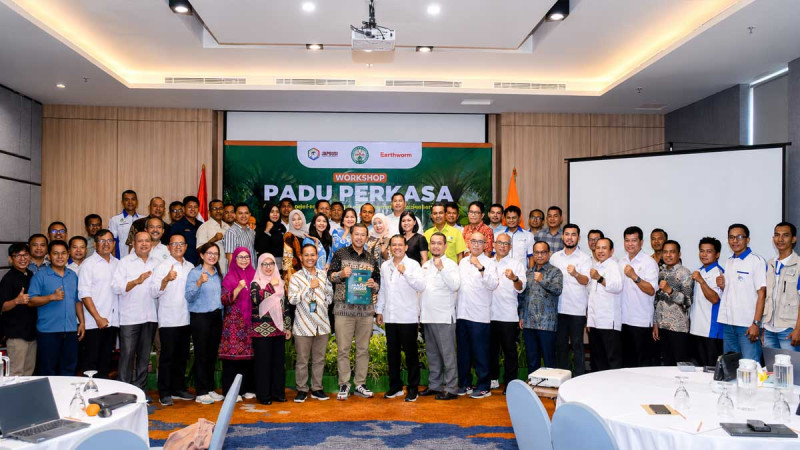
InfoSAWIT, BENGKULU – Gabungan Pengusaha Kelapa Sawit Indonesia (GAPKI) is stepping up efforts to strengthen sustainable labor practices in Indonesia’s palm oil industry through a collaborative workshop aimed at improving protections and welfare for daily workers across plantation operations.
The initiative took shape in Bengkulu through the Padu Perkasa Workshop: Advancing the Welfare of Daily Workers in the Palm Oil Plantation Industry, which brought together around 50 participants representing GAPKI member companies and labor unions from across the sector.
The workshop served as a strategic platform to build common understanding around labor protection through implementation of the General Guidelines for Sustainable Daily Palm Employment Agreements, known as Padu Perkasa—a framework designed to promote fairer, safer, and more sustainable working arrangements for daily plantation workers.
Opening the event, the Head of Industrial Relations Division at Bengkulu’s Manpower and Transmigration Office, Ali Sadikin, representing the provincial labor agency, described the forum as an important space for constructive dialogue between government, business, and workers in strengthening inclusive and sustainable labor governance in the palm oil sector.
He emphasized that stronger cross-sector collaboration is essential to address employment challenges in plantations, particularly for workers employed under daily labor agreements, who remain an integral part of plantation operations.
Ali also encouraged more palm oil companies in Bengkulu to join GAPKI membership to strengthen coordination with government institutions, especially in resolving labor-related issues, improving workforce capacity, and accelerating adoption of sustainable palm oil principles.
According to an official statement received by InfoSAWIT, GAPKI Bengkulu Branch Secretary Hasan Slamet said the workshop marked an important milestone in aligning stakeholder understanding on the use of daily employment agreements in accordance with Indonesia’s labor regulations while upholding decent work principles in the palm oil industry.
“Successful implementation of Padu Perkasa requires active participation from companies, workers, government institutions, and supporting organizations involved in strengthening labor governance in plantations,” Hasan noted.
The workshop also featured Yuli Adiratna, Director of Labor Supervision System Development at Indonesia’s Ministry of Manpower, who stressed that compliance with labor regulations remains the foundation for protecting workers’ rights while creating harmonious, healthy, and productive industrial relations.
Meanwhile, Earthworm Foundation shared technical insights on Padu Perkasa implementation, followed by discussions between company representatives and labor unions on challenges surrounding daily labor agreements in the field.
Beyond awareness-building, the event included problem mapping, group discussions, formulation of follow-up action plans, and the signing of a joint commitment—highlighting the seriousness of all stakeholders in improving working conditions for daily workers in Indonesia’s palm oil plantations.
Padu Perkasa itself is the result of collaboration between GAPKI, the Indonesian Palm Oil Workers Union Network (JAPBUSI), Earthworm Foundation, and other key stakeholders, providing a practical guide to advance a daily labor system that is fairer, better protected, and more sustainable.
Through stronger collaboration, Indonesia’s palm oil industry is expected not only to grow in productivity, but also to reinforce labor standards that are equitable, resilient, and globally competitive. (T2)