InfoSAWIT, MERAUKE — The government continues to emphasize the importance of strengthening national energy resilience. This time, it was the turn of the Minister of Defense of Indonesia, Sjafrie Sjamsoeddin, to visit Southern Papua to inspect plans for developing a palm oil-based biodiesel program in Boven Digoel Regency.
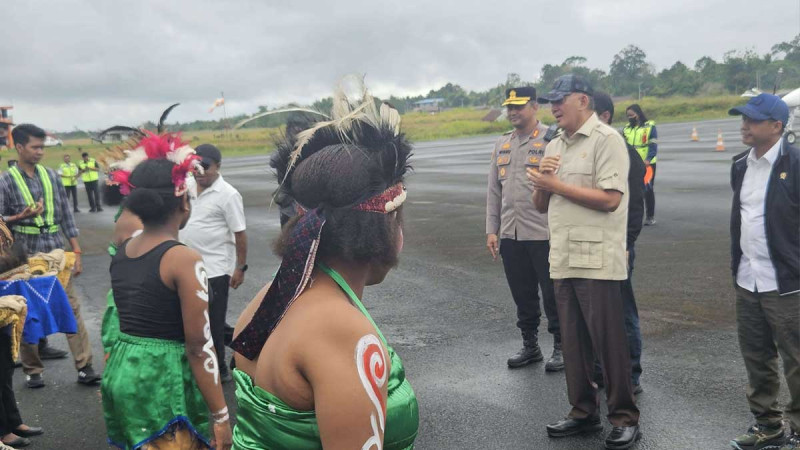
The visit, conducted on Sunday (June 8), was not an ordinary trip. The Minister arrived with a strategic cross-sectoral team, including the Minister of Agriculture, Minister of Forestry, Minister of Public Works, Special Staff to the President for Infrastructure, Chief of General Staff of the TNI, Deputy Chief of Staff of the Army, Head of the Defense Facilities Agency (Kabaranahan) of the Ministry of Defense, and the President Director of Agrinas Palma. The Governor of Southern Papua also welcomed the delegation at the site.
The main agenda of the visit was to directly inspect potential areas in Boven Digoel Regency, which is designed to become one of the national centers for biodiesel development from palm oil. This program is part of a larger strategy initiated by President Prabowo Subianto to build energy independence and strengthen national economic sovereignty.
From Tanah Merah Airport, the Minister and his entourage used a helicopter to reach remote areas in Boven Digoel. Through aerial observation, they surveyed the expanse of land prepared for palm oil plantation development while also assessing the geographical conditions, infrastructure, and the area surrounding the 803rd Territorial Development Battalion.
As reported by InfoSAWIT from KBRN RRI, sourced from the Ministry of Defense's Information Bureau, this aerial inspection provided a comprehensive view of the challenges and potential of Boven Digoel as a new hub in the national energy supply chain based on palm oil. In addition to being a renewable energy source, the development of this area is also projected to be an integral part of economic development in eastern Indonesia.
The presence of officials from the ministries of agriculture, forestry, and infrastructure indicates that this program is not solely an energy sector issue. The government is placing significant attention on cross-sector integration to promote project sustainability while ensuring support for the development of underdeveloped regions. “This inspection is a concrete step in implementing a comprehensive and sustainable national energy resilience strategy,” stated one official accompanying the Minister.
It was also emphasized that energy resilience is a key pillar in maintaining national stability, not only from the energy supply side but also from aspects of security, economic independence, and community empowerment in border areas.
After the inspection, the delegation transited at Johanes Abraham Dimara Air Base (Lanud DMA) in Merauke Regency. At this location, the Minister of Defense led an initial evaluation and further coordination regarding the technical steps to be taken moving forward, before finally returning to Jakarta.
This visit is part of an intensive series of efforts by the government to accelerate national strategic projects in the renewable energy sector. Particularly in Papua, where development is expected to not only rely on the exploitation of natural resources but also strengthen infrastructure, territorial defense, and empower local communities.
By prioritizing palm oil as an alternative energy source, the government hopes that Indonesia will no longer depend on fossil fuel imports, especially diesel. This step also marks the beginning of a new chapter in national geopolitical and geo-economic strategies, positioning eastern Indonesia as a crucial pillar for the future of national energy. (T2)