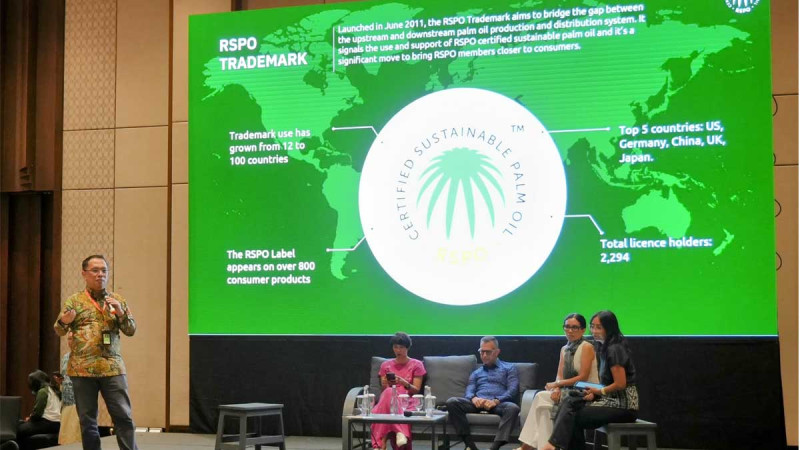
InfoSAWIT, SANUR – Sustainable palm oil took center stage at the 2025 Eco Tourism Week held at The Meru Sanur, Bali. Initiated by Eco Tourism Bali (ETB), the event highlighted the tourism sector's role in promoting eco-friendly practices, including sustainable palm oil consumption.
In a bold step forward, ETB established a strategic partnership with the Roundtable on Sustainable Palm Oil (RSPO), marking a new chapter in tourism and environmental sustainability.
“Through this partnership, we aim to reduce deforestation, protect wildlife, and empower local communities,” said Suzy Hutomo, Co-Founder of Eco Tourism Bali, in an official statement received by InfoSAWIT on Thursday (May 29, 2025). She noted that tourists—especially from Europe—increasingly prioritize eco-conscious travel.
RSPO sees enormous potential in the tourism sector to expand the use of Certified Sustainable Palm Oil (CSPO). Dr. M. Windrawan Inantha, Deputy Director of Market Transformation RSPO Indonesia, mentioned that the national tourism sector consumes around 500,000 tons of crude palm oil annually—about 5% of total national food-related consumption.
“This is no small figure. Tourism has a strategic position to pioneer sustainable palm oil consumption,” he said.
With over 14 million international visitors and hundreds of millions of domestic trips in 2024, cooking oil use in hotels, restaurants, and catering services is significant. “If each tourist consumes 0.1 kg of cooking oil per day, the impact of switching to CSPO would be substantial,” Windrawan added.
He also stated that adopting CSPO is a sound business strategy. “Many tourism operators already have sustainability certifications like GSTC or Green Key. The next step is ensuring the food ingredients they use are also sustainable,” he explained.
This initiative aligns with Indonesia’s role as the world’s top palm oil producer and a key advocate of responsible consumption. Cross-sector collaboration—between tourism operators, food suppliers, local governments, and communities—is seen as essential for driving systemic change in supply chains.
“Tourism and palm oil are two economic pillars of Indonesia. If managed responsibly, they can pave the way for a greener, more inclusive future,” concluded Dr. Windrawan.
This event reinforced that sustainability is no longer optional—and once again, Bali leads the charge.
(T2)