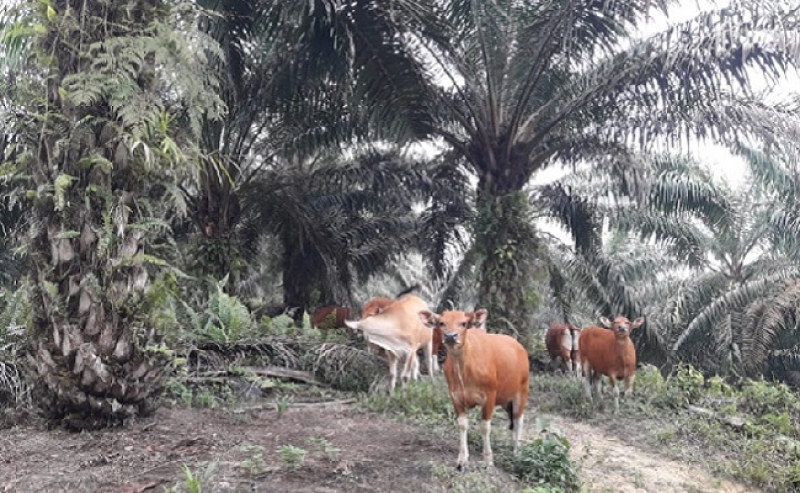
InfoSAWIT, JAKARTA – Ministry of Environment and Forestry (MEF) recently announced 3,7 million hectares palm oil plantations in forest regions. The sentence was from chronology of events that made different data of palm oil plantations in Indonesia.
As InfoSAWIT quoted from what general secretary of MEF told, the chronology started from data reconciliation of palm oil plantations in national scale that Coordinator Ministry in Economy initiated to solve every different data of palm oil plantations in Indonesia.
“The method in the process used high resolution satellite image which then verified with field data,” MEF mentioned when being a speaker in Pertemuan Nasional (Penas) Petani Sawit Indonesia, by the late of 2023.
The persons involved in the process signed Berita Acara Data Sawit Nasional, such as, Ministry of Agriculture, MEF, National Land Agency, Geospatial Information Agency, and Coordinator Ministry in Economy. It was sentenced that palm oil plantation nationally laid about on 16,38 million hectares through the Decision Number 833/KPTS/SR.020/M/12/2019 on 17 December 2019. Ministry of Agriculture would be the Walidata.
Then MEF used the data and did overlay with the last data of forest regions. As the result, 3,37 million hectares are in forest regions. The sentence of MEF reflected the commitment of the government to maintain the balance between agriculture and environmental conservation that significantly have ecologic functions.
The different data of palm oil plantations in Indonesia would be the main focus of reconciliation data that Ministry of Economy conducted. The method that combined high resolution satellite image and field verification should deliver more accurate data and be responsible. The initiative also reflected what the government would do to escalate transparency and accountability in natural resource management particularly in palm oil plantation sectors that would deliver big impacts for the environment.
MEF noted, the decision that 3,7 million hectares palm oil plantations in forest regions, would be the concrete thing to maintain the balance between agricultural needs and environment. The process should involve collaboration among the related ministries and institutions, to show good coordination to solve every different data. (T2)