InfoSAWIT, JAKARTA - Feby Indriyani, Okto Ivansyah, Yuris Sutanto from Universitas Tanjungpura (UNTAN) researched palm oil mill liquid waste or limbah cair pabrik kelapa sawit (LCPKS). In their research and application, LCPKS responded to land physical characteristics.
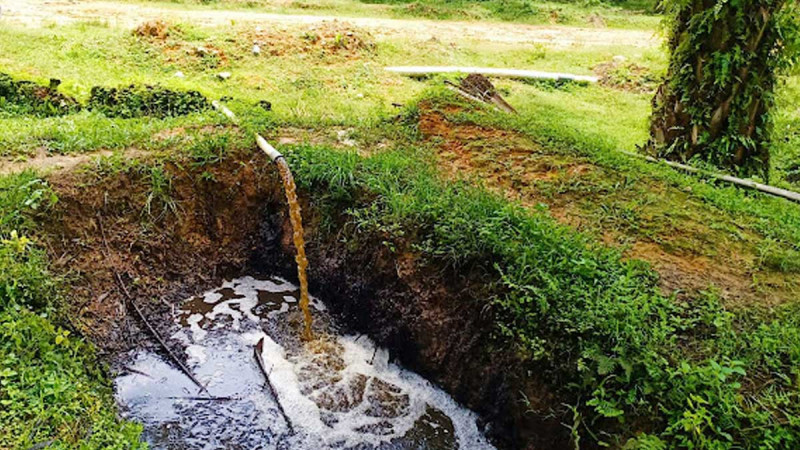
As quoted from Jurnal Prisma Fisika Untan, the research applied bio-pore hole within 100 cm deep and 10 cm diameter around three palm oil trees as the study case. They also took land samples twice before and after LCPKS applied. The variation depth reached 0 – 30 cm, 31 – 60 cm, 61 – 90 cm, and 91 - 120 cm from the land surface.
The analysis result revealed that there was no significant changes in water, density, and land porosity after applying LCPKS. But there was significant escalation of electricity conductivity assessment in the land that reached high assessment at 91 – 120 cm after applying LCPKS.
“Even land density assessment did not significantly show changes, as the observation ran, the deeper land is, the more increasing density in the land would be. The increasing land water also took place though there was no significant change and the change of land porosity was not either,” the research mentioned.
Before applying LCPKS, electricity conductivity in the land was 21.700, while after applying LCPKS, it reached about 19 - 20, and the highest peak was in 91 - 120 cm deep.
The high assessment of electricity conductivity in the land after applying LCPKS would escalate fertilizer absorption by the trees (plants) and this strongly delivered scientific base to support the success of LCPKS application in palm oil plantations. (T2)