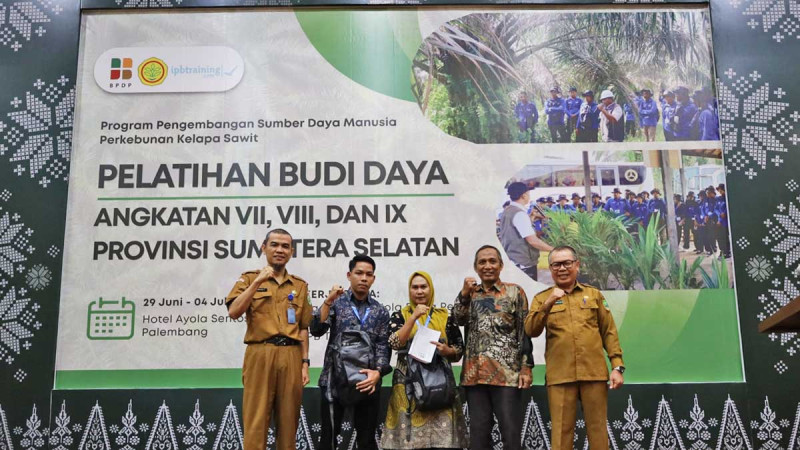
InfoSAWIT, PALEMBANG – Efforts to improve the productivity and sustainability of Indonesia's smallholder oil palm sector received another boost as 85 oil palm growers from Empat Lawang Regency, South Sumatra, participated in a six-day cultivation training program designed to enhance technical expertise and promote Good Agricultural Practices (GAP).
Held from June 29 to July 4, 2026, at Hotel Ayola Sentosa in Palembang, the training formed part of the 2026 Oil Palm Human Resources Development Program for Cohorts VII, VIII, and IX in South Sumatra. The initiative was jointly organized by the Palm Oil Plantation Fund Management Agency (BPDP), the Directorate General of Plantations under Indonesia's Ministry of Agriculture, the Empat Lawang Regency Government, the South Sumatra Provincial Plantation Office, and IPB Training.
The program aims to equip smallholders with practical knowledge and modern cultivation techniques that can improve plantation productivity, increase farm efficiency, and strengthen the long-term sustainability of Indonesia's independent oil palm sector.
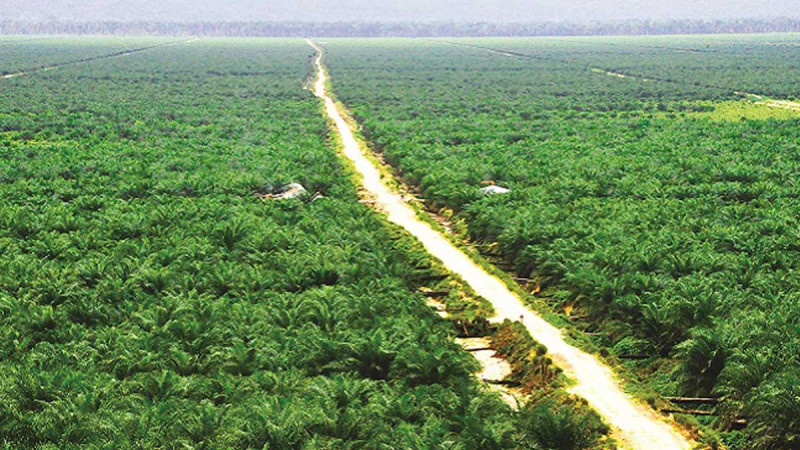
Head of the Empat Lawang Plantation Office, Hendra Lezi, said the regency has experienced rapid oil palm expansion over the past several years. Plantation area has grown from around 1,000 hectares in 2022 to approximately 7,000 hectares, accompanied by a significant increase in production.
Despite the remarkable expansion, he stressed that improving productivity remains the primary challenge.
"Oil palm cultivation has expanded rapidly, but productivity still needs to be improved to remain competitive with other producing regions. Strengthening the capacity of our growers is therefore essential," Hendra said.
He noted that local growers continue to face several structural challenges, including limited road access to plantations, relatively small landholdings, and the continued use of uncertified planting materials due to financial and accessibility constraints.
Throughout the six-day program, participants attended classroom sessions, technical discussions, practical demonstrations, and field visits covering the full spectrum of oil palm cultivation. Training topics included plantation regulations, certified seed selection, nursery management, land preparation, planting techniques, maintenance of immature and mature palms, fertilization strategies, weed management, pest and disease control, and proper harvesting practices.
Representing IPB Training, Prof. Dr. Hariyadi emphasized that high plantation productivity cannot be achieved through fertilization alone. Instead, successful oil palm cultivation depends on three fundamental pillars: suitable land conditions, the use of certified superior planting materials, and consistent crop management throughout the plantation's life cycle.
Participants also took part in hands-on technical exercises, including nursery media preparation, soil acidity measurement using pH meters and litmus paper, field staking simulations for planting layout, and calibration of knapsack sprayers to ensure precise fertilizer and pesticide applications.
The interactive training sessions allowed growers to consult directly with experts on practical challenges encountered in their plantations, ranging from the use of uncertified seedlings and replanting strategies to weed control, pest outbreaks, plant diseases, and crop damage caused by wild boars, rats, and monkeys.
As part of the program, participants visited PT Duta Reka Mandiri, where they observed industry-standard plantation management practices, including nursery operations, maintenance of immature and mature palms, and harvesting procedures.
The field visit provided valuable opportunities for growers to compare their current cultivation methods with commercial plantation standards while receiving practical guidance from industry specialists.
Through this collaborative initiative, BPDP, the Directorate General of Plantations, regional governments, and IPB Training aim to accelerate the transfer of technology and technical knowledge to Indonesia's smallholder oil palm growers.
By strengthening growers' competencies in Good Agricultural Practices, the program is expected to support higher productivity, improve competitiveness, and contribute to the sustainable development of Indonesia's palm oil industry. (T2)