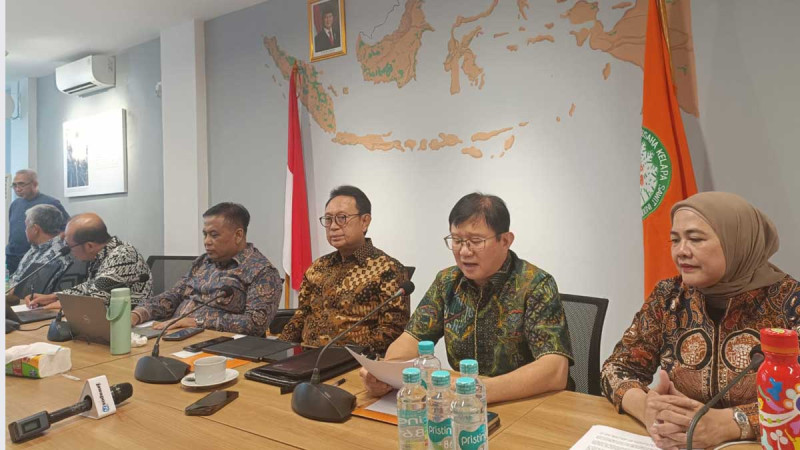
InfoSAWIT, NUSA DUA — Thomas Mielke, Editor and CEO of OIL WORLD, warned that Indonesia’s plan to expand its biodiesel mandate to B50 still faces major supply challenges. Speaking at a press conference during the Indonesia Palm Oil Conference (IPOC) 2025 and Price Outlook 2026 in Nusa Dua, Bali, Mielke said the idea of B50 is “good in principle” but not aligned with the country’s current vegetable oil production capacity.
He estimated that Indonesia would need at least an additional 2.2 million tons of vegetable oil to meet B50 demand — “and likely more,” he emphasized. He noted that Indonesia should have expanded planting and output earlier to support such a high blend target.
If Indonesia pushes B50 as early as the second half of 2026, the impact could be dramatic.
“It would create an extremely bullish effect on global vegetable oil prices, which would spill over into the domestic market,” he said. Rising prices would challenge the government’s ability to keep cooking oil and other palm-based products affordable. “There will be a conflict of interest between energy needs and food price stability.”
Mielke also projected that Indonesia’s palm oil output will decline in 2026, and even more sharply in 2027. The drop is driven by government interventions in the primary industry, land seizures or ownership shifts, changes in profit-sharing schemes, and reduced fertilizer use in recent years.
With such a production trend, he said it is “almost impossible” for Indonesia to implement B50 without triggering a significant price surge. “Prices will jump — first globally, then domestically,” he warned.
As the world’s largest vegetable oil exporter, Indonesia plays a crucial role in maintaining global supply balance. Mielke called this a “major achievement,” yet stressed that any significant shift in Indonesia’s export volumes could destabilize international markets.
He concluded that rolling out B50 under stagnant production conditions risks causing extreme price reactions that could harm both importing countries and Indonesian consumers. (T2)