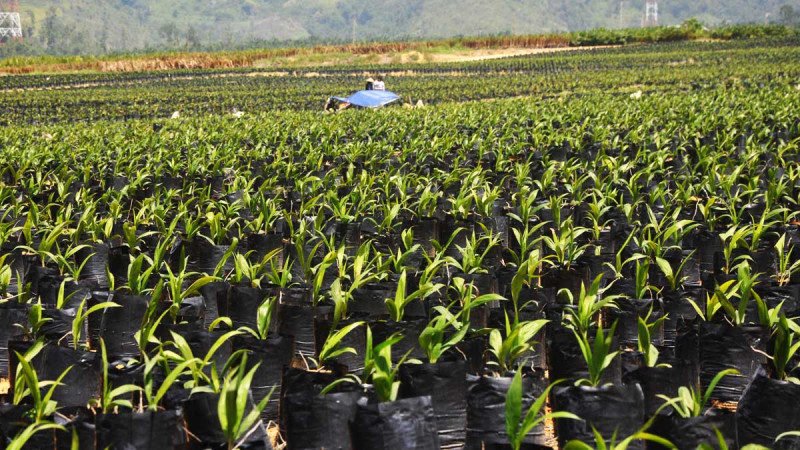
InfoSAWIT, JAKARTA – In the palm oil industry, performance is ultimately measured by numbers. For Topaz, the DxP oil palm seed produced by Asian Agri, those numbers speak for themselves: fresh fruit bunch (FFB) yields of up to 38 tonnes per hectare, oil extraction rates reaching 29%, and crude palm oil (CPO) production potential of as much as 10 tonnes per hectare.
At a time when plantation management is becoming increasingly costly and disease risks continue to grow, productivity is no longer the only priority. Growers are also looking for planting materials that can consistently deliver measurable performance over the long term. According to Asian Agri, Topaz has built that reputation through years of commercial planting and field validation rather than marketing claims alone.
For plantation companies and smallholders alike, seed selection represents one of the most critical long-term investment decisions. Once planted, genetic performance will influence yields, fertilizer requirements, harvesting efficiency, and the economic lifespan of the plantation for decades.
Topaz is a DxP (Dura × Pisifera) hybrid, a genetic combination widely recognized across the palm oil industry for producing high-yielding palms with superior oil content. However, Asian Agri says the variety's competitive advantage lies not only in its genetic background but also in the extensive testing it has undergone.
The company conducted multi-location field trials across two Indonesian provinces covering mineral soils as well as shallow and deep peat areas. The first-generation trials, established in 1996, demonstrated encouraging productivity throughout different growing environments.
According to Asian Agri, Topaz recorded 16 tonnes of FFB per hectare during its first harvesting year. Production increased to around 32 tonnes per hectare between the third and sixth years of harvesting, while the oil extraction rate (OER) reached 25%, resulting in CPO production of approximately 8.5 tonnes per hectare.
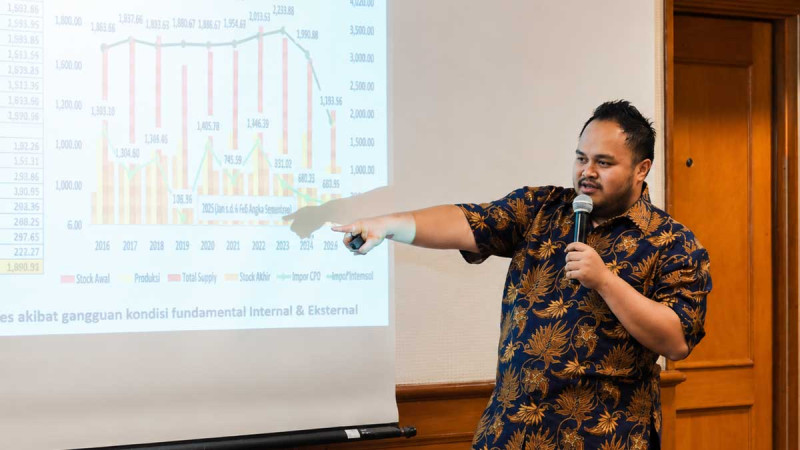
"Within the palm oil industry, seed quality influences not only productivity but virtually every plantation management decision—from fertilizer programs to harvesting strategies," Asian Agri said during a presentation at IPOSC 2025, as cited by InfoSAWIT. The company described Topaz as a DxP variety that has been "tested and proven" under commercial plantation conditions.
Government Approval and Four Genetic Combinations
Topaz has also obtained official approval from Indonesia's Ministry of Agriculture under Ministerial Decrees No. 57, 58, 59, and 60 KPTS/SR.120/1/2004, issued on January 16, 2004.
The variety is available in four principal genetic combinations:
- Topaz 1 (Dura Deli × Pisifera Nigeria)
- Topaz 2 (Dura Deli × Pisifera Ghana)
- Topaz 3 (Dura Deli × Pisifera Ekona)
- Topaz 4 (Dura Deli × Pisifera Yangambi)
These breeding lines combine Deli's well-established commercial traits with African Pisifera germplasm selected for productivity and adaptability under diverse growing conditions.
According to Asian Agri, maintaining genetic diversity has become increasingly important as plantations face varying rainfall patterns, changing soil moisture conditions, and the growing impacts of climate change. (T2)
For more informastion Klik: Seed Topaz