InfoSAWIT, JAKARTA – Indonesia's abundant supply of palm kernel shells could become a valuable feedstock for the country's growing activated carbon industry, offering both environmental and economic benefits while supporting downstream palm biomass utilization.
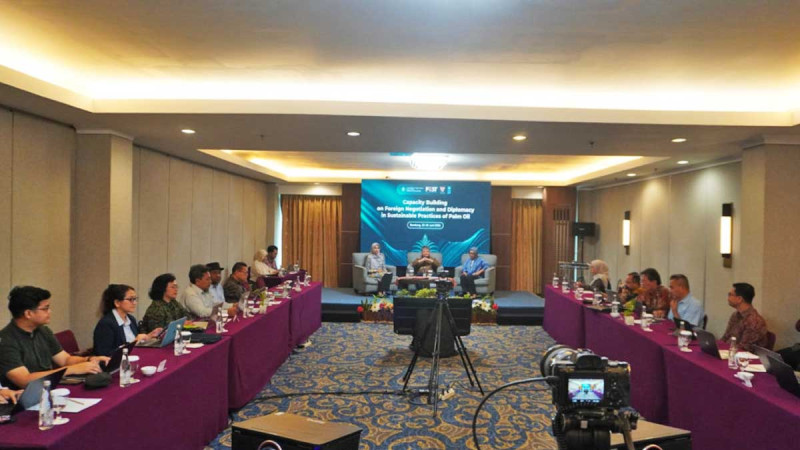
The opportunity was highlighted during the 9th Dissemination Webinar Series organized by Indonesia's National Research and Innovation Agency (BRIN), which examined the financial feasibility of activated carbon production using coal and palm kernel shells as raw materials.
Presenting the study, Wawan Irawan of CV. Pehakarsa Multitek Engineering explained that the analysis compared two activated carbon plants—one using coal and the other palm kernel shells—each designed to process 25,000 tons of raw material annually.
The assessment evaluated capital expenditure (CAPEX), operating expenditure (OPEX), and projected profitability of both production models, two industries that leverage Indonesia's abundant natural resources.
Although both plants process the same amount of feedstock, Wawan noted that activated carbon output differs because coal and palm kernel shells possess distinct physical and chemical characteristics.
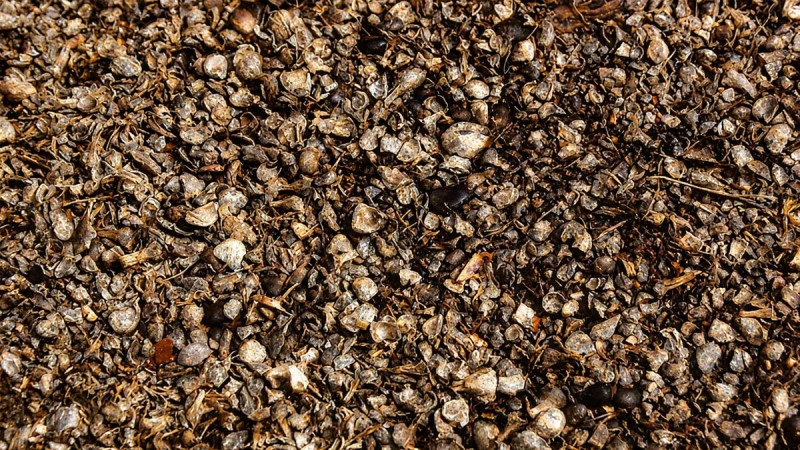
Low- to medium-rank coal offers relatively stable year-round availability and higher fixed carbon content. Palm kernel shells, meanwhile, provide the advantages of being a renewable biomass resource with naturally porous structures that support high-quality activated carbon production, although raw material prices tend to fluctuate across regions.
According to information published on BRIN's official website and obtained by InfoSAWIT on Monday (June 29, 2026), coal-based facilities require additional infrastructure, including combustion reactors, feedstock preparation units, material handling systems, and sulfur emission controls.
Palm kernel shell-based plants, by contrast, require larger storage areas due to the lower bulk density of biomass feedstock.
Energy efficiency also plays a major role in operating costs. Coal carbonization can utilize volatile compounds generated during processing as an internal energy source, whereas palm kernel shell activation generally requires higher external energy inputs.
Despite these differences, Wawan stressed that investment performance is not determined solely by feedstock prices.
"For plants processing 25,000 tons of raw materials annually, reaching the break-even point depends more on maintaining consistent calorific values throughout production and achieving activated carbon yields that meet market specifications," he explained.
The study also assessed key financial indicators, including Net Present Value (NPV), Internal Rate of Return (IRR), and Payback Period, providing investors with benchmarks for evaluating commercial viability.
The findings suggest that both coal-based and palm kernel shell-based activated carbon projects offer attractive investment prospects for Indonesia's domestic market. Locally produced activated carbon could also strengthen competitiveness by reducing import dependence while lowering logistics costs.
Meanwhile, David Candra Birawidha, Senior Researcher at BRIN's Research Center for Mineral Technology (PRTM), said the agency continues to encourage downstream commercialization of research outputs to accelerate industrial adoption.
He emphasized that collaboration between research institutions, engineering firms, and manufacturers is essential for transforming laboratory innovations into commercially viable technologies.
"Through techno-economic studies like this, we want to ensure that every innovation and process design developed by BRIN researchers is supported by sound economic fundamentals, remains competitive, and is ready for industrial implementation," David said.
BRIN expects the study to serve as a valuable reference for investors and manufacturers seeking to develop Indonesia's activated carbon industry while unlocking greater value from palm kernel shell biomass as part of the country's circular economy and downstream plantation strategy. (T2)